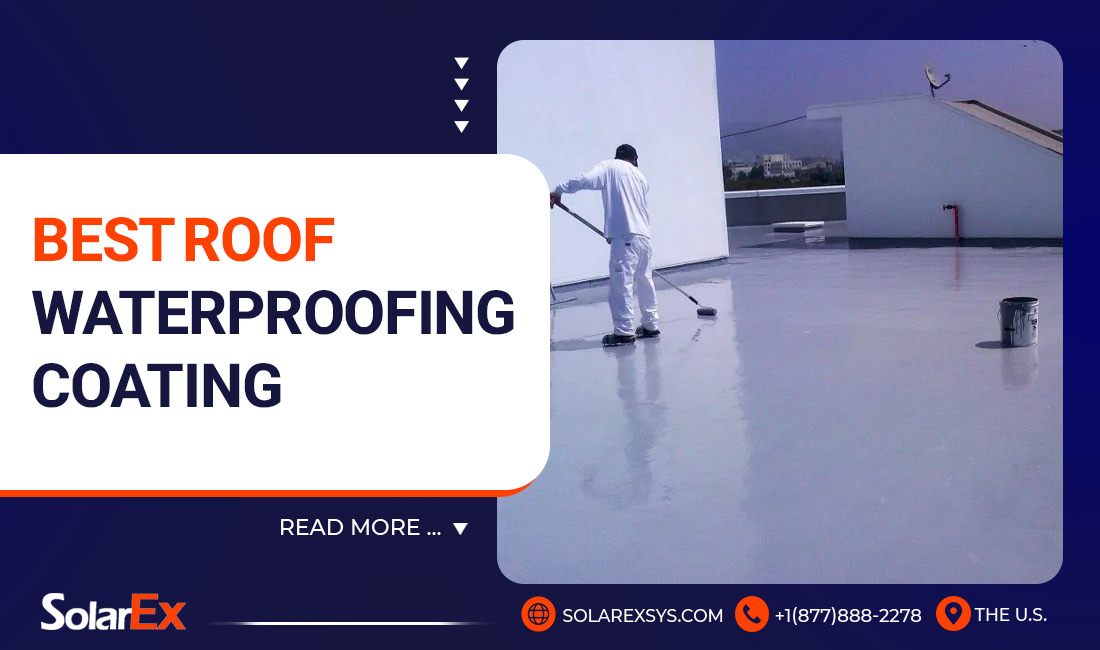

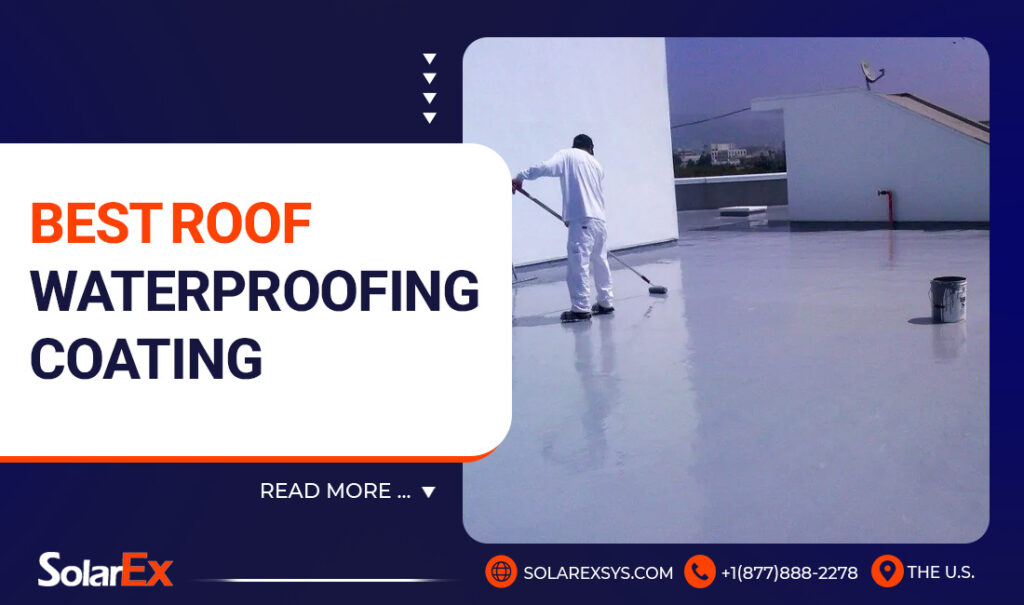
Have you ever wondered why one roof coating performs well for years while another starts failing much sooner under the same weather conditions? Choosing the best roof waterproofing coating depends on more than price or product type; roof material, drainage, UV exposure, standing water, climate, and maintenance expectations all affect the result. If you want to protect the roof without paying for the wrong system, it helps to understand how silicone, polyurethane, polyurea, acrylic, and cementitious coatings differ in real applications. In this guide, you will see which options suit different roof conditions, where each system performs best, and what to check before making a decision. For more practical information, stay with SolarEx.
Why Roof Waterproofing Is Essential for Building Protection?
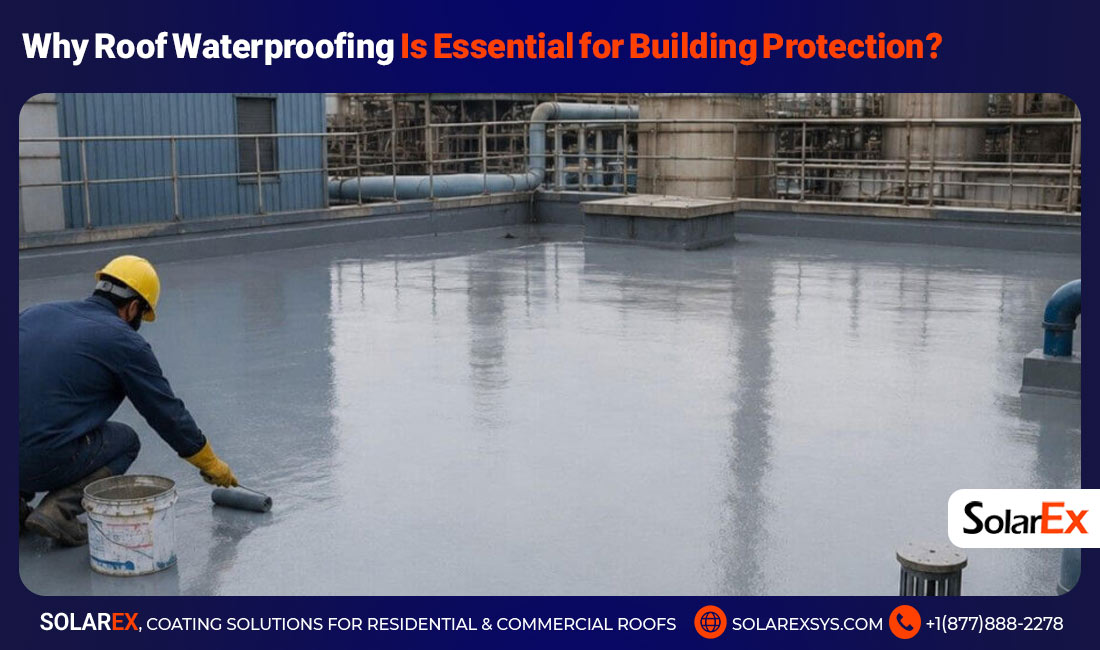
Roof waterproofing does more than stop visible leaks. It helps protect the building envelope, reduces moisture-related damage, and can prevent small roofing issues from developing into costly structural repairs. Choosing the best waterproofing for roof protection becomes especially important when the surface is exposed to heavy rain, standing water, intense sunlight, or repeated temperature changes.
1. Prevents Water Intrusion
A properly applied waterproof roof coating creates a protective barrier that helps keep rainwater from reaching the roof deck, ceilings, walls, insulation, and electrical components.
2. Protects Structural Components
When moisture penetrates concrete or roofing assemblies, it can contribute to cracking, corrosion, and gradual deterioration. Effective waterproofing limits this exposure before the damage spreads deeper into the structure.
3. Helps Control Roof Heat
Some reflective and elastomeric systems reduce solar heat absorption, which can help keep the roof surface cooler and reduce heat transfer into the building.
4. Limits Mold and Moisture Problems
Persistent roof leaks create damp conditions where mold and fungal growth can develop. Keeping water out helps protect both interior materials and indoor conditions.
5. Extends Roof Service Life
The best roof waterproofing system is one that matches the roof material, climate, drainage conditions, and expected exposure. When selected and maintained correctly, waterproofing can slow surface deterioration and reduce the frequency of major repairs.
6. Reduces Long-Term Maintenance Pressure
Addressing moisture at the roof level can help you avoid repeated interior repairs, repainting, damaged insulation, and premature roofing replacement. For building owners, this makes waterproofing a preventive maintenance decision rather than a response to recurring leaks.
best roof waterproofing coating
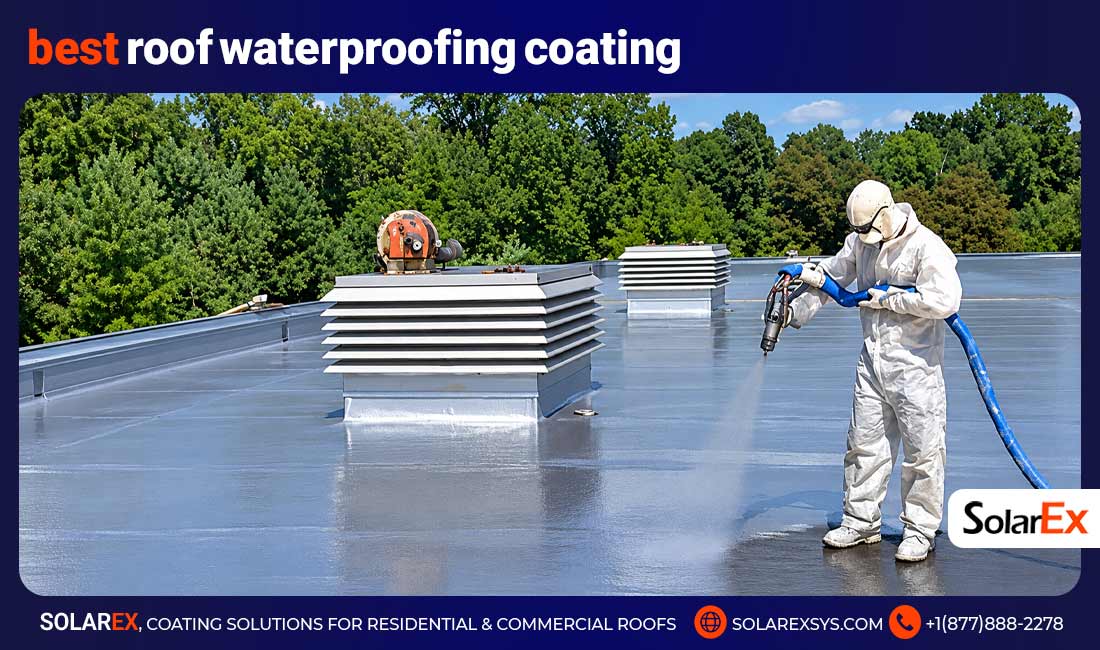
Choosing the best roof waterproofing coating depends on more than water resistance alone. Roof material, drainage, UV exposure, temperature swings, project timeline, and long-term maintenance all affect which system will perform best. A coating that works well on an exposed concrete roof may not be the right choice for a metal roof, terrace, or protected surface. If you are looking for the best waterproof roof coating or the best waterproofing for rooftop applications, the comparison below gives you a practical starting point before we examine each option in detail.
| Coating System | Main Strength | Best Applications | Main Limitation |
|---|---|---|---|
| Silicone Roof Coating | Strong weather and water resistance | Flat and exposed roofs | Requires proper surface preparation |
| Polyurethane (PU) | Elasticity and crack-bridging ability | Concrete roofs, podiums, green roofs | Sensitive to preparation quality |
| Polyaspartic Polyurea | Fast curing and UV stability | Terraces, repairs, premium residential roofs | Higher application demands |
| Spray-Applied Polyurea | Very fast curing and high durability | Industrial and complex roofs | Requires specialized equipment |
| Acrylic Cool Roof Coating | Reflectivity and easy maintenance | Metal and warehouse roofs | Lower resistance to long-term ponding water |
| Silicone-Modified Coating | UV and temperature stability | Coastal and hot-humid climates | Performance varies by formulation |
| JS Cementitious Systems | Strong adhesion to concrete | Tiled or protected roofs | Less suitable for fully exposed flexible systems |
1. Silicone Roof Coating
- Key Features: Strong resistance to weather exposure, UV radiation, and standing water; seamless application; flexible waterproofing layer.
- Best Applications: Exposed flat roofs, commercial roofs, roofs with drainage challenges, and restoration projects.
A high-quality silicone roof coating is one of the strongest options when long-term exposure to sun and water is a major concern. For roofs where drainage is imperfect, choosing a ponding water resistant roof coating becomes particularly important because repeated standing water can accelerate deterioration in less suitable systems. Best ponding water resistant roof coating options should maintain their protective properties even when water remains on the surface for extended periods. At SolarEx, we work with silicone roof coating systems as part of roof waterproofing and restoration projects, selecting the system according to roof condition and project requirements. Ponding water resistant roof coating cost can vary depending on roof size, substrate condition, preparation work, and the number of coats required.
| Pros | Cons |
|---|---|
| Strong UV and weather resistance; good performance in standing-water conditions; seamless protection; suitable for roof restoration | Surface preparation must be completed correctly before application |
2. Polyurethane (PU) Waterproofing Coatings
- Key Features: High elasticity, seamless membrane formation, crack-bridging capability, and good resistance to water exposure.
- Best Applications: Concrete flat roofs, green roofs, podium slabs, and protected roof decks.
Polyurethane systems are widely used where the roof needs to accommodate movement without losing its waterproofing layer. Their flexible membrane can bridge minor cracks and adapt to normal substrate movement. In many applications, this type of system performs similarly to an elastomeric roof coating because flexibility is one of its main advantages. However, the final performance depends heavily on substrate preparation, moisture control, and correct priming.
| Pros | Cons |
|---|---|
| Flexible; strong crack-bridging ability; suitable for complex concrete surfaces; good water resistance | Poor preparation or trapped moisture can reduce performance |
3. Polyaspartic Polyurea
- Key Features: Rapid curing, strong UV stability, color stability, and relatively fast return to service.
- Best Applications: Commercial terraces, emergency roof repairs, and high-end residential roofs.
Polyaspartic polyurea is useful when project speed matters as much as waterproofing performance. Compared with many conventional coatings, it can cure much faster and maintain better color stability under UV exposure. This makes it particularly suitable for terraces and visible roof areas where both appearance and downtime matter.
| Pros | Cons |
|---|---|
| Fast curing; good UV resistance; suitable for decorative finishes; reduced project downtime | Application conditions and timing require careful control |
4. Spray-Applied Polyurea
- Key Features: Extremely rapid curing, seamless membrane formation, high elasticity, and strong impact and abrasion resistance.
- Best Applications: Industrial roofs, infrastructure projects, and roofs with complex shapes.
Spray-applied polyurea is designed for demanding projects where durability and installation speed are priorities. Once sprayed, the material cures very quickly and forms a continuous protective membrane without joints. Its performance makes it useful for large industrial or irregular surfaces, but the application process requires trained installers and specialized spray equipment.
| Pros | Cons |
|---|---|
| Very fast curing; seamless coverage; strong durability; suitable for demanding environments | Requires specialized equipment and experienced applicators |
5. Acrylic Cool Roof Coatings
- Key Features: High solar reflectivity, water-based formulation, easy application, and relatively simple maintenance.
- Best Applications: Metal factory roofs, warehouses, large commercial roofs, and exposed exterior surfaces.
An acrylic roof coating can be a practical option when solar heat gain and budget are major considerations. These systems are commonly used as a waterproof paint for roof surfaces where reflectivity and ease of maintenance are important. A cool roof coating can also help reduce solar heat absorption, while a reflective roof coating focuses on reflecting more incoming sunlight from exposed surfaces. Standard acrylic systems, however, are generally less suitable for roofs with persistent ponding water.
| Pros | Cons |
|---|---|
| Reflective; easy to apply; water-based; economical for large areas | Usually requires more maintenance; less suitable for long-term standing water |
6. Silicone-Modified Waterproof Coatings
- Key Features: Strong temperature resistance, UV stability, water repellency, and improved weather resistance.
- Best Applications: Coastal buildings, roofs exposed to salt spray, and hot or humid climates.
Silicone-modified systems combine characteristics of silicone with other polymer technologies to improve performance under demanding weather conditions. They are particularly useful where roofs face a combination of intense sunlight, heat, humidity, and airborne salts. Their exact performance can vary depending on the formulation, so product specifications should be reviewed before selection.
| Pros | Cons |
|---|---|
| Good UV stability; performs well in hot climates; strong water repellency | Performance depends significantly on formulation quality |
7. JS Cementitious Systems & Specialized Coatings
- Key Features: Strong adhesion to concrete, compatibility with damp substrates, and suitability for protected waterproofing systems.
- Best Applications: Tiled roofs, protected concrete roofs, balconies, and concealed waterproofing areas.
JS polymer-cement systems are useful where waterproofing will be protected by tile, screed, or another finishing layer. They bond well to concrete and can often be applied in situations where the substrate is not completely dry. Other specialized systems, including bituminous and hybrid coatings, may also be considered when roof construction or exposure conditions require a different approach. For roofs finished with shingles, the existing roof condition should be evaluated before selecting a shingle roof coating or another compatible restoration system.
| Pros | Cons |
|---|---|
| Strong adhesion to concrete; useful under tiles; suitable for some damp surfaces | Not the first choice for every fully exposed or highly flexible roof |
Why Choose SolarEx for Roof Waterproofing Services?
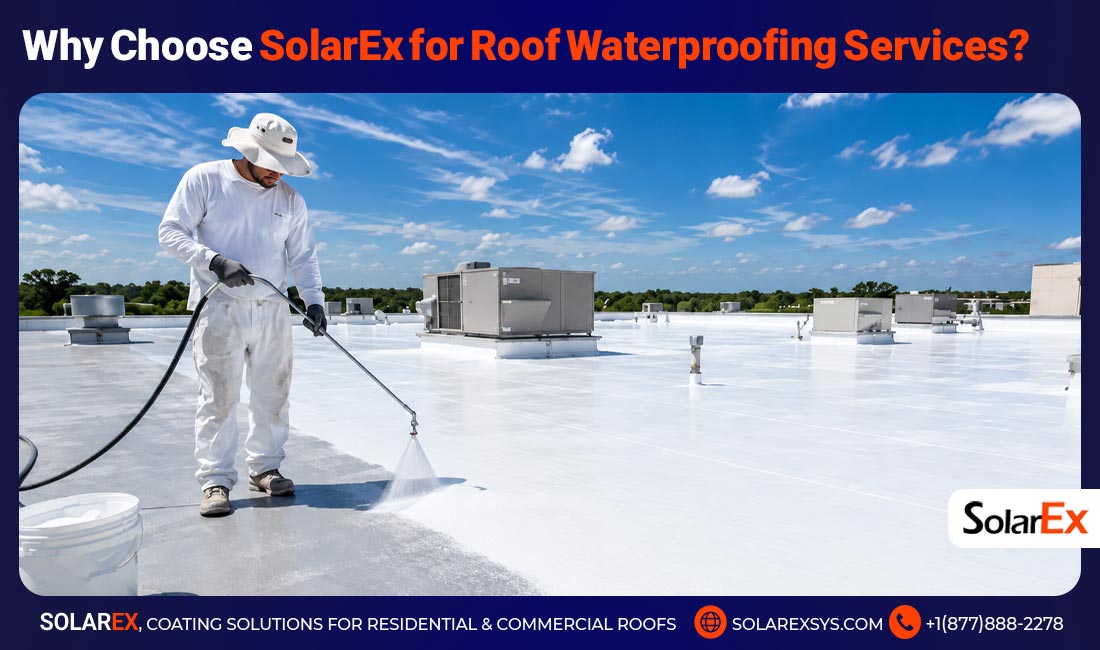
SolarEx Systems focuses on roof restoration rather than treating roof replacement as the only solution. Based in Berkeley, California, the company provides coating systems for residential, commercial, and industrial properties, with options that include silicone, acrylic, reflective, and shingle-restoration solutions. SolarEx also supports projects with material selection, specification assistance, application guidance, contractor support, and bulk purchasing.
For property owners and facility managers, this broader approach makes it easier to match the coating system to the actual roof condition instead of choosing one product for every application. SolarEx also publishes completed project examples, including commercial roof restorations in Pomona, Corona, and San Diego, giving you practical references for different roof substrates and project sizes.
Key Benefits of Choosing SolarEx
- Multiple coating systems: Options are available for flat, low-slope, metal, modified-bitumen, shingle, and other suitable roof surfaces.
- Project-specific guidance: The appropriate system can be selected according to roof condition, exposure, drainage, and restoration goals.
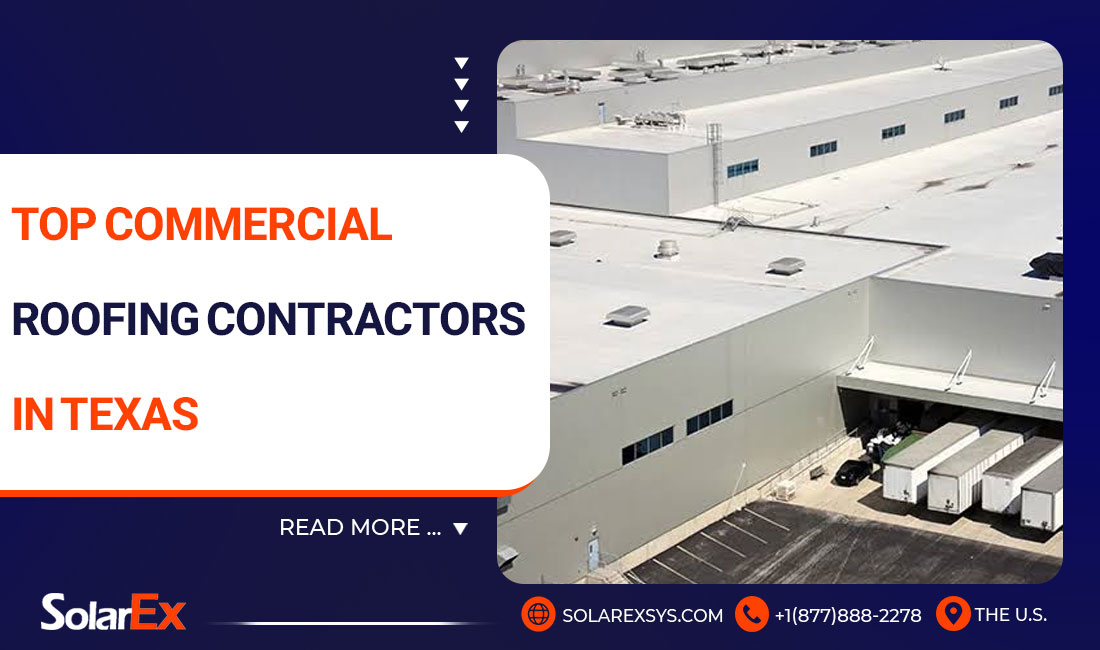
- Support for larger projects: Property owners planning commercial work can explore SolarEx’s Commercial Roofing Contractors services for project-specific support.
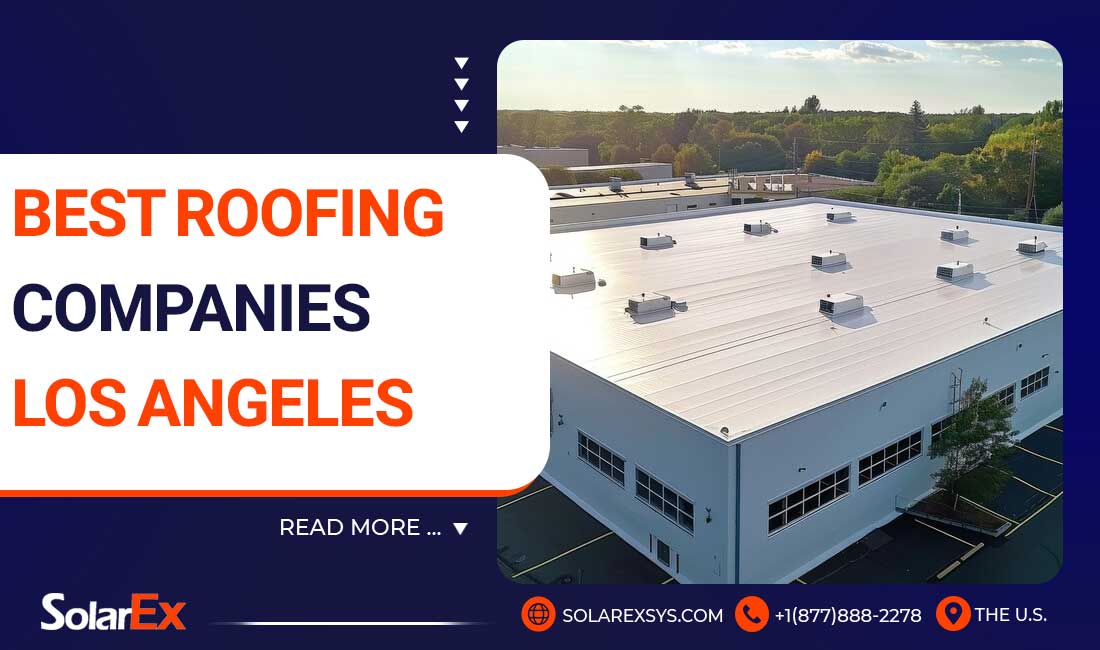
- Documented California projects: If you are comparing Best roofing companies Los Angeles, SolarEx’s published Southern California project records provide useful examples of completed restoration work.
If you are trying to identify the best roof waterproofing coating for your property, SolarEx can help evaluate the roof condition and determine which coating system best fits the project.
Address: 700 Allston Way, Berkeley, CA 94710, USA
Phone: +1 (877) 888-2278
Email: info@solarexsys.com
Conclusion; How Can You Choose the best roof waterproofing coating for Your Project?
The right waterproofing system is the one that matches your roof material, drainage conditions, UV and heat exposure, expected movement, project schedule, and maintenance priorities. Silicone is a strong choice for exposed roofs and areas where ponding water is a concern, while polyurethane works well where flexibility and crack-bridging are important. Polyaspartic and spray-applied polyurea are better suited to projects that require fast curing or heavy-duty performance, acrylic systems can be effective when reflectivity and budget matter, and cementitious coatings are more appropriate for protected concrete or tiled surfaces. Choosing the best roof waterproofing coating should therefore be based on how the roof actually performs and what it is exposed to, not simply on price or product popularity. A properly matched coating can reduce water-related damage, limit unnecessary maintenance, and help extend the useful life of the roof.