


Operations Manager, GreenTech Industries
Operations Manager, GreenTech Industries
Operations Manager, GreenTech Industries
Operations Manager, GreenTech Industries
Recurring leaks, surface wear, and rising maintenance costs do not always mean your entire roof needs to be replaced. Commercial Roof Coating Washington can provide a practical restoration option, but only when the existing system is structurally sound and the selected coating matches the roof material, drainage conditions, and local climate. Before making a decision, you need to understand which products perform well in Washington, how coating compares with replacement, and what determines the final project cost. For more detailed information, stay with us at SolarEx.
What Is Commercial Roof Coating?
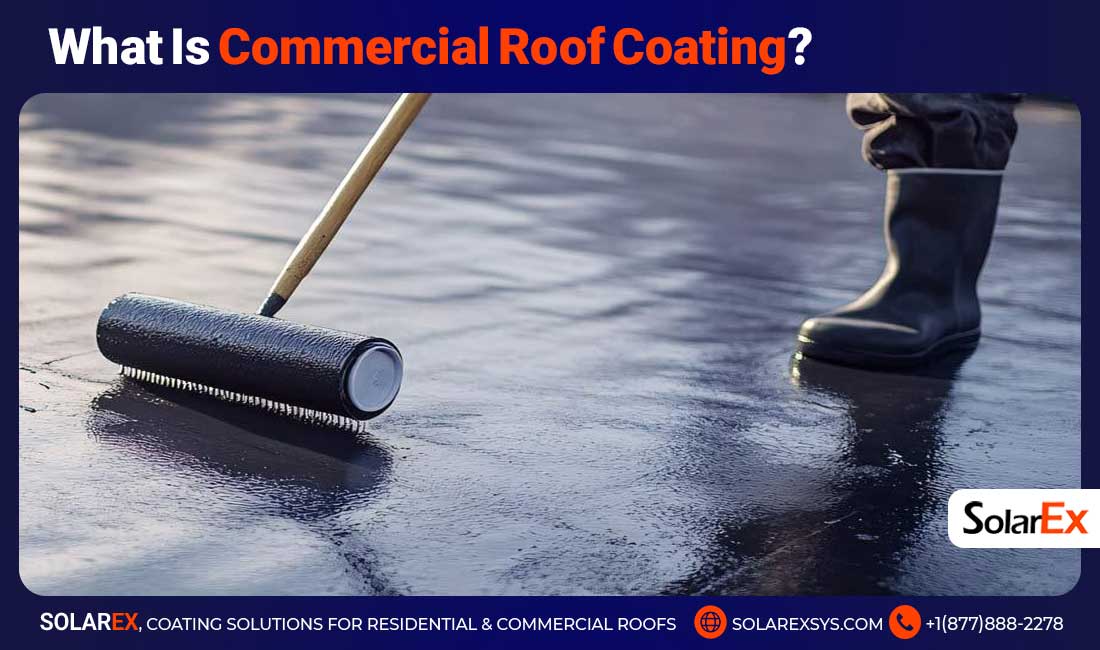
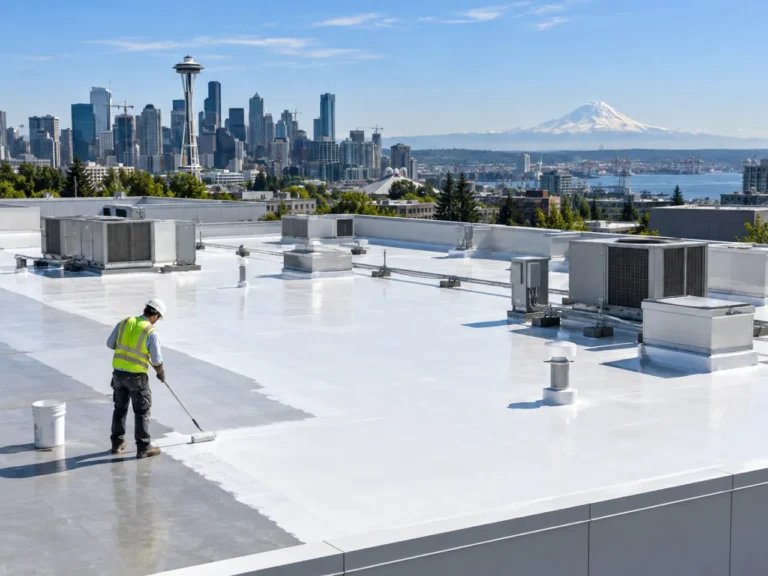
Commercial roof coating is a fluid-applied system installed over an existing flat or low-slope roof to restore its weather-resistant surface. Once cured, the material forms a continuous, fully adhered membrane across seams, fasteners, and other vulnerable areas where moisture may enter. Depending on the substrate and roof condition, the system may also require primer, reinforcing fabric, and additional detailing around penetrations. It is not simply roof paint; it becomes part of the roof’s protective assembly.
Unlike full replacement, a commercial roof coating can often be installed without removing the entire existing system. The roof must still be structurally sound. During a Commercial Roof Coating Washington assessment, the contractor should inspect for trapped moisture, saturated insulation, damaged decking, drainage problems, and loose membrane sections. Coating can restore a weathered surface, but it should not be used to conceal structural deterioration or extensive water damage.
How Does Commercial Roof Coating Work?
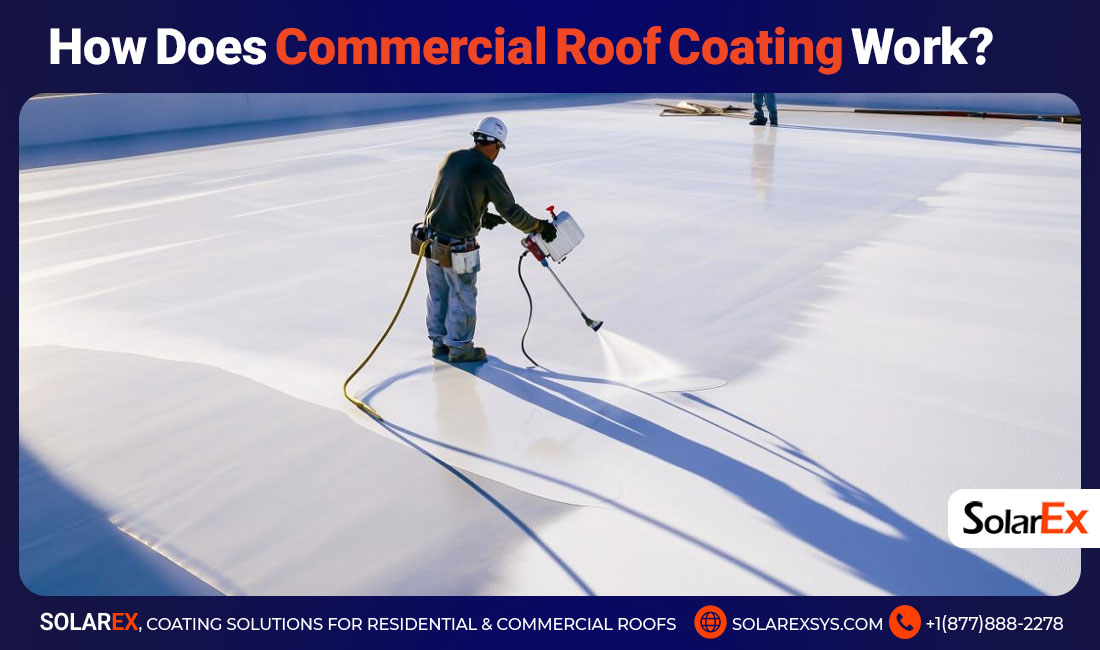
The process begins with a detailed roof inspection. Before any coating is applied, the contractor checks the membrane, insulation, deck, seams, flashing, penetrations, and drainage areas. Dirt and loose material must be removed, while active leaks, damaged sections, and open seams are repaired. Applying a coating over trapped moisture or an unstable substrate can shorten the system’s service life, regardless of product quality.
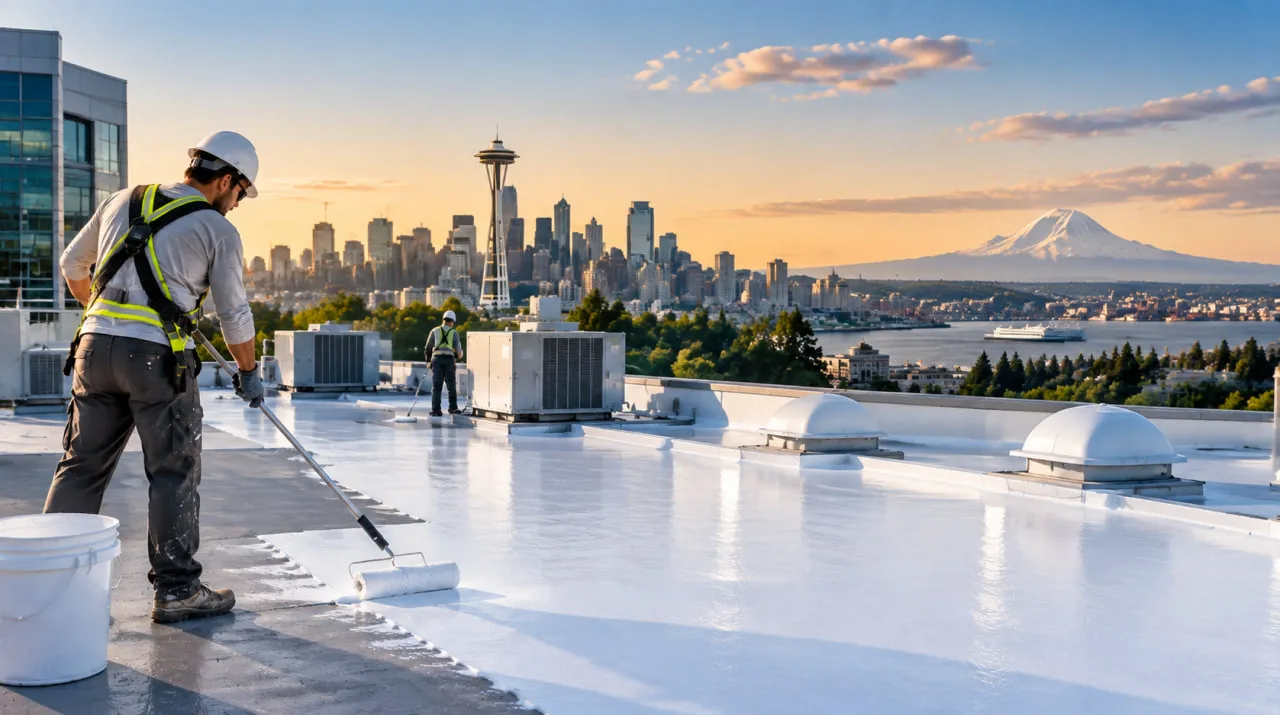
Once the surface is clean, dry, and properly prepared, seams and vulnerable details are reinforced. A compatible primer may also be required, depending on the existing roof material. The selected waterproof roof coating is then sprayed or rolled at the manufacturer’s specified coverage rate. As it cures, it bonds to the substrate and creates a continuous membrane that follows normal roof movement while limiting pathways for water intrusion.
For a Commercial Roof Coating Washington project, application timing matters. Surface temperature, humidity, residual moisture, and the likelihood of rain can all affect adhesion and curing. After installation, the contractor should inspect the finished membrane for consistent coverage, correct thickness, and complete sealing around drains, curbs, edges, and rooftop equipment.
Benefits of Commercial Roof Coating in Washington
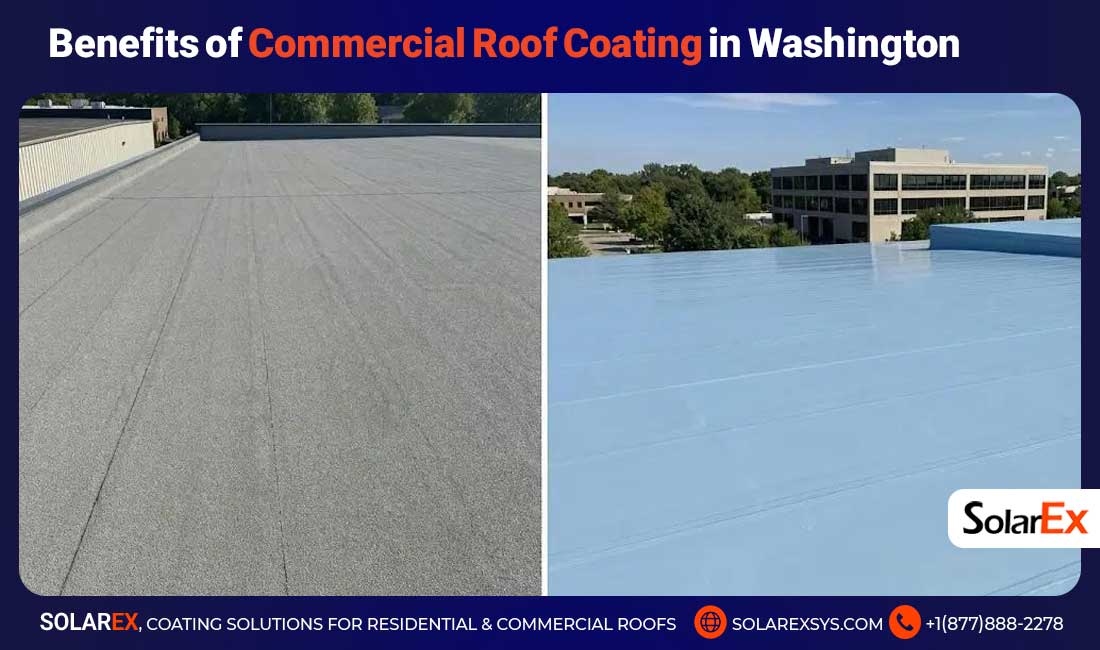
A Commercial Roof Coating Washington system can be a practical choice when the existing roof is weathered but remains structurally sound. Its actual performance depends on the condition of the roof, surface preparation, product compatibility, application thickness, and ongoing maintenance. When checking Commercial Roof Coating Washington reviews, look for projects that identify the original roof type, repairs performed, coating system used, and final inspection process. These details are more useful than broad claims about durability.
Extends Commercial Roof Lifespan
Sunlight, moisture, temperature changes, and foot traffic gradually wear down exposed roofing materials. A coating places a new protective layer over the prepared surface, reducing direct exposure and reinforcing repaired seams and penetrations. Regular inspections are still necessary, but timely recoating can help a serviceable roof remain in use longer before replacement becomes necessary.
Reduces Energy Costs
A light-colored reflective roof coating reduces the amount of solar heat absorbed through the roof. This can lower rooftop temperatures and ease cooling demand, particularly on large, unshaded commercial buildings during Washington’s warmer months. Potential savings vary according to roof color, insulation levels, building use, HVAC efficiency, and location, so the same coating will not produce identical results on every property.
Prevents Roof Leaks
Once existing damage has been repaired, the cured coating creates a continuous membrane over seams, fasteners, and other common entry points for water. This reduces the number of exposed joints where leaks can develop. A coating cannot correct saturated insulation, damaged decking, or poor drainage, which is why moisture testing and repairs must take place before application.
Minimizes Business Disruption
Coating an existing roof usually requires less removal work than a complete replacement. Businesses can avoid much of the noise, debris, material handling, and prolonged roof exposure associated with a tear-off. Installers must still coordinate access, rooftop equipment, odors, and curing times, but the work can often be completed with less interference to daily operations.
Supports Sustainable Building Practices
Restoring a functional roof preserves materials already installed and reduces the amount of roofing debris sent to landfills. Reflective systems may also lower cooling demand, while future recoating can renew the protective surface without replacing the complete assembly. The environmental benefit is strongest when the correct system is selected, installed to specification, and maintained throughout its service life.
Is Commercial Roof Coating Suitable for Washington Climate?
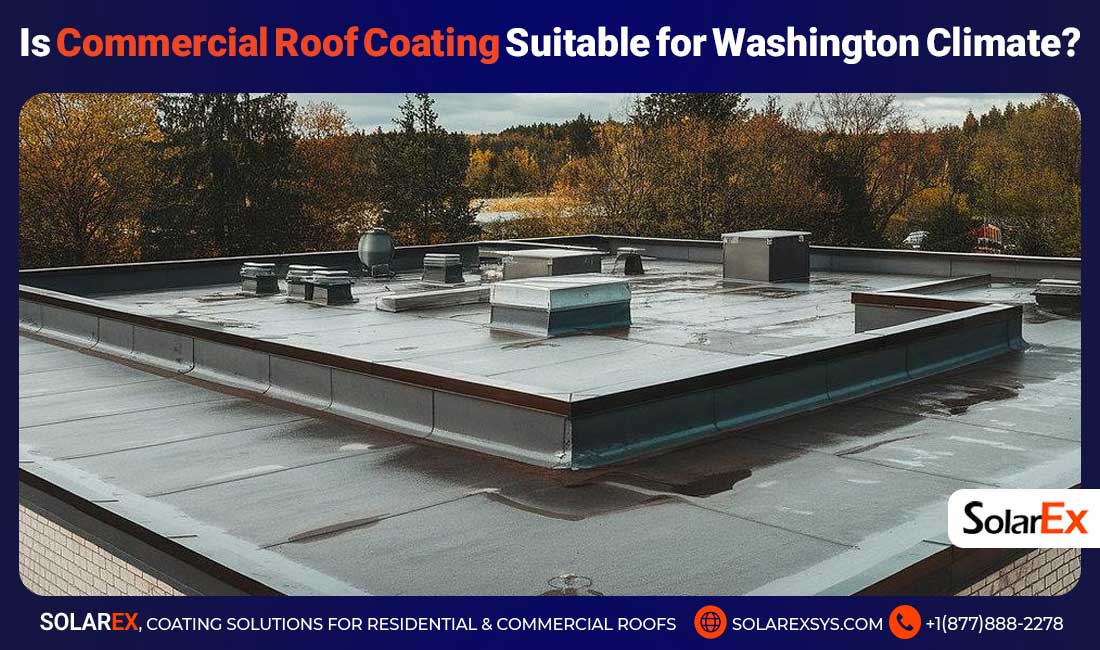
Yes, Commercial Roof Coating Washington can perform well when the system is selected for the building’s location and installed under suitable weather conditions. Washington does not have a single uniform climate. Western areas are generally wetter and milder because of their proximity to the Pacific Ocean, while eastern Washington is drier and experiences greater seasonal temperature variation. The Cascade Range creates much of this difference, so a product that suits Seattle may not be the best choice for Spokane or the Tri-Cities. Washington State Climate Office
In wetter parts of the state, roof drainage, existing moisture, and the condition of seams require close attention. A silicone roof coating may be considered for flat or low-slope roofs exposed to frequent rain or occasional ponding water, provided that the substrate is compatible and properly prepared. Acrylic systems can also be effective on well-drained roofs, but they generally require a reliable dry-weather window during installation and curing.
Contractors working on commercial roofing washington projects should also account for freeze-thaw movement, summer heat, roof expansion, and local wind exposure. The coating must remain flexible, adhere to the existing material, and be applied at the specified thickness. A site inspection and adhesion test are more reliable than choosing a system based only on a broad climate label.
Types of Commercial Roof Coatings in Washington
The best material for a Commercial Roof Coating Washington project depends on the existing roof, drainage performance, moisture exposure, rooftop traffic, and available installation window. Product chemistry matters, but correct preparation and compatibility with the substrate are just as important. If you reached this service while searching for commercial roofing washington dc, confirm the project location before comparing systems; Washington State and Washington, D.C. have different climatic and local code considerations.
Acrylic Roof Coating
Acrylic coatings are typically water-based systems valued for solar reflectivity, UV resistance, low odor, and relatively simple application. A quality acrylic roof coating can work well on commercial roofs with positive drainage, particularly when reducing heat absorption is one of the project goals.
These products need clean, dry conditions during application and enough time to cure before rain or heavy dew. Standard acrylic systems are generally less suitable for areas with persistent ponding water unless the selected manufacturer specifically approves that use. Their lower material cost can be attractive, but drainage and weather timing should guide the decision rather than price alone.
Silicone Roof Coating
Silicone systems cure into a flexible membrane with strong resistance to UV exposure and prolonged moisture. Their ability to tolerate ponding water makes them a practical option for many low-slope commercial roofs in wetter parts of Washington. They can also be applied at a higher film thickness, depending on the product specification and warranty requirements.
The surface may collect dirt over time and can become slippery when wet. Future repairs or recoating also require silicone-compatible materials because many other products will not bond reliably to a cured silicone surface. Adhesion testing, primer selection, and careful detailing around drains remain essential.
Polyurethane Roof Coating
Polyurethane, also called urethane, offers strong resistance to abrasion, impact, and mechanical wear. It is often considered for commercial roofs that receive regular maintenance traffic or have equipment service paths. The material also handles normal expansion and contraction while providing a durable protective surface.
Some polyurethane systems use a tougher aromatic base coat beneath a UV-stable aliphatic finish coat. Formulations, odors, curing requirements, and VOC content vary, so application around occupied facilities requires planning. A contractor should verify compatibility with the existing membrane and follow the specified mixing and application procedures.
Elastomeric Roof Coating
“Elastomeric” describes a coating’s ability to stretch and recover as the roof expands and contracts; it does not always identify a separate chemical family. Acrylic, silicone, and polyurethane products can all have elastomeric properties. In everyday roofing terminology, however, the term often refers to flexible, water-based acrylic systems.
An elastomeric coating can bridge small surface cracks and remain flexible during temperature changes, but it cannot stabilize loose roofing material or span structural gaps. Product data should be reviewed for elongation, tensile strength, approved substrates, weather limitations, and ponding-water resistance before a system is specified.
Best Commercial Roof Types for Coating Applications
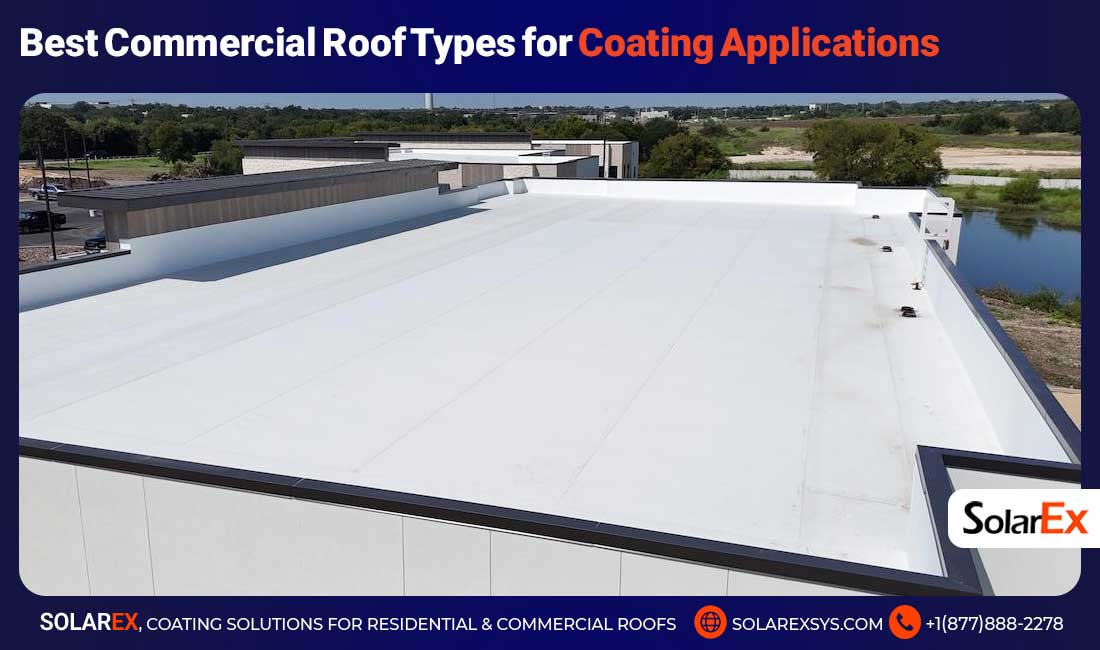
Not every aging roof should be coated. A Commercial Roof Coating Washington system is most reliable when the deck remains structurally sound, the insulation is dry or repairable, and the existing membrane is securely attached. Age alone does not determine eligibility; moisture scans, adhesion testing, drainage assessment, and close inspection of seams provide a clearer picture. For commercial roofing washington projects, the specification should be based on the actual substrate rather than a one-system-fits-all recommendation.
Metal Roofs
Metal roofs are strong coating candidates because their panels often remain serviceable even after seams, fasteners, and surface finishes begin to deteriorate. Preparation may include treating corrosion, replacing loose fasteners, sealing panel laps, and reinforcing penetrations before the main coating is applied.
A compatible elastomeric roof coating can flex as metal panels expand and contract during temperature changes. Coating cannot restore panels with severe corrosion, holes, or structural deformation, so damaged sections must be repaired or replaced first.
TPO and PVC Membrane Roofs
Aged TPO and PVC membranes may be coated when they remain securely attached and free from widespread moisture damage. These smooth thermoplastic surfaces can be difficult to bond to, making manufacturer-approved cleaning, primer, and adhesion testing essential. Open seams, punctures, and loose flashing must be repaired before coating begins.
The selected system should specifically list TPO or PVC as an approved substrate. Building owners should also review the existing membrane warranty because applying an unapproved coating could affect its coverage.
EPDM Roofs
EPDM can develop a chalky surface as it ages, which interferes with adhesion if it is not removed. Thorough cleaning and a compatible primer are often required before coating. The contractor should also repair shrinking membrane edges, separated seams, punctures, and deteriorated flashing.
Coating can provide a reflective finish over a dark EPDM roof, but only after the membrane has been tested for adhesion and underlying moisture. Loose or extensively shrunken sheets may require more substantial restoration work.
Modified Bitumen Roofs
Smooth and granulated modified bitumen roofs can accept several coating systems when the membrane remains dry and stable. Asphaltic oils may migrate into light-colored coatings, causing discoloration or reducing adhesion. A bleed-blocking primer is often used to separate the asphalt surface from the finish coat.
Blisters, open laps, exposed reinforcement, and wet insulation should be addressed before restoration. Granulated surfaces may also require additional material because their texture creates more surface area than a smooth membrane.
Built-Up Roofing Systems
Built-up roofing, commonly called BUR, can be restored with a coating when the multiple asphalt and reinforcement layers remain intact. Smooth-surface systems are usually easier to prepare, while gravel-surfaced roofs require removal of loose aggregate and a restoration approach designed for the remaining texture.
A moisture scan is particularly useful because water can travel between BUR layers without appearing directly below the entry point. Once wet areas, blisters, cracks, and flashing defects are repaired, a compatible primer and coating system can create a renewed protective surface.
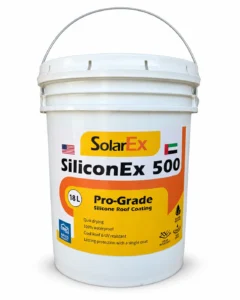
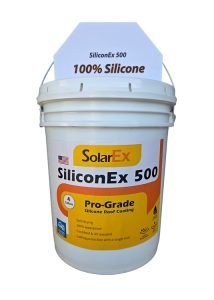
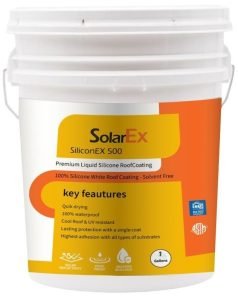
Based on one of our customers’ experiences with SiliconEx 500: “Handles ponding water without issues. Strong choice for restoration jobs.”
Commercial Roof Coating vs Roof Replacement
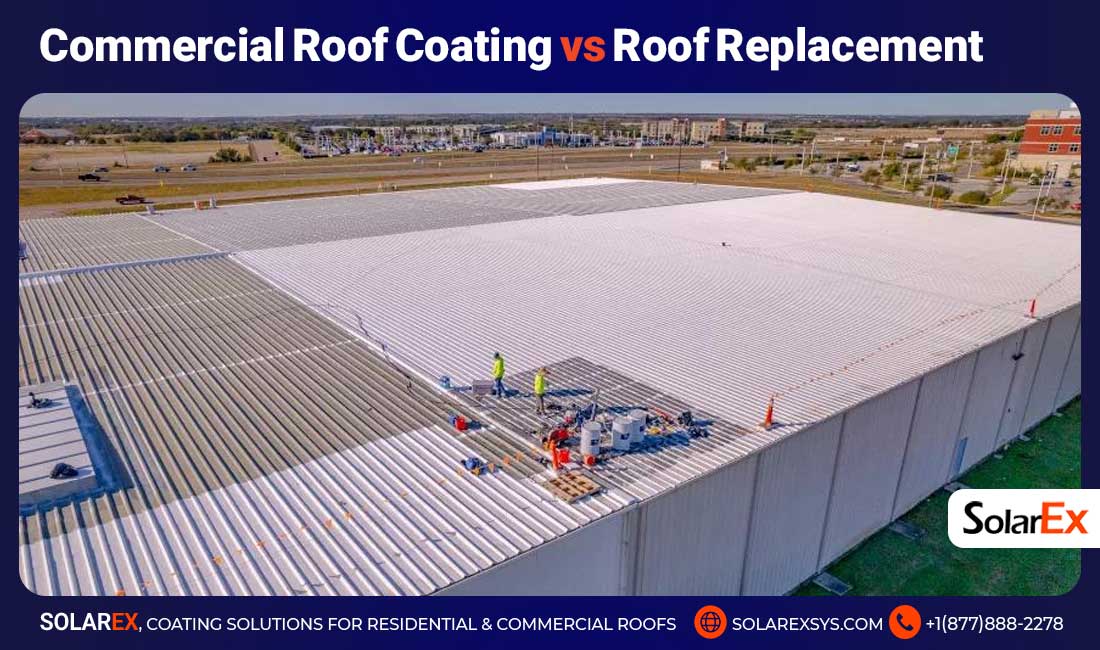
Choosing between Commercial Roof Coating Washington and complete replacement should begin with the roof’s condition, not its age alone. A weathered but dry and structurally stable roof may be restored with coating. Widespread moisture, deteriorated decking, unstable insulation, or extensive membrane failure usually points toward replacement.
Comparison factor | Commercial roof coating | Roof replacement |
Best application | Structurally sound roofs with repairable surface wear | Roofs with widespread failure, wet insulation, or damaged decking |
Project scope | Cleaning, localized repairs, detailing, and coating application | Removal or covering of the old system followed by installation of a new assembly |
Initial investment | Usually lower because less demolition and fewer materials are required | Generally higher due to removal, disposal, labor, insulation, and new roofing materials |
Installation time | Often completed faster, depending on preparation and curing conditions | Usually requires a longer schedule and more extensive site coordination |
Business disruption | Less noise, debris, and material movement around the property | Greater potential for noise, vibration, access restrictions, and operational interruption |
Structural repairs | Cannot correct major deck or insulation failure | Allows damaged components to be exposed and replaced |
Energy performance | A reflective surface may reduce solar heat absorption but does not automatically increase insulation value | Provides an opportunity to upgrade insulation, drainage slope, and the complete roof assembly |
Construction waste | Preserves most of the existing roof and produces less tear-off debris | Produces more waste when the existing system must be removed |
Service period | Extends the usable life of a qualifying roof; duration depends on the system and maintenance | Begins a new roof service cycle with performance based on the selected assembly |
Future maintenance | Requires inspections, cleaning, repairs, and eventual recoating | Still requires routine inspections and repairs throughout its service life |
Main limitation | Suitable only when the existing assembly can support restoration | Higher cost, longer installation, and more disruption |
Coating is not automatically the better financial choice. Extensive repairs, poor drainage, or large areas of wet insulation can make restoration inefficient. When comparing Commercial Roof Coating Washington reviews, check whether each project began with a roof similar to yours. Results from a dry metal roof cannot be used to predict the outcome for a saturated built-up system.
Information found under commercial roofing washington dc should also be evaluated carefully, as labor conditions, building requirements, and climate considerations in Washington, D.C. do not directly represent projects in Washington State.
Steep-slope asphalt roofs require a separate assessment. A shingle roof coating uses different products and preparation methods from coatings designed for flat commercial membranes, so the two systems should not be treated as interchangeable.
Commercial Roof Coating Washington Cost
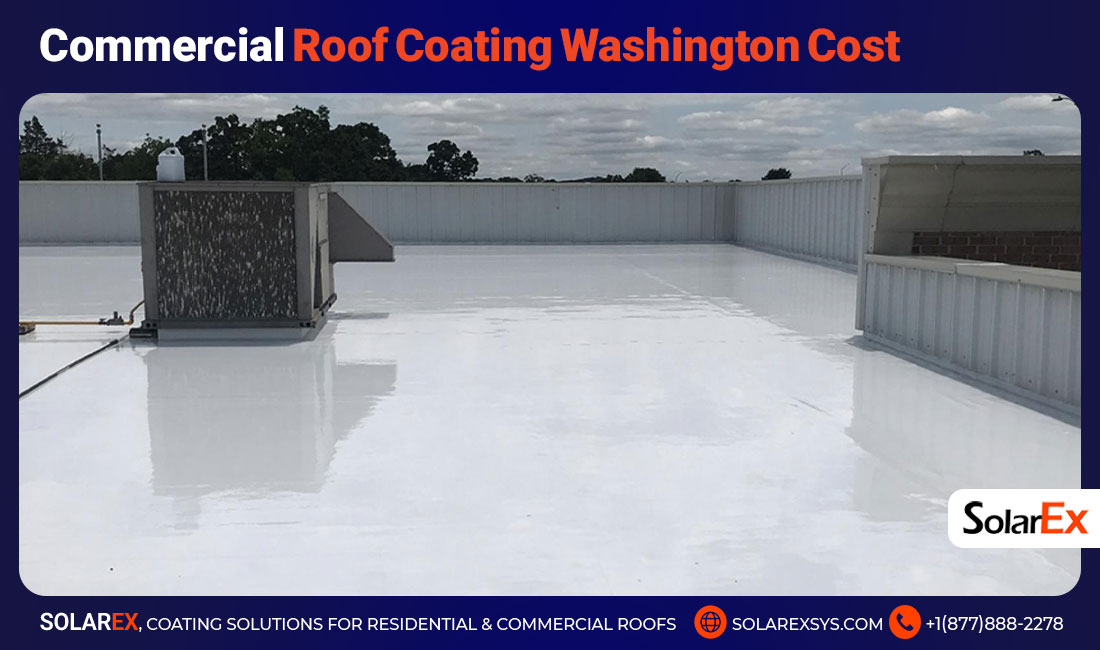
The Commercial Roof Coating Washington cost depends on the roof’s size, condition, accessibility, and required coating system. A fixed price per square foot can be misleading because repairs and preparation vary between buildings.
The main cost factors include:
- Total roof area and accessibility
- Existing leaks, wet insulation, or membrane damage
- Cleaning and surface preparation
- Roof material and primer requirements
- Coating type and application thickness
- Seams, drains, penetrations, and rooftop equipment
- Labor, warranty, and inspection requirements
SolarEx offers competitive project-based pricing while using professional-grade, USA-manufactured materials. Each system is selected according to the roof substrate and actual condition, helping you avoid paying for an unsuitable product or incomplete application. To compare Commercial Roof Coating Washington cost, request an itemized estimate covering repairs, primer, coating thickness, labor, and warranty.
Prices associated with commercial roofing washington dc should not be used for Washington State projects because regional labor, climate, and installation requirements differ.
Best Commercial Roof Coating Washington
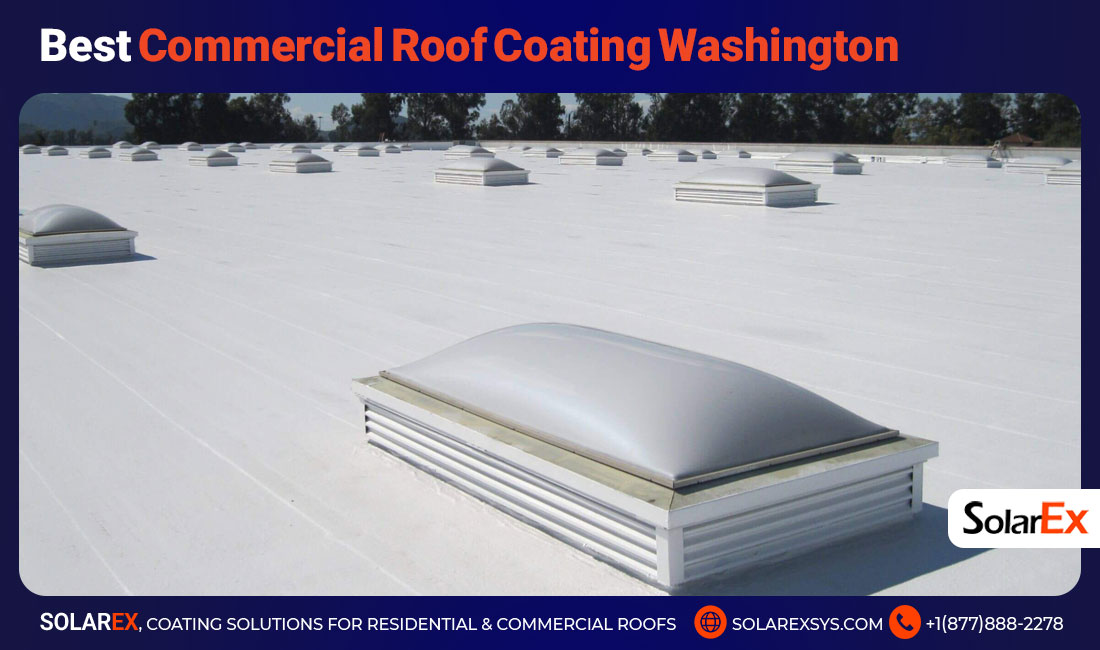
The best Commercial Roof Coating Washington solution is not a single product for every building. At SolarEx, we evaluate the existing substrate, drainage, moisture exposure, roof condition, and performance goals before recommending a coating system.
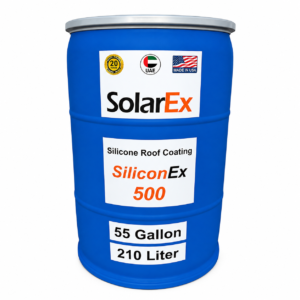
Our commercial product range includes SiliconEx 500 for flat and low-slope roofs exposed to moisture or ponding water, SolarEx 300 for reflective protection on compatible surfaces, and ElastEx 200 for flexible waterproofing and priming applications. We support commercial roofing washington projects with product selection, technical guidance, bulk coating supply, and application recommendations.
Why Choose SolarEx?
- Professional-grade coatings manufactured in the USA
- Systems selected according to your roof type and local conditions
- Silicone, acrylic, reflective, and elastomeric coating options
- Guidance on surface preparation, primers, and application thickness
- Bulk quantities for commercial and industrial projects
- Competitive, project-specific pricing
- Technical support before and during application
When comparing Commercial Roof Coating Washington reviews, look for information about the original roof, preparation process, coating thickness, and product used. At SolarEx, we focus on these practical details so you can choose a system based on your roof’s actual needs rather than broad sales claims.
Contact us to discuss your commercial roof, compare suitable SolarEx products, and request a project-specific estimate.
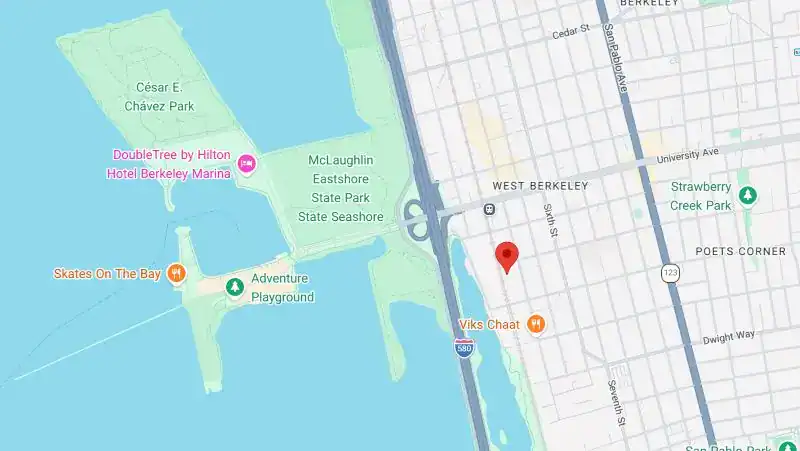
- Address: 700 Allston Way Berkeley, CA 94710, USA
- Phone: +1 (877) 888-2278
- Email: info@solarexsys.com
Conclusion; When Should Your Building Choose Commercial Roof Coating Washington Instead of a Complete Replacement?
Commercial Roof Coating Washington is a practical choice when your existing roof remains structurally sound, moisture damage is limited, and the surface can support a compatible coating system. If the deck has deteriorated, insulation is widely saturated, or the membrane has failed across large areas, replacement is likely the safer long-term decision. Base your choice on professional inspection, moisture testing, drainage performance, and a detailed project scope. A properly specified coating can delay tear-off, reduce operational disruption, and restore protection, but it should never be used to cover unresolved roof damage.
Frequently Questions Commercial Roof Coating Washington
How Do We Know If Our Commercial Roof Can Be Coated?
We should begin with an inspection and moisture test. If the deck is sound, the membrane remains attached, and existing leaks can be repaired, coating may be a suitable option. Widespread wet insulation or structural damage usually means we should consider replacement.
How Long Can a Commercial Roof Coating Last in Washington?
We cannot assign one lifespan to every system. Coating type, application thickness, drainage, roof condition, installation quality, and maintenance all affect durability. Depending on the specified system, we may find warranty periods of 10, 15, or 20 years.
What Affects the Commercial Roof Coating Washington Cost?
The Commercial Roof Coating Washington cost depends on roof size, surface preparation, required repairs, primer, coating material, application thickness, accessibility, and warranty. We should compare itemized estimates rather than choosing a contractor based only on the lowest total price.