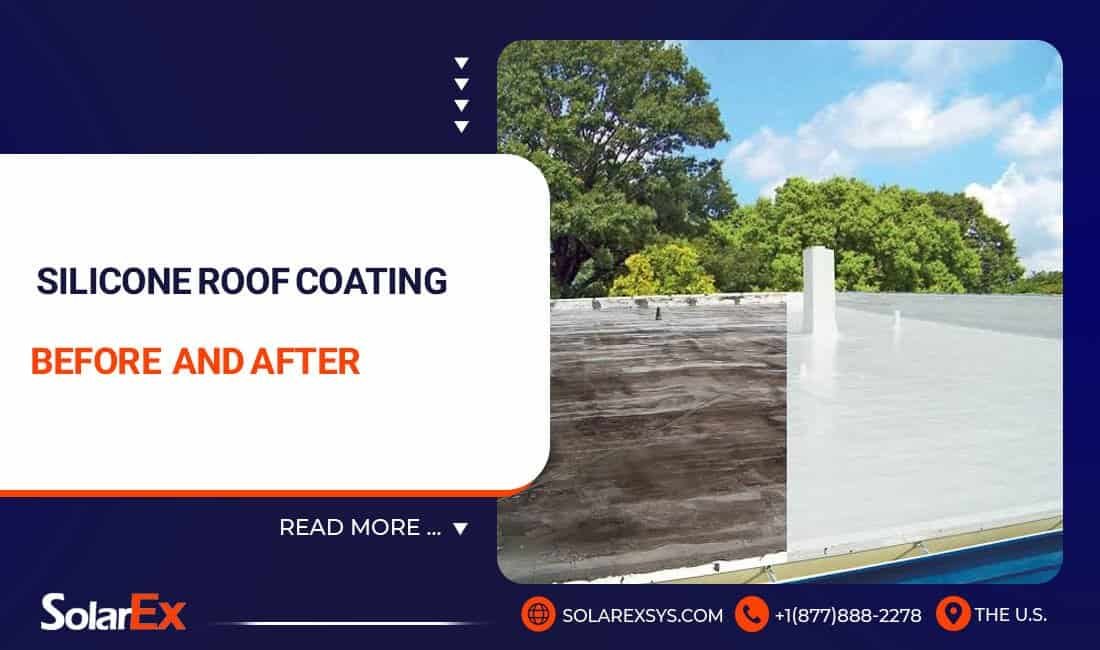

If your roof is leaking or showing its age, replacing the whole thing isn’t your only option. Coating it with silicone is an effective way to seal every leak, withstand harsh weather, and extend your roof’s life without the significant cost of a tear-off. Looking at real silicone roof coating before and after results quickly reveals how much a simple restoration can transform a property. Stay with the SolarEx team to learn how this system works and see if it’s the right fit for your building.
what is silicone roof coating?
If you want to protect your property’s roof and extend its lifespan, understanding silicone roof coating is a great place to start. Applied as a seamless liquid layer—either rolled or sprayed it adheres directly to various substrate materials, including metal, asphalt, EPDM, PVC, concrete, modified bitumen (MBUR), and asphaltic built-up (BUR) roofs. This application process usually requires one or two coats to form a unified protective barrier that effectively seals seams, covers blisters, and fills surface imperfections. While it delivers exceptional protection against harsh environmental elements, it is important to note that a silicone coating does not add thermal insulation or change the structural integrity of your roof.
The true strength of silicone lies in its superior resistance to weather-induced damage. It serves as an effective waterproof shield that stops active leaks and protects your roofing materials from damaging UV radiation, which typically breaks down standard substrates over time. Furthermore, unlike many alternative sealants that degrade under constant water exposure, silicone can continuously endure standing water without breaking down.
Property owners generally turn to silicone restoration when a roof is still structurally sound but exhibits visible signs of age and weathering. By applying the proper film thickness, you can extend your roof’s functional lifespan by 10 to 20 years or more. Manufacturers typically align their warranty coverage directly with application thickness; for instance, a standard 20-mil layer often carries a 10-year warranty, while a thicker 30-mil application can secure reliable coverage for up to 20 years.
Types of Reflective Roof Coatings
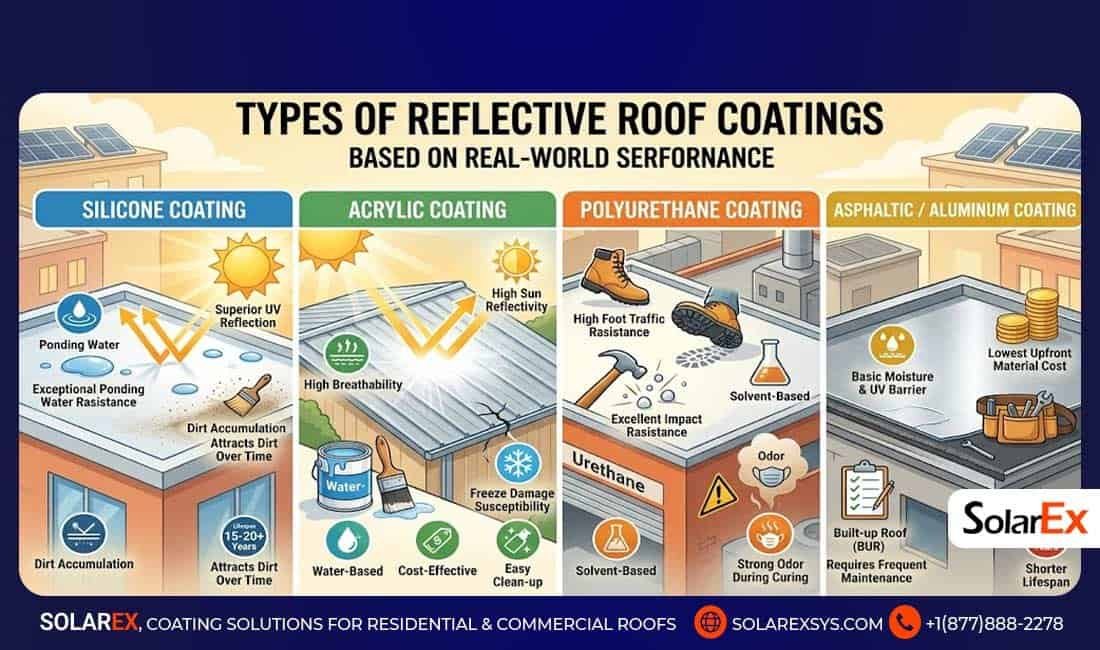
Understanding the different types of reflective roof coatings is essential for choosing the best solution for your commercial or residential property. Selecting the right coating material depends on your local climate, roof slope, budget, and specific exposure to standing water or UV intensity. By learning how each major reflective coating behaves under real-world conditions, you can make a well-informed decision that delivers maximum energy savings and long-term structural protection.
To help you compare your options at a glance, here is a detailed breakdown of the most common reflective roof coatings available today:
|
Coating Type |
Primary Material Base | Key Strengths & Best Features | Primary Limitations | Average Lifespan | Ideal Applications |
| 1. Silicone | 100% High-Solids Silicone | Exceptional resistance to ponding water, high UV reflection, and long-term weatherproofing without cracking. | Attracts dirt slightly over time; difficult to recoat with non-silicone products. | 15 – 20+ Years |
Flat or low-slope roofs with frequent standing water or severe sun exposure. |
|
2. Acrylic |
Water-Based Acrylic Elastomers | High initial sun reflectivity, cost-effective, easy clean-up, and highly breathable. | Degrades quickly under standing or ponding water; susceptible to freezing temperatures. | 7 – 12 Years | Well-drained sloped roofs, metal roofs, and moderate dry climates. |
| 3. Polyurethane (Urethane) | Solvent-Based Polymer (Aromatic / Aliphatic) | Superior tensile strength, extreme impact resistance, and excellent tolerance for high foot traffic. | Higher material and labor costs; strong odor during initial curing. | 10 – 15 Years |
High-traffic commercial roofs, heavy equipment zones, and hail-prone areas. |
|
4. Asphaltic / Aluminum |
Petroleum-Based Asphalt Emulsion with Aluminum Pigments | Lowest upfront material cost; provides basic moisture and UV barrier. | Lower heat reflectivity compared to silicone/acrylic; requires frequent maintenance. | 3 – 7 Years |
Budget-conscious repairs on existing built-up (BUR) or modified bitumen roofs. |
silicone roof coating before and after
Seeing actual project results is the best way to understand how a professional restoration completely transforms a weathered surface into a seamless, watertight defense. Below, we have gathered a few standout examples so you can evaluate the Best silicone roof coating before and after results and see why property owners in Silicone roof coating before and after california projects choose this solution.
Solarexsys Silicone Roof Coating
At SolarEx, we provide a complete energy solution by combining advanced solar technology with high-performance cool roof coatings to maximize your energy savings and protect your property. By first reducing heat absorption with reflective silicone layers and then generating clean power, we deliver global expertise from California’s Bay Area to every project. Reviewing our dramatic silicone roof coating before and after results shows how we help homeowners and businesses lower indoor temperatures, cut AC costs, and boost overall solar efficiency. Here are some of the key benefits of our services:
Why Choose SolarEx?
Discover the benefits that make SolarEx the smart choice for energy-efficient, sustainable building solutions:
- 20% Cooling Cost Reduction: Our reflective coatings significantly reduce indoor temperatures, cutting your energy bills by up to 20%.
- Eco-Friendly & Low-VOC: Formulated with low volatile organic compounds, SolarEx products are completely safe for the environment and your family.
- Long-Term Durability: Built to withstand harsh weather, intense UV exposure, and heavy rain over time without peeling or cracking.
- Compatible with Solar Panels: Designed to work seamlessly under solar systems, improving solar panel efficiency by keeping roof surfaces cooler.
“A commercial facility manager in San Jose reached out to us after facing recurrent seam leaks and rising cooling bills on a 15,000 sq. ft. modified bitumen roof. By examining notable Silicone roof coating before and after USA case studies, they chose our high-solids silicone system over a full tear-off eliminating all active leaks, dropping peak indoor temperatures by 12°F, and cutting AC power consumption by 18% in the first season alone.”
- Address: 700 Allston Way, Berkeley, CA 94710, USA
- Phone: +1 (877) 888-2278
- Email: info@solarexsys.com
Conclusion: Is a Silicone Coating the Right Investment for Your Roof’s Long-Term Protection?
Choosing to restore your roof with a liquid-applied elastomeric barrier bridges the gap between costly full replacements and temporary surface patch-ups. By creating a seamless, fully adhered defense against harsh solar radiation and chronic ponding water, this restoration method effectively halts structural degradation while cutting operational energy costs. When you evaluate silicone roof coating before and after results, the dynamic shift from a cracked, weather-beaten substrate to a durable, heat-reflective surface demonstrates a clear path toward extending functional roof performance by decades with minimal ongoing maintenance.
FAQ : silicone roof coating before and after
How long will a silicone roof coating last?
With correct application and routine checkups, a silicone system provides reliable protection for 10 to 20+ years. The exact duration depends on the initial layer thickness and local weather exposure.
How many coats of silicone roof coating are needed?
Most projects need only a single thick layer to achieve complete coverage. Unlike water-based products, silicone keeps its thickness in warm weather, making the process faster and saving you money on labor.
How many times can you coat a roof?
You can re-coat a flat roof every 7 to 15 years as long as the underlying structure remains solid. Reviewing Silicone roof coating before and after pictures shows how adding a fresh layer restores seal integrity, while examining Silicone roof coating before and after photos confirms.