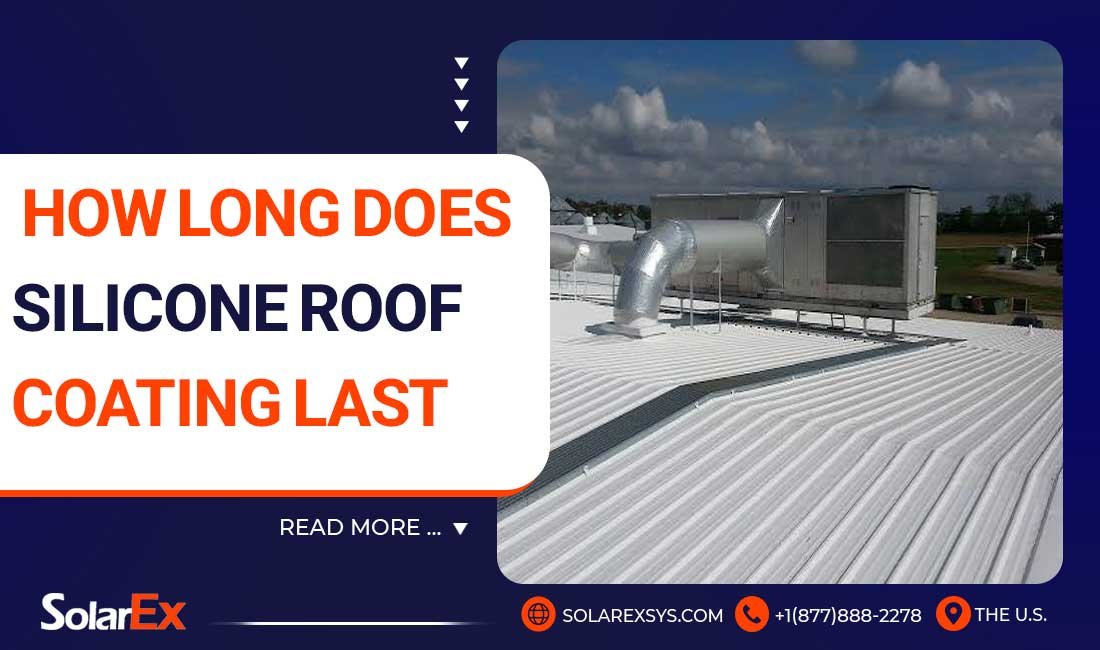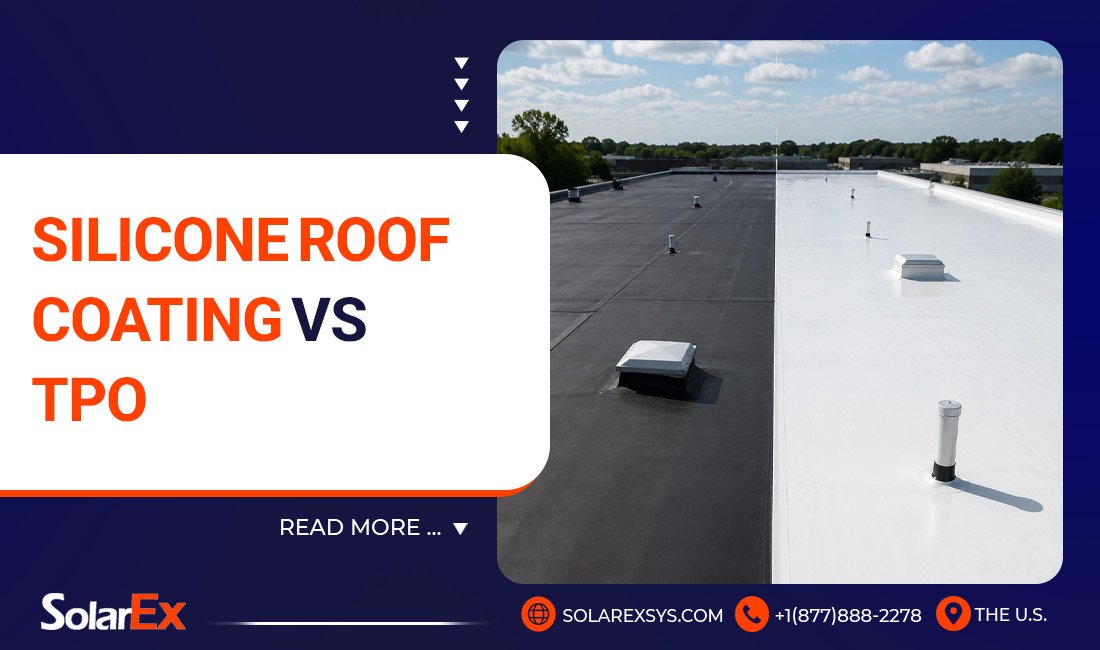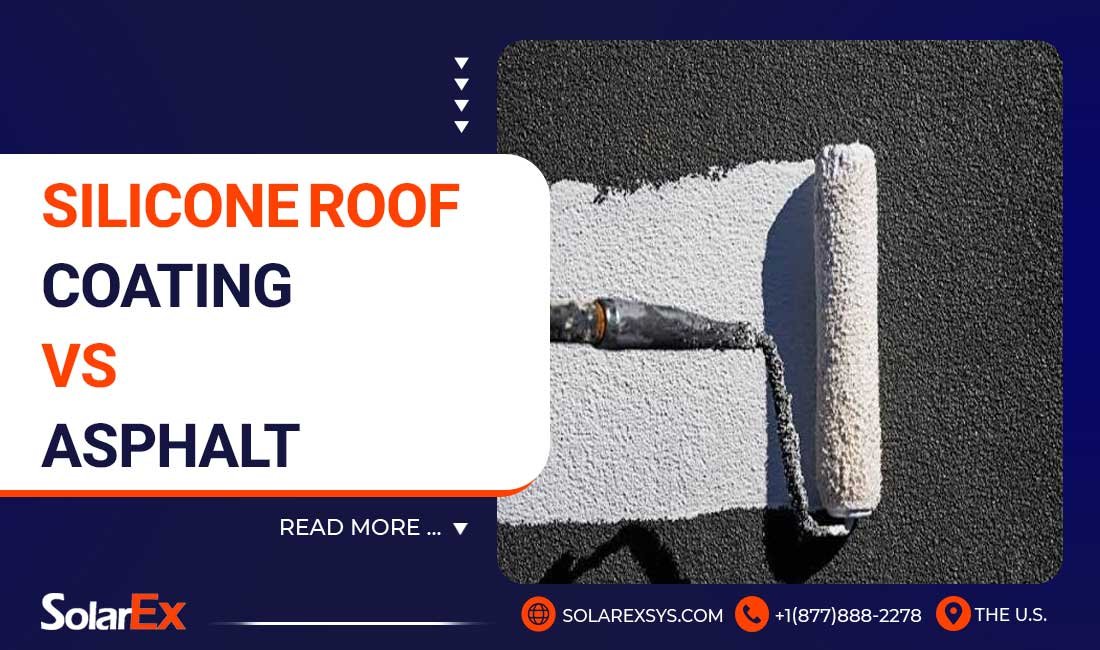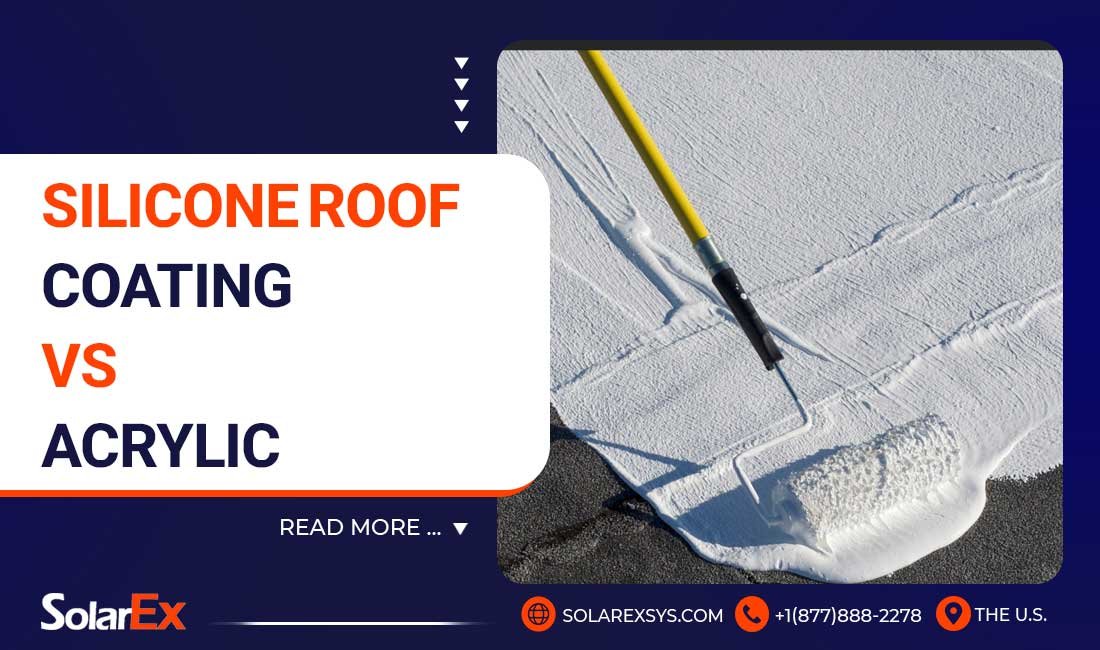

Selecting the appropriate coating for your roof is an important decision, particularly since different materials perform quite differently under rain, heat, and sun exposure. Whether your goal is to reduce summer cooling costs, address minor leaks, or extend your roof’s lifespan without a costly replacement, choosing the right material can save you both time and money. Comparing silicone roof coating vs elastomeric options allows you to understand exactly how each material performs under real weather conditions, helping you select the best fit for your building. Below, our team at SolarEx presents a comprehensive comparison to help you make an informed decision.
What Is Silicone Roof Coating?
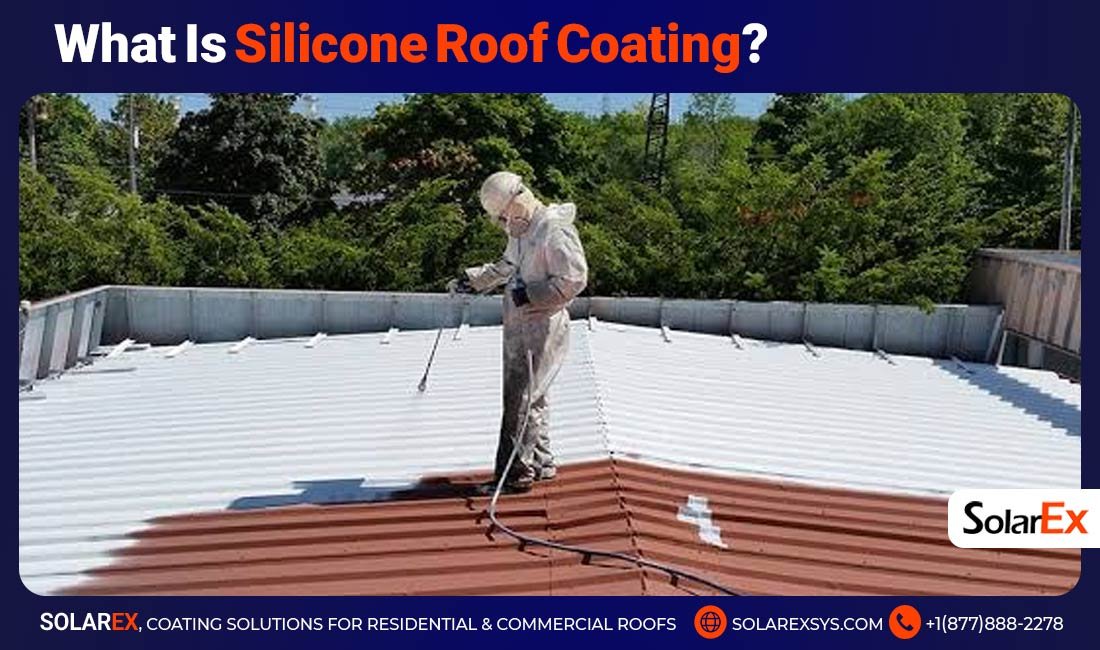
Silicone roof coating is formulated primarily from robust silicone polymers, delivering a seamless, highly durable, waterproof shield over commercial and residential roofs. What sets silicone apart is its unmatched resistance to ponding water, making it the industry standard for flat roofs or surfaces with low drainage slopes where rainwater tends to pool.
Chemically engineered to withstand extreme environment factors, it delivers exceptional UV resistance that reflects harsh solar rays and prevents thermal degradation. Unlike traditional sealants, silicone retains its original flexibility and adhesion over decades, refusing to crack, peel, or chalk under seasonal temperature shifts.
When property owners evaluate elastomeric roof coating vs silicone roof coating, ease of installation stands out as a major benefit. Silicone can often be applied directly over existing roofing systems with minimal surface preparation, eliminating the labor and costs of a complete tear-off.
However, when you compare silicone roof coating vs elastomeric roof coating, you will notice a few trade-offs. Silicone comes at a higher upfront cost per square foot, and its smooth finish can become slick when wet, requiring designated walkways for maintenance traffic.
What is silicone roof elastomeric?
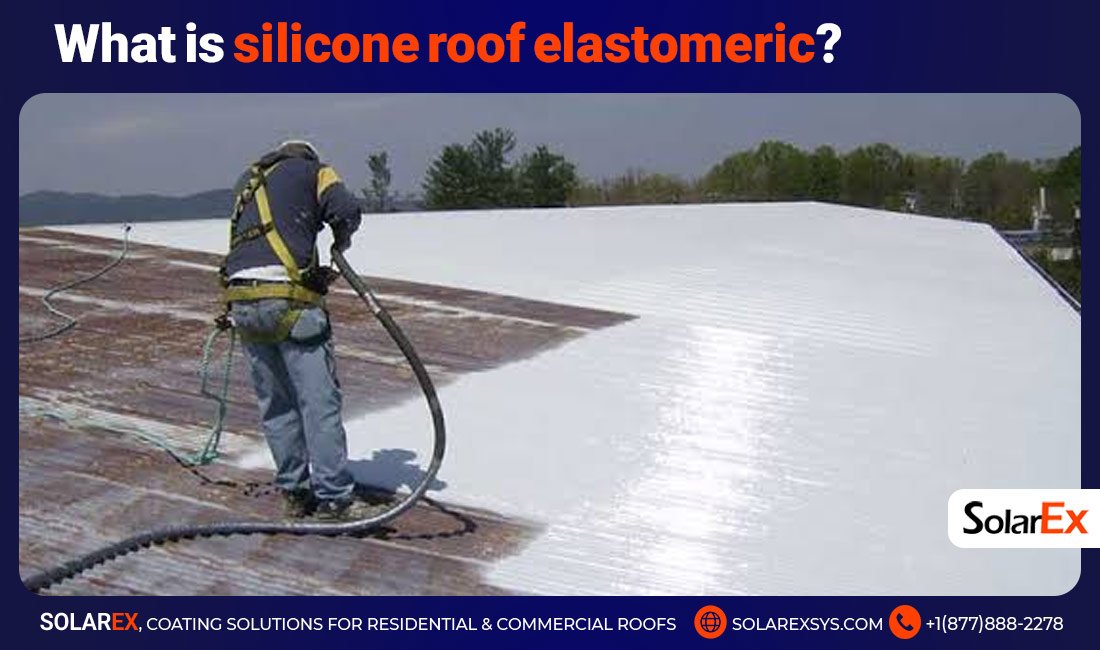
Elastomeric roof coating is an advanced liquid membrane that cures into an elastic, rubberized protective layer over your roof. Formulated from premium acrylic, silicone, or polyurethane polymers, this coating is defined by high tensile strength and superior elongation properties.
The key strength of an elastomeric membrane is thermal movement. It seamlessly expands during daytime heat and contracts as temperatures drop at night, preventing structural cracks and surface ruptures. It is widely applied over metal roofs, modified bitumen, and built-up roofing (BUR) systems where durable flexibility is essential.
In solar energy efficiency, elastomeric formulas act as high-performance cool roofs. By reflecting up to 85% of solar radiation back into the atmosphere, they lower interior temperatures and cut summer air conditioning expenses.
Understanding the difference between elastomeric and silicone roof coating is critical when evaluating drainage. While acrylic-based elastomeric coatings deliver budget-friendly solar protection, they degrade under continuous standing water. If your roof experiences frequent water ponding, selecting the proper polymer formula is vital for long-term performance.
Advantages and Disadvantages of Silicone Roof Coating
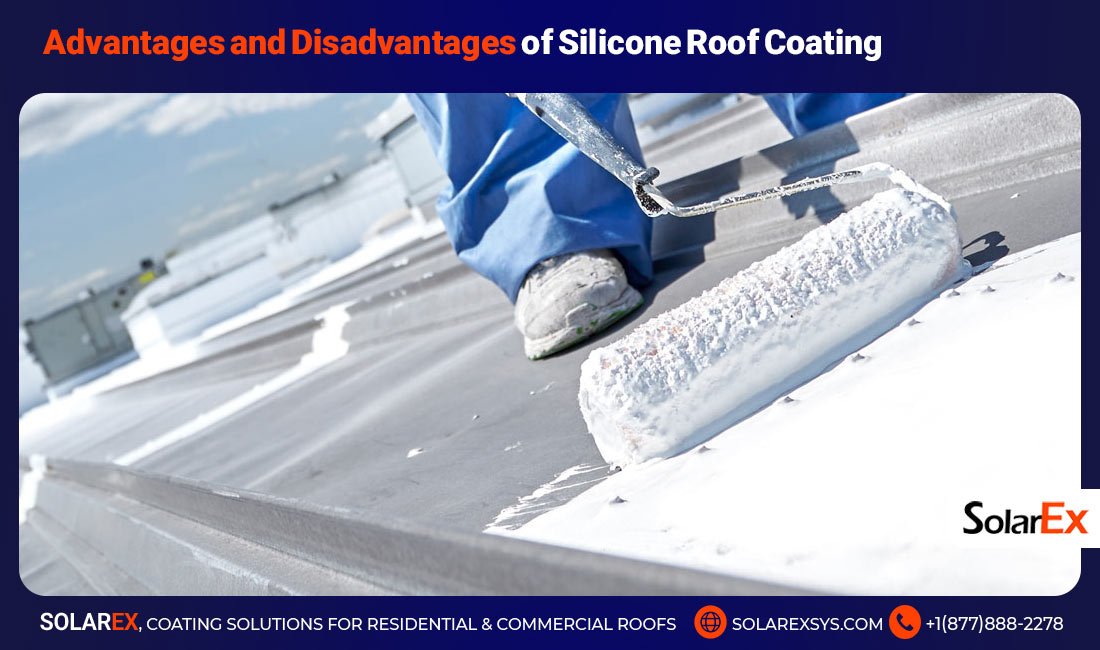
While silicone roof coatings deliver outstanding long-term performance, evaluating both their key advantages and potential drawbacks will help you decide if this material fits your project goals.
Advantages of Silicone Coatings
- Superior Waterproofing: Provides unbeatable resistance against severe ponding water, making it the top choice for flat roofs with poor drainage.
- Exceptional UV Protection: Highly resistant to continuous sun exposure, ensuring long-term durability without chalking, cracking, or fading.
- Low Maintenance Needs: Requires very few repairs over time, which significantly reduces overall lifecycle maintenance costs.
- Extended Service Life: Lasts between 15 to 20 years when properly applied under optimal conditions.
- Single-Coat Application: Often achieves full coverage in a single coat, saving substantial labor and material expenses during installation.
Disadvantages of Silicone Coatings
- Higher Initial Cost: Entails a higher upfront material investment compared to standard acrylic or elastomeric coatings.
- Slippery Surface: Becomes hazardous and slick when wet, requiring safety precautions or dedicated walkways for maintenance personnel.
- Dirt and Dust Accumulation: Attracts environmental grime over time, which can lower thermal reflectivity unless cleaned periodically.
- Limited Color Palette: Usually restricted to standard functional shades such as white or light gray.
- Complex Recoating Process: Future recoating requires specific silicone primers or thorough surface prep, as traditional coatings will not adhere to existing silicone.
Advantages and Disadvantages of Elastomeric Roof Coating
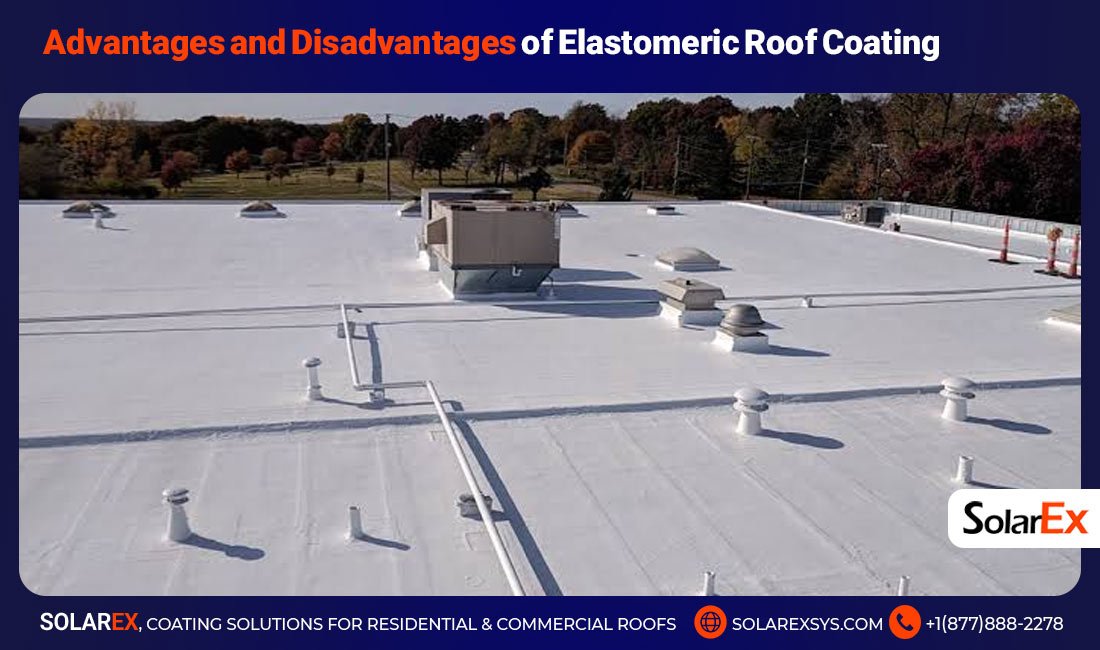
Choosing an elastomeric membrane comes down to balancing immediate budget savings with the specific climate demands of your building.
Advantages of Elastomeric Coatings
- Lower Material Expenses: Costs significantly less per gallon than silicone solutions, making it an appealing option for large surface areas.
- Superior Thermal Elasticity: Accommodates constant building expansion and contraction caused by daily temperature swings without tearing or cracking.
- Energy-Saving Reflectivity: Highly effective at bouncing solar rays away from your roof, noticeably lowering interior cooling costs during summer.
- Versatile Application Methods: Easily applied using standard rollers, brushes, or industrial sprayers for a fast installation process.
- Environmentally Friendly Choices: Readily available in low-VOC formulations that meet strict regional compliance and environmental guidelines.
Disadvantages of Elastomeric Coatings
- Low Ponding Water Tolerance: Tends to break down and blister when exposed to standing water for long periods, limiting its use on flat roofs with poor drainage.
- Shorter Protection Cycle: Generally lasts between 5 to 10 years, requiring earlier re-application compared to higher-end sealants.
- More Frequent Upkeep: Needs regular inspections and cleaning cycles to preserve its protective seal and structural integrity.
- Sensitivity to Surface Contaminants: Demands deep cleaning and priming prior to installation, as dirt or oils can undermine its adhesive bond.
- Gradual Weathering Concerns: Prolonged exposure to harsh sunlight can cause chalking and surface wear, slowly decreasing its reflectivity over time.
silicone roof coating vs elastomeric
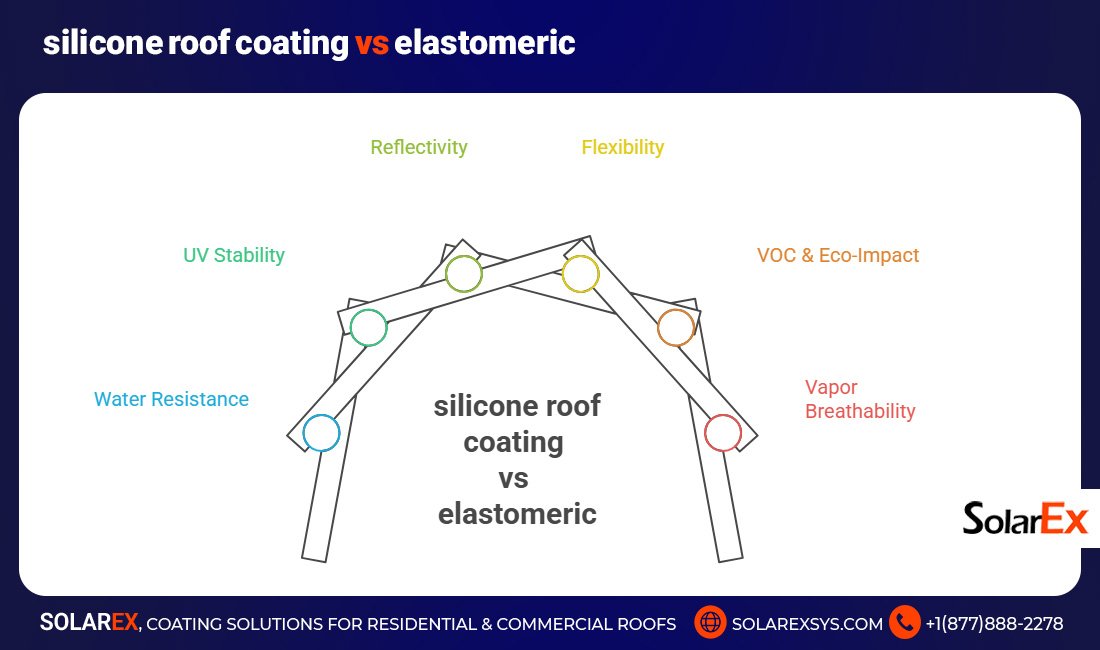
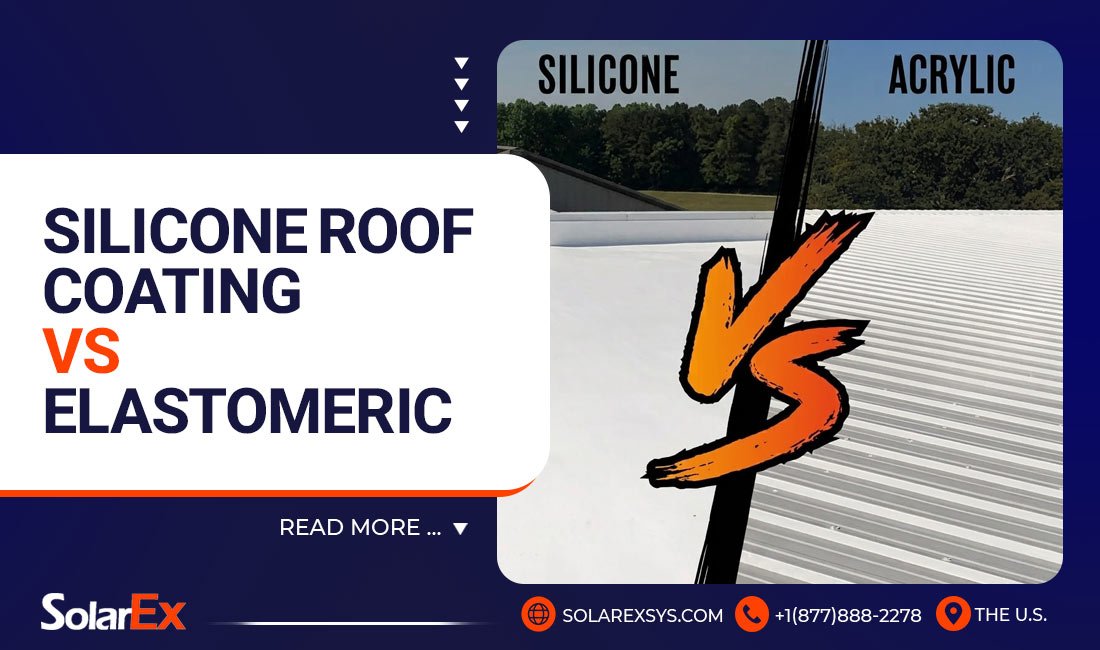
Although both materials act as high-performance protective shields for your building, evaluating elastomeric roof coating vs silicone across key operational metrics will help you determine the best long-term option for your specific roofing environment.
|
Performance Metric |
Silicone Roof Coating | Elastomeric Roof Coating |
| Water Resistance | Superior endurance against chronic ponding water without breaking down or absorbing moisture. |
Prone to moisture absorption over time, making it less effective on flat surfaces with standing water. |
|
UV Stability |
Exceptionally stable under continuous solar radiation; resists cracking, chalking, and premature aging. | Offers solid UV protection, though prolonged heat exposure can cause gradual surface chalking. |
| Reflectivity | Retains high solar reflectivity over many years due to excellent surface resilience. |
Reflects heat effectively, but reflectivity can drop as the surface weathers or attracts dirt. |
|
Flexibility |
Delivers reliable flexibility across freezing and burning thermal cycles over its full lifespan. | Features higher elongation capacity, expanding seamlessly on roofs with heavy structural movement. |
| VOC & Eco-Impact | Solvent-based high-solids formulas require careful handling during spray application. |
Frequently produced in low-VOC, water-based formulations that are environmentally friendly. |
|
Vapor Breathability |
Forms a completely impermeable, airtight membrane; requires an entirely dry substrate during setup. |
Vapor-permeable structure allows trapped sub-layer moisture to escape naturally without blistering. |
Real-World Impact: One of our commercial clients in Northern California was facing recurring roof leaks due to seasonal ponding water on their flat roof. After we replaced their failing acrylic sealant with a high-solids silicone coating, they reported a 100% elimination of roof leaks over the next three rainy seasons and saw an immediate 18% drop in summer AC energy usage.
Elastomeric vs Silicone Roof Coating Cost Comparison
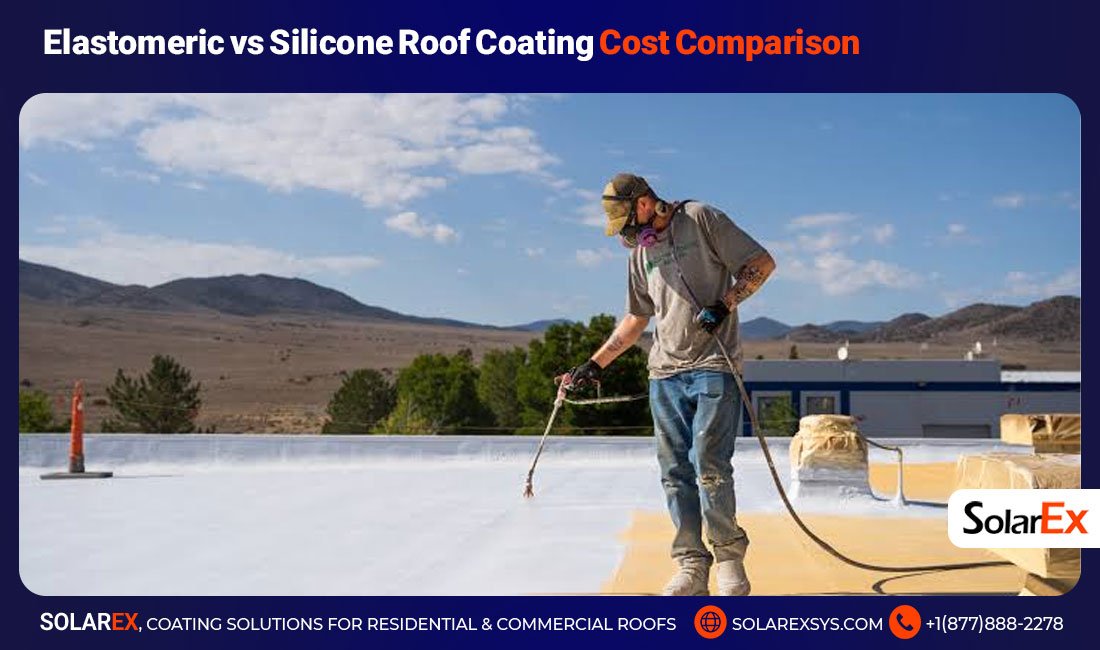
When planning a commercial or residential roof restoration, evaluating upfront installation pricing alongside long-term performance value helps you select the most budget-smart solution for your propertySolarex Your Trusted Roof Coating Partner.
|
Performance Metric |
Elastomeric Coating |
Silicone Coating |
|
Average Cost per Sq. Ft. |
$1.00 – $2.50 |
$2.50 – $4.00 |
|
Expected Lifespan |
5 – 10 years |
10 – 20 years |
|
Ponding Water Resistance |
Low to Moderate |
High |
|
UV Stability |
Moderate |
Excellent |
|
Maintenance Frequency |
High |
Low |
|
VOC Emissions |
Low |
Moderate to High |
|
Ease of Application |
Easy (multi-coat application) |
Moderate (often achieved in a single coat) |
|
Recoat Compatibility |
High |
Low (requires surface prep or specialized primer) |
Solarex Your Trusted Roof Coating Partner
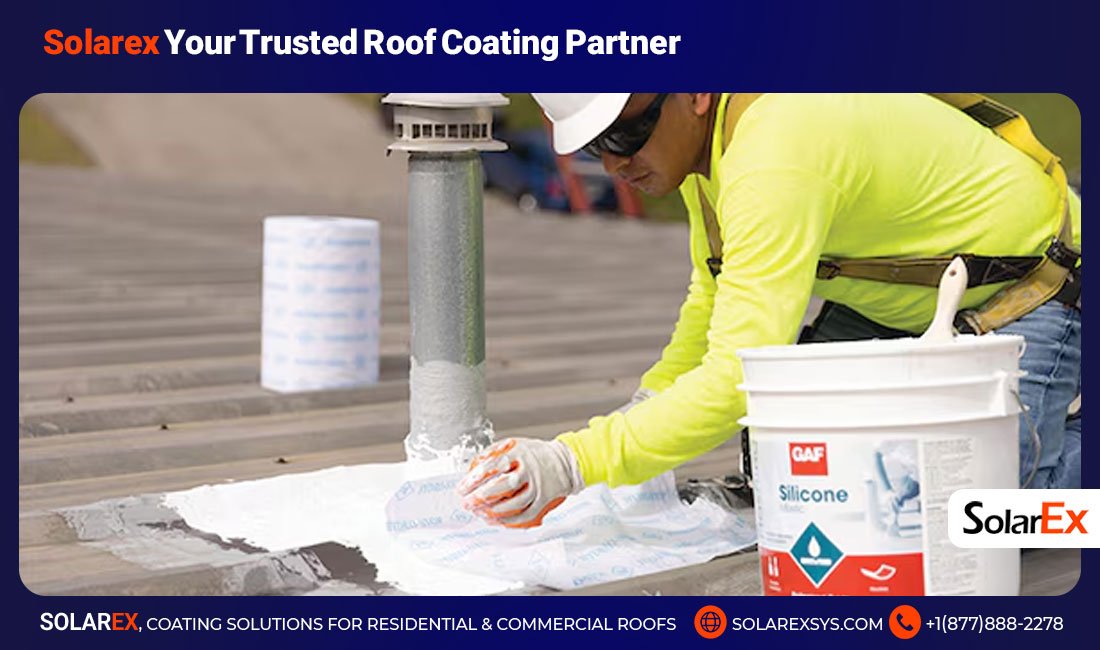
At SolarEx, we provide an all-in-one energy solution by pairing high-performance reflective roof coatings with advanced solar technology. Before generating clean power, our priority is to maximize energy efficiency—reducing roof heat absorption so your building stays naturally cooler while your energy systems operate at peak performance. Backed by extensive expertise in energy management across the Middle East and California’s Bay Area, we bring international standards and tailored local solutions to every property.
Here are some of the key advantages of working with us:
Why Choose SolarEx?
- 20% Cooling Cost Reduction: Our reflective coatings drastically lower indoor temperatures, cutting your summer air conditioning expenses by up to 20%.
- Eco-Friendly & Low-VOC: Engineered with environmentally responsible, low-VOC formulations that are completely safe for your property and the planet.
- Long-Term Durability: Built to endure severe weather, intense UV radiation, and heavy rain without peeling, cracking, or degrading.
- Optimized for Solar Panels: Designed to integrate seamlessly with solar systems, keeping surface temperatures low to boost panel output efficiency.
For expert consultations, personalized quotes, or more details about our roof coating solutions, reach out to our team through any of the channels below:
- Address: 700 Allston Way, Berkeley, CA 94710, USA
- Phone: +1 (877) 888-2278
- Email: info@solarexsys.com
Conclusion: Which Roof Coating Is the Smartest Investment for Your Building?
“Deciding between silicone and elastomeric sealants ultimately comes down to assessing your building’s slope, localized climate demands, and long-term financial strategy. While flat roofs with chronic ponding water require the unbeatable moisture resistance of silicone, sloped surfaces can fully leverage the budget-friendly elasticity of acrylic formulations. Weighing silicone roof coating vs elastomeric performance metrics ensures you select a system that protects your structural integrity, minimizes lifecycle maintenance, and maximizes indoor thermal efficiency over time.
FAQ: silicone roof coating vs elastomeric
Is silicone roof coating superior to elastomeric options?
When evaluating an acrylic vs silicone elastomeric roof coating system, silicone holds a distinct advantage on flat roofs because it resists chronic standing water without peeling or degrading. Acrylic elastomeric options offer great solar protection at a lower price point, but they require proper roof drainage to remain effective.
Which roof coating material delivers the top performance?
The ideal choice depends entirely on your roof’s slope and local rainfall. Silicone, acrylic elastomeric, polyurethane, and asphalt membranes represent the most reliable solutions on the market. Typically applied via roller or spray equipment, these products can extend a substrate’s operational lifespan by up to two decades.
Does silicone outlast elastomeric roof coatings?
Yes, silicone sealants consistently outlast standard elastomeric alternatives. A properly installed silicone system generally delivers 10 to 20 years of continuous protection, whereas traditional elastomeric coatings usually require a new application every 5 to 10 years.
What is the expected lifespan of a silicone roof seal?
A well-applied silicone coating lasts approximately 15 years on average. As a thick, solvent-based sealant, silicone creates a seamless waterproof barrier that seals existing leaks and shields your building from severe weather for years to come.