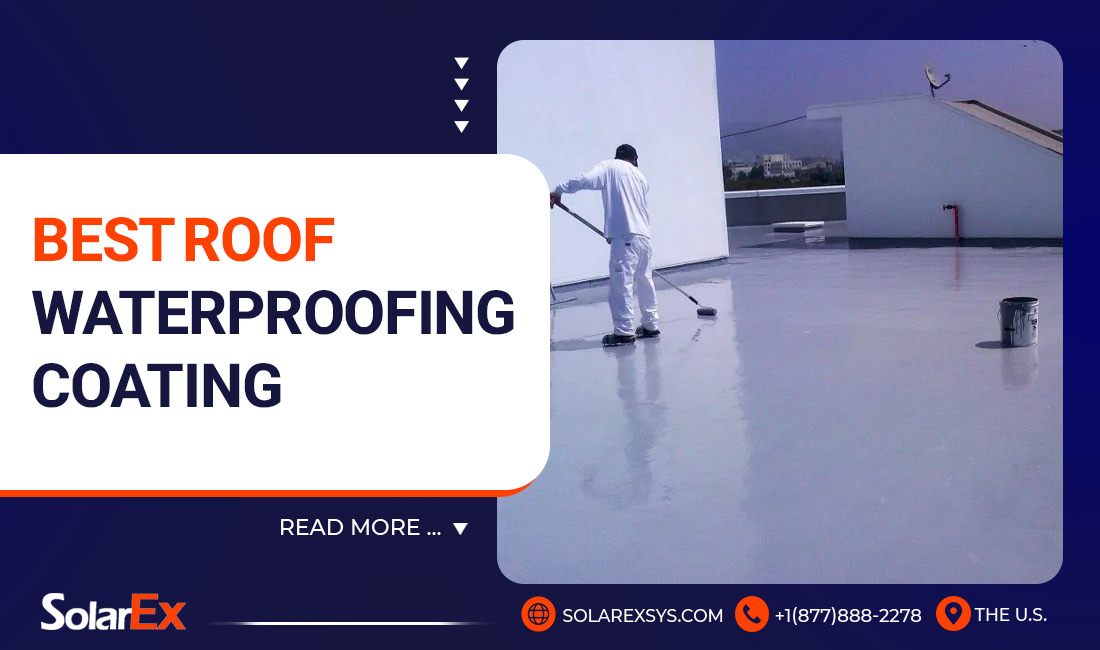


A white roof might look like a simple design choice, but what is a white roof actually designed to do? The difference goes beyond appearance. Reflective roofing materials can help reduce the amount of solar heat absorbed by a building, but not every white surface delivers the same performance. Some roofs use reflective coatings, while others rely on specialized membranes, metal finishes, or shingles. The right choice depends on more than color, especially when you’re considering an upgrade to an existing roof.
Before investing in a white roof, it’s worth understanding how different roofing systems perform, whether your current roof is suitable for coating, and what affects long-term costs. You also need to consider potential drawbacks, from maintenance requirements to climate-related limitations. At SolarEx, we’ll help you explore these factors, compare your options, and understand what makes a reflective roofing solution suitable for your building.
What Is a White Roof?
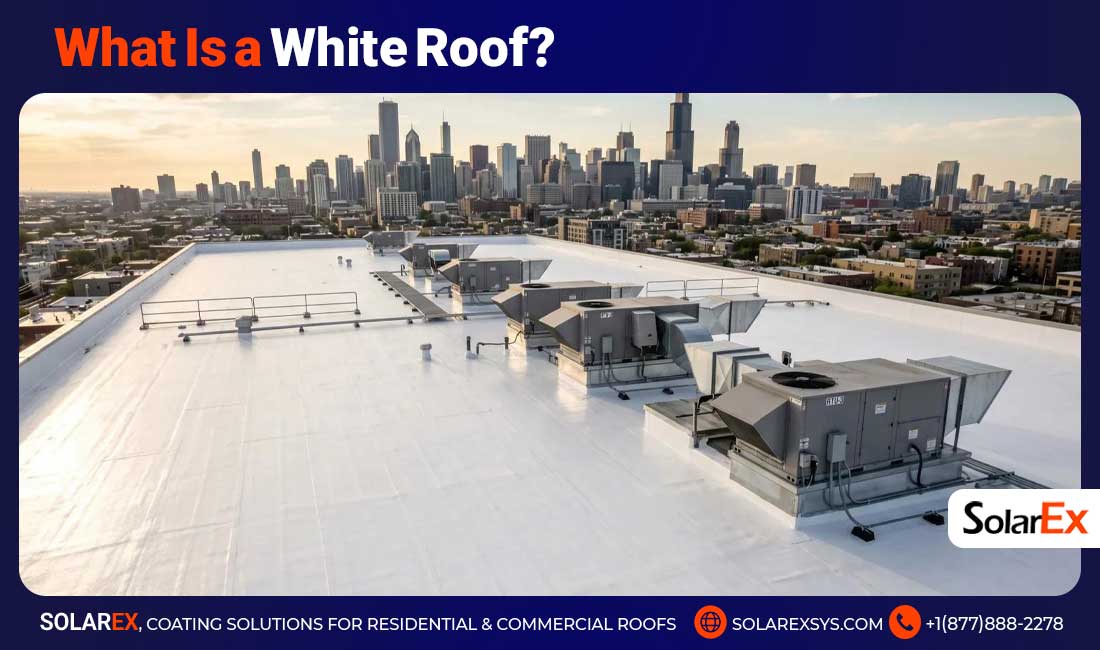
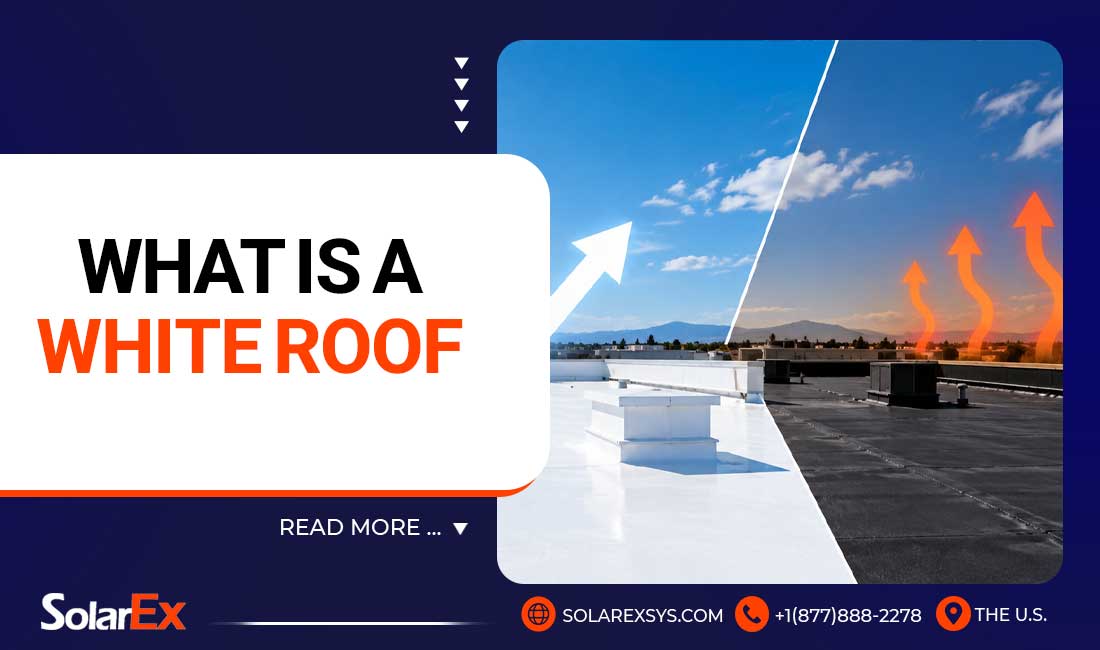
What does “white roof” mean? A white roof is a roofing system with a light-colored, reflective surface that absorbs less sunlight than most conventional dark roofs. Its purpose is to help keep the roof cooler in direct sunlight and limit the amount of heat entering your building.
A white roof isn’t necessarily a roof painted white. It can be made with reflective membranes, coated metal, specially designed shingles, or protective coatings. What matters is its solar reflectance (how much sunlight it reflects) and thermal emittance (how effectively it releases absorbed heat).
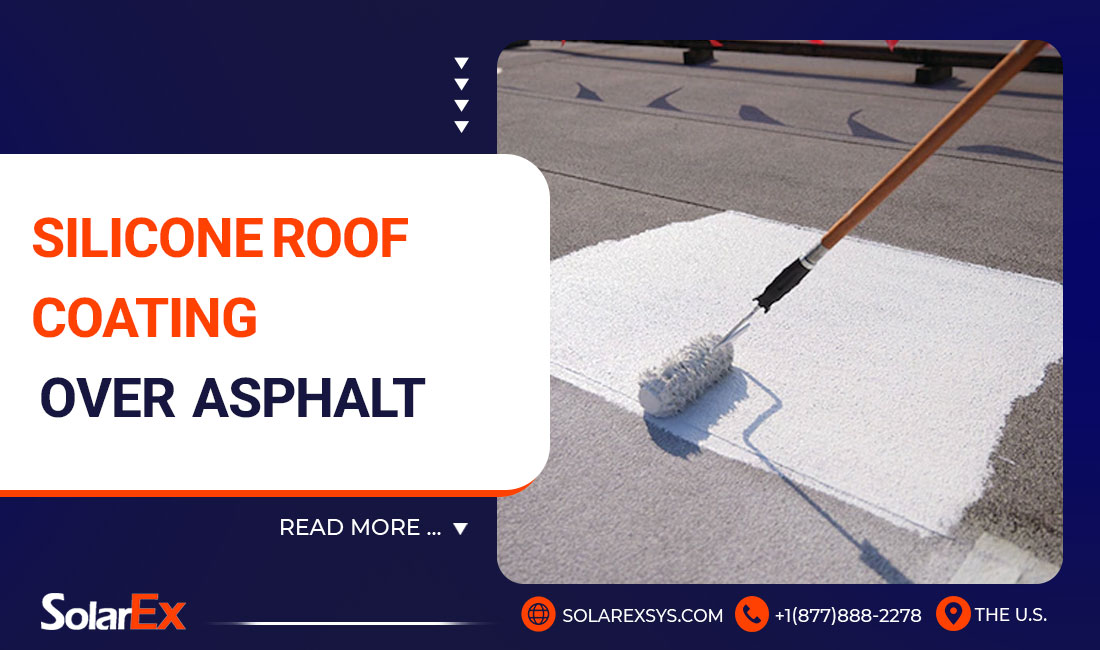
That raises another question: what is a white roof coating? It’s a liquid-applied material that creates a protective surface over a compatible existing roof. For example, silicone roof coating can provide reflectivity and waterproofing without requiring a complete roof replacement, provided the underlying roof is in suitable condition.
According to the U.S. Department of Energy:
“It is rarely economical to replace a mechanically sound roof just to increase its solar reflectance.”
Based on our experience at SolarEx, improving roof reflectivity should begin with evaluating the existing roof. If its structure and surface are suitable, a compatible coating may offer a practical alternative to replacement. Moisture problems and underlying damage still need to be addressed first.
How Does a White Roof Work?
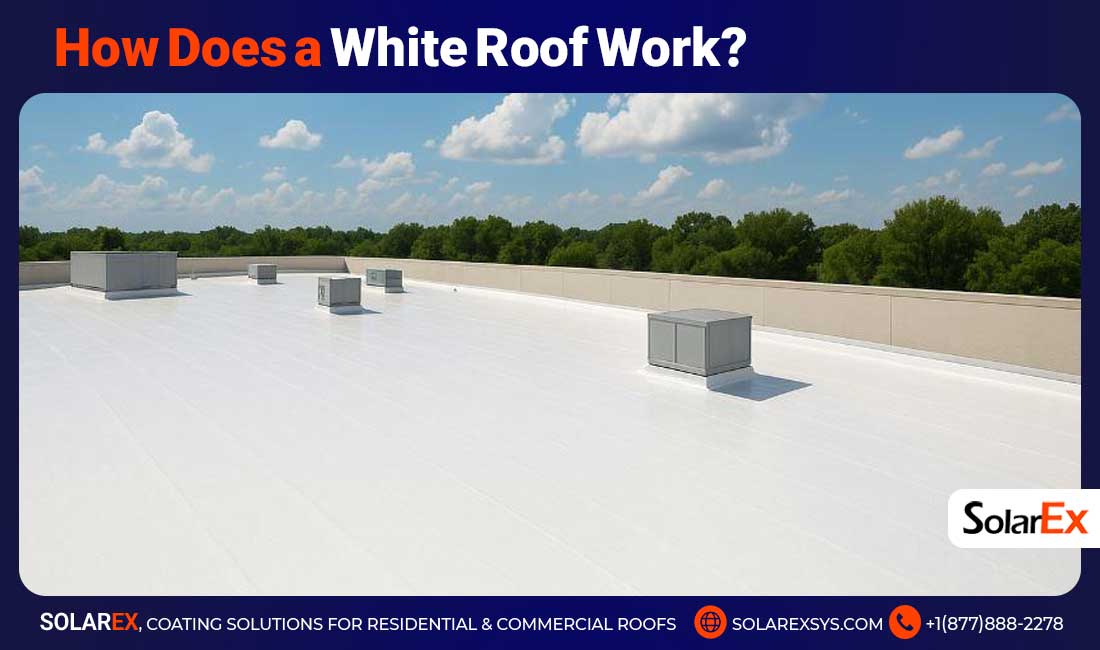
A white roof limits heat buildup by reflecting sunlight and releasing absorbed heat. This process involves four steps that help reduce the amount of solar heat reaching your building.
1. Reflecting Solar Radiation
When sunlight hits a white roof, its reflective surface redirects much of the solar energy instead of absorbing it. A properly applied elastomeric roof coating can improve the reflectivity of a compatible existing roof, depending on the product’s properties.
2. Reducing Heat Absorption
Because less solar energy is absorbed, the roof surface generally stays cooler than a comparable dark roof under direct sunlight. This can help limit heat buildup during hot afternoons.
3. Releasing Absorbed Heat
Even reflective roofs absorb some heat. Thermal emittance measures how effectively the surface releases that absorbed heat as infrared radiation. A roof with both high solar reflectance and high thermal emittance can better control its surface temperature.
4. Reducing Heat Transfer Into the Building
A cooler roof allows less heat to pass through the roofing system into the building. This may reduce air-conditioning demand, particularly in hot climates. However, the actual impact depends on your roof’s insulation, local weather, and building design.
What Are the Different Types of White Roofs?
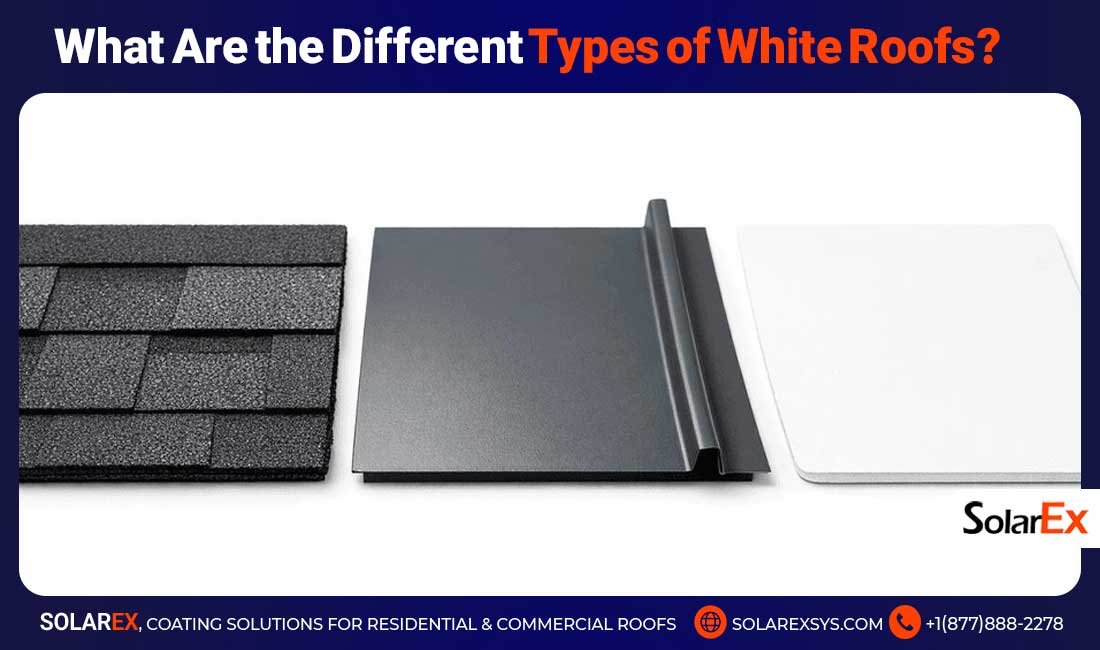
What type of roof is white? There isn’t just one answer. The types of white roofs available include liquid-applied coatings, single-ply membranes, metal panels, and reflective shingles. Each suits different roof structures, so choosing the right material depends on your roof’s slope, existing condition, and installation requirements.
1. White Roof Coatings
These liquid-applied products create a reflective layer over compatible existing roofs. Silicone coatings are often considered where moisture exposure is a concern, while acrylic roof coating is another option for suitable surfaces with proper drainage. Surface preparation is essential for either system.
2. White TPO Roofing
TPO (Thermoplastic Polyolefin) is a single-ply membrane commonly used on low-slope commercial roofs. Its sheets are joined using heat-welded seams, creating a continuous roofing surface when properly installed.
3. White PVC Roofing
PVC (Polyvinyl Chloride) is another single-ply roofing membrane with heat-welded seams. Although similar in appearance to TPO, it has a different material composition. The choice depends on your building’s exposure conditions and roofing requirements.
4. White Metal Roofing
White metal roofs use reflective factory-applied finishes on metal panels. They’re suitable for many pitched roofs and certain low-slope designs. Their actual reflectivity depends on the coating’s properties, not simply its white appearance.
5. White Reflective Roof Shingles
These shingles use reflective granules or specially designed surfaces to reduce solar heat absorption. They’re primarily intended for sloped residential roofs, offering an alternative to conventional dark shingles.
6. White EPDM Roofing
White EPDM is a reflective rubber roofing membrane, unlike the more familiar black EPDM. It’s used on low-slope roofs and typically installed with adhesives or mechanical fasteners. Its seams require compatible sealing methods rather than the heat welding used for TPO and PVC.
Benefits of a White Roof
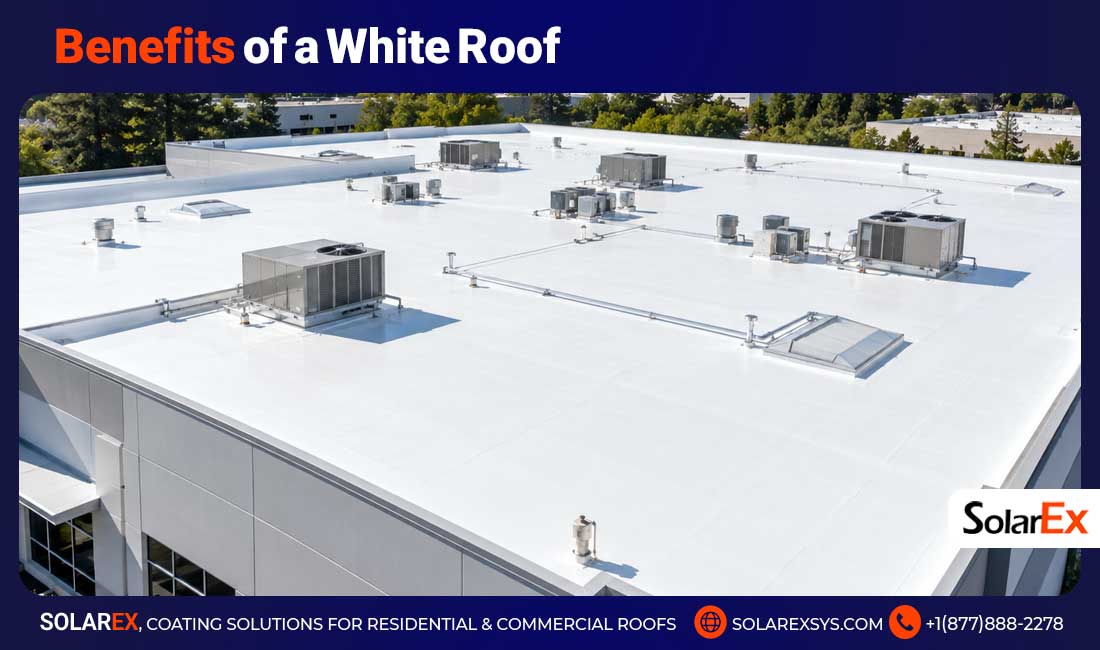
A white roof can reduce heat buildup, improve indoor comfort, and lower cooling demand in suitable buildings. The benefits depend on your climate, insulation, and roofing materials.
1. Lower Roof Surface Temperature
Reflective surfaces absorb less sunlight, helping your roof stay cooler during hot, sunny days. This reduces prolonged exposure to high surface temperatures.
2. Lower Cooling Demand
Less heat entering your building can reduce the workload on your air-conditioning system. The potential energy savings depend on your local climate and the building’s insulation.
3. Reduced Solar Heat Gain
A reflective roof limits the amount of solar heat passing through the roof assembly. This can be particularly useful for buildings with large roof areas exposed to direct sunlight.
4. Improved Indoor Comfort
Rooms directly below the roof may experience less heat buildup, especially during summer afternoons. This can make indoor temperatures easier to manage.
5. Reduced Urban Heat Island Effect
When widely used across a neighborhood, reflective roofs can help reduce heat absorbed by buildings and contribute to lower surrounding temperatures.
6. Protection for Existing Roofs
Some reflective coating systems also provide a protective barrier against weather exposure. For compatible asphalt shingle roofs, shingle roof coating may help protect worn surfaces without a complete replacement. However, damaged shingles and underlying problems must be evaluated before application.
Disadvantages of White Roofs
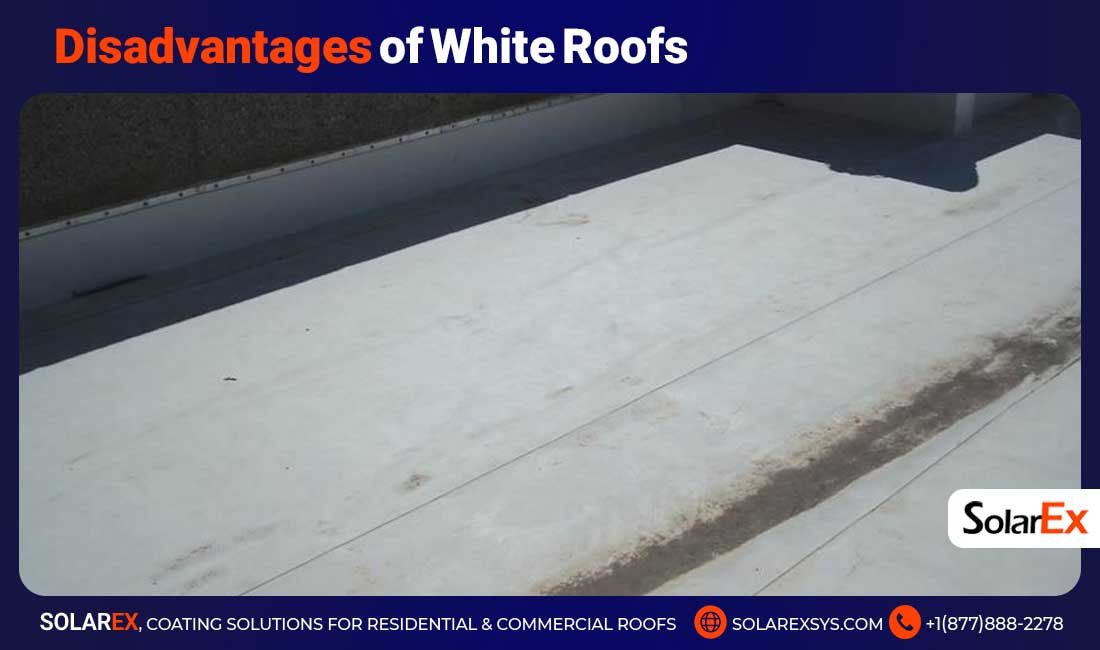
White roofs have practical limitations that can affect their performance over time. Before choosing one, consider your building’s climate, roof condition, and maintenance needs.
1. Dirt and Surface Soiling
Dust, pollution, and debris can gradually reduce a white roof’s reflectivity. As the surface becomes dirtier, it absorbs more sunlight and may lose some of its cooling benefits.
2. Maintenance Requirements
White roofs, especially low-slope systems, may need periodic inspections and cleaning. Always follow the manufacturer’s recommendations, as harsh chemicals or improper pressure washing can damage certain roofing materials.
3. Climate Considerations
In colder climates, reflecting sunlight during winter may slightly increase heating demand. Whether this matters depends on your insulation, local weather, and the building’s cooling needs.
4. Roof Condition and Waterproofing
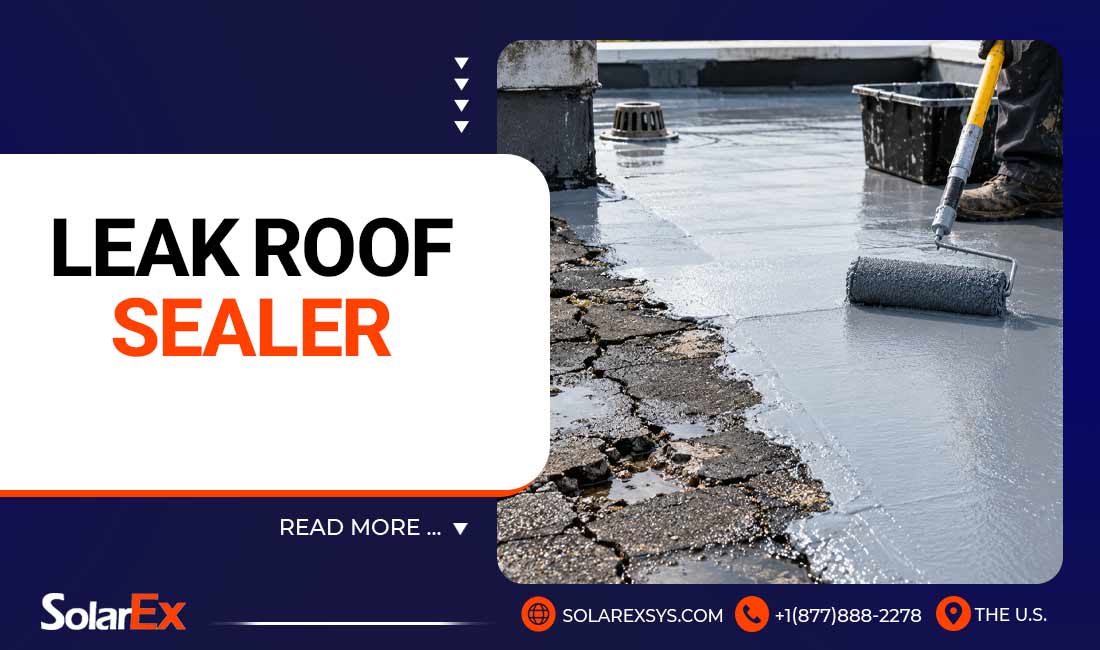
A reflective surface isn’t automatically waterproof. Before applying waterproof roof coating, check for trapped moisture, damaged areas, and drainage problems. Even a high-quality coating cannot compensate for a severely deteriorated roof.
5. Unwanted Glare
Highly reflective surfaces may direct sunlight toward nearby windows, particularly when taller buildings overlook the roof. This is worth considering in densely developed areas.
6. Improper Installation
Poor surface preparation, incompatible products, or incorrect application can lead to adhesion problems and premature coating failure. Choosing the right system for your existing roof is just as important as its reflectivity.
White Roof vs Black Roof
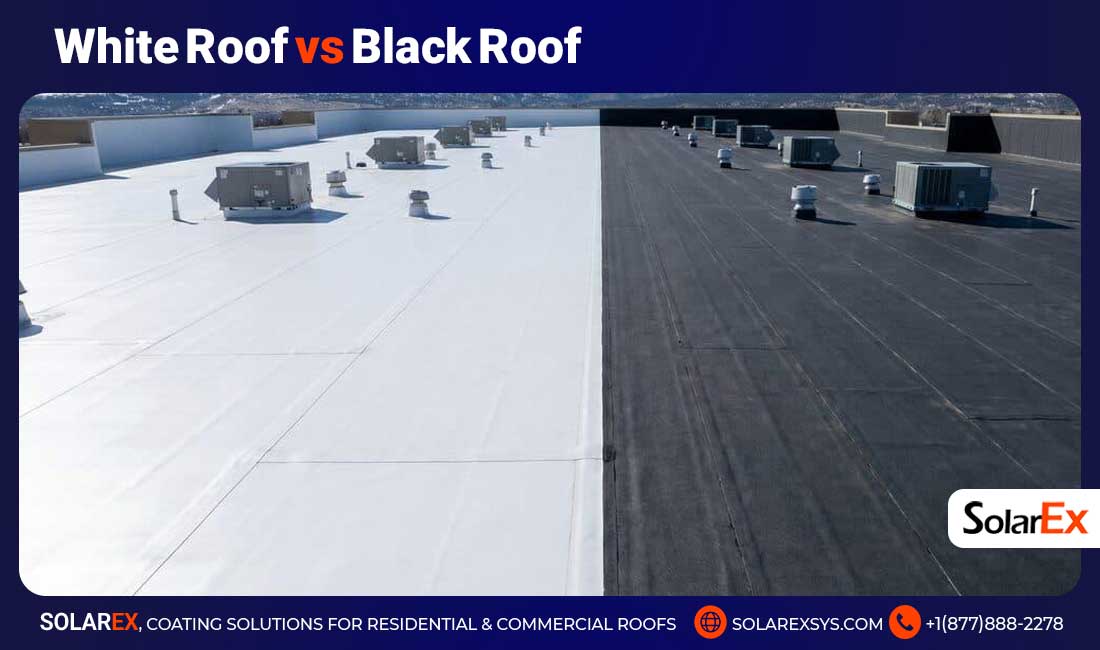
The main difference between white and black roofs is how they handle sunlight. White reflective surfaces generally absorb less solar heat, while dark roofs tend to retain more. If you’re considering upgrading an existing roof, reflective roof coating may help improve its reflectivity without replacing the entire roofing system, provided the surface is suitable.
The table below compares their typical performance. Actual results depend on the roofing material, insulation, climate, and building design.
| Factor | White Roof | Black Roof |
|---|---|---|
| Solar Reflectance | Generally higher | Generally lower |
| Heat Absorption | Absorbs less solar energy | Absorbs more solar energy |
| Surface Temperature | Usually cooler in direct sunlight | Usually hotter in direct sunlight |
| Cooling Demand | May reduce air-conditioning use | May increase cooling demand |
| Winter Performance | May slightly increase heating needs | Can provide more solar heat gain |
| Visible Dirt | Dirt and stains are more noticeable | Dirt is generally less visible |
| Maintenance | May need cleaning to maintain reflectivity | Depends on material and condition |
| Suitable Climate | Often beneficial in hot, sunny regions | May be worth considering in colder regions |
A white roof isn’t automatically the better choice. For your building, the most useful comparison is between actual roofing products, including their reflectance ratings, durability, and maintenance requirements.
How Much Does a White Roof Cost?

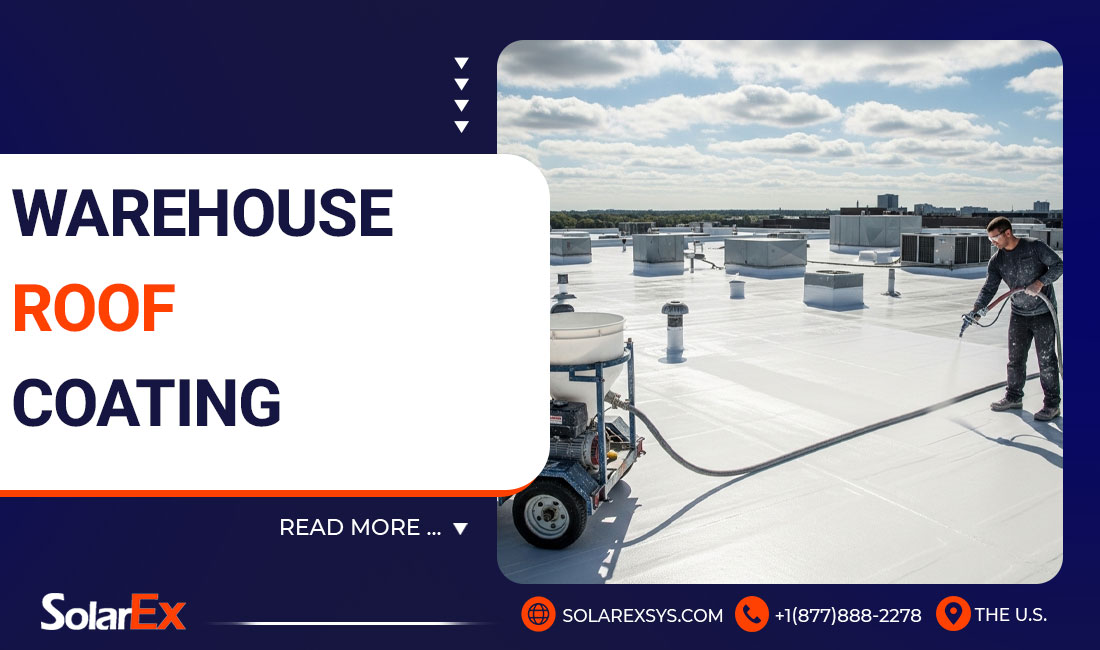
The cost of a white roof depends on whether you’re coating an existing roof or installing a new roofing system. Applying a reflective coating to a sound roof may cost less than a full replacement, but extensive repairs can change the final price.
Several factors determine what you’ll pay:
- Roof size and material: Larger roofs require more materials, while coatings, membranes, and metal roofing have different installation costs.
- Existing roof condition: Damaged seams, trapped moisture, rust, or drainage problems may require repairs before installation.
- Surface preparation: Cleaning, primers, and reinforcement can increase labor and material requirements.
- Coating thickness and application: The number of coats and required coverage affect product quantities and labor costs.
- Roof access and complexity: HVAC equipment, penetrations, flashing details, and difficult access can increase installation time.
- Labor and warranty: Local contractor rates and warranty requirements also influence the final estimate.
Reviewing silicone roof coating before and after projects can help you understand what restoration achieves, but photos alone won’t reveal hidden damage or necessary repairs.
Before comparing quotes, ask for an itemized estimate showing material costs, installation, repairs, and the total roof area in square feet. This helps you compare the actual project costs rather than just the price of the roofing product.
White Roof Coating Solutions from SolarEx

At SolarEx, we offer reflective roof coatings such as SiliconEx 500, along with asphalt shingle protection products like ShinglEx 800. We help you choose a solution based on your roof’s material, condition, drainage, and long-term protection needs. We help you choose a coating based on your roof’s material, existing condition, drainage, and protection needs, rather than recommending the same product for every project.
Our roof coating solutions offer several benefits:
- Potential Cooling Savings: Our reflective coatings help reduce solar heat absorption and may lower cooling costs, depending on your building and climate.
- Eco-Friendly & Low-VOC: We offer low-VOC formulations designed to reduce solvent emissions while protecting compatible roofing surfaces.
- Long-Term Durability: Our silicone coatings are designed to withstand UV exposure, rain, temperature changes, and weather-related deterioration.
- Solar Panel Compatibility: Our reflective coating solutions can complement rooftop solar installations when properly matched to the roofing system.
- Product Guidance: We help you assess coating compatibility, material requirements, and application considerations before purchasing.
If you’re comparing coating options, our guide to Silicone roof coating pros and cons can help you evaluate the benefits and limitations before making a decision.
Not sure which coating suits your roof? Contact our SolarEx team for a free consultation. We’ll help you review your roofing needs and explore suitable products.
- Address: 700 Allston Way, Berkeley, CA 94710, USA
- Phone: +1 (877) 888-2278
- Email: info@solarexsys.com
Conclusion: Is Your Roof Ready for a Reflective Upgrade?
Understanding what is a white roof is only part of making the right roofing decision. A reflective surface can help manage solar heat, but its long-term value depends on your building’s needs and the condition of your existing roof. Before investing in a new system, consider whether the current roof can be restored, how effectively it handles drainage, and whether the chosen material suits your climate. Pay attention to installation quality, maintenance requirements, and total project costs rather than focusing solely on reflectivity or appearance. If your roof is structurally sound, a compatible coating may provide a practical alternative to replacement. The goal is to choose a solution that improves your building’s performance without creating unnecessary expenses. If you’re unsure where to begin, the SolarEx team can help you evaluate suitable coating options.
Frequently Asked Questions What Is a White Roof
Will a White Roof Always Stay Cooler Than a Black Roof?
Not always. A reflective white roof usually stays cooler in direct sunlight, but we also need to consider the roofing material, weather, insulation, and surface condition. We shouldn’t expect the same temperature difference in every building.
How Often Should We Clean a White Roof?
There’s no fixed cleaning schedule for every roof. We should inspect the surface periodically and remove dirt or debris when needed. Following the manufacturer’s cleaning recommendations helps us maintain reflectivity without damaging the roofing material.
Can We Turn Our Existing Roof Into a White Roof?
In some cases, yes. We may be able to apply a reflective coating instead of replacing the entire roof. First, we need to check the existing material, moisture conditions, drainage, and coating compatibility to make sure the roof is suitable.