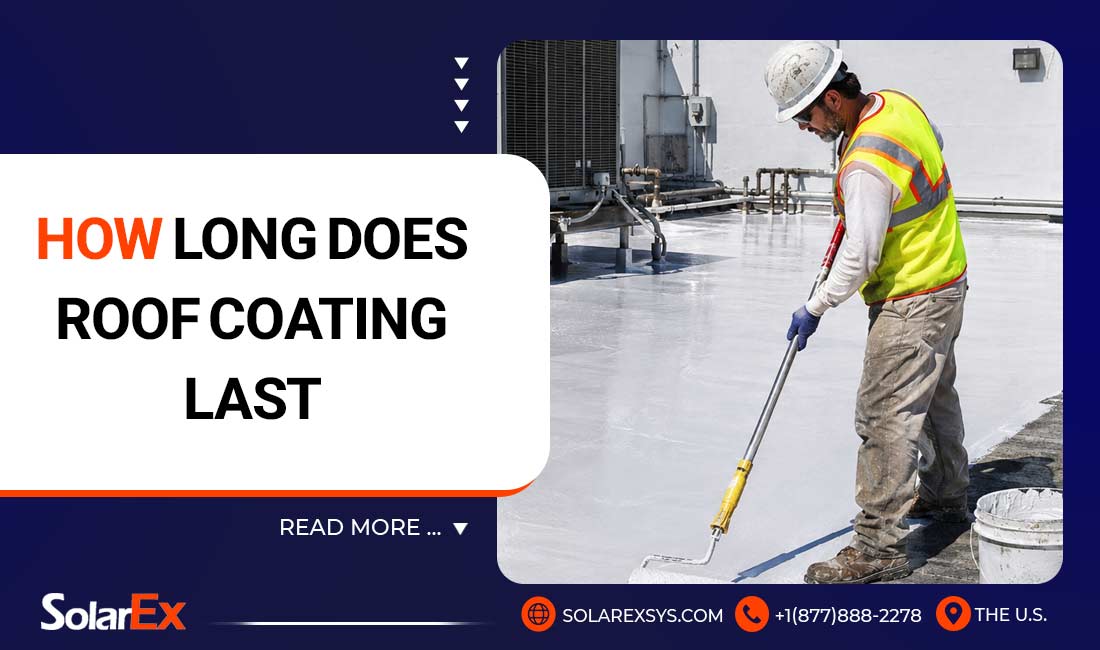

A roof coating may continue to look intact while its ability to protect the underlying surface gradually changes. If you are planning a roof restoration or evaluating an existing coating, understanding how long does roof coating last can help you make better decisions about maintenance, repairs, and future costs. However, the expected service life is not the same for every roof. The coating formulation, condition of the existing surface, application quality, and exposure to sunlight, moisture, and temperature changes all influence its performance.
Choosing a suitable coating also requires considering the roofing material and the conditions the building faces throughout the year. In this guide, we examine the typical lifespan of different coating systems, the factors that can shorten or extend their service life, and the signs that indicate when maintenance or recoating may be necessary. At SolarEx, we understand the importance of selecting roofing solutions that match the actual requirements of each project.
How Long Does Roof Coating Last on Average?
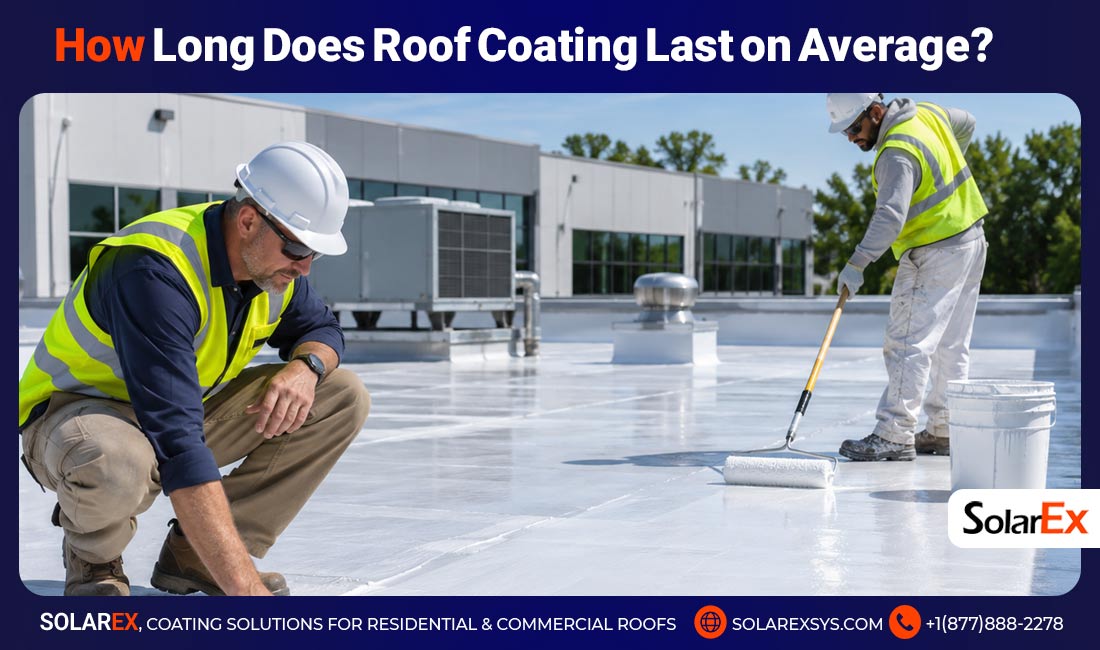
Most roof coating systems last around 5 to 15 years, although high-performance products can provide protection for 20 years or longer under suitable conditions. If you’re wondering how long does roof coating last, the answer depends on the coating’s formulation, application thickness, existing roof condition, weather exposure, and maintenance. A longer warranty does not automatically mean the coating will perform without maintenance for the entire warranty period.
For example, a properly installed silicone roof coating can offer an extended service life. SolarExsys lists an expected durability of 10–20+ years for its SiliconEx 500 system, alongside a 20-year material warranty. These figures apply to the specified product and should not be generalized to every silicone coating.
Commercial projects also require evaluating the complete restoration system rather than looking at the coating alone. SolarExsys states that its commercial roof coating can extend an existing roof’s service life by up to 20 years. Actual results depend on substrate condition, proper preparation, and professional application.
The Roof Coatings Manufacturers Association (RCMA) highlights an important limitation:
“A coating cannot add life back into a roof.”
A coating can slow further deterioration, but it cannot restore a roof that already has serious structural damage or moisture problems. Therefore, inspecting the existing roof before application is essential to setting realistic expectations for its service life.
How Long Do Different Types of Roof Coatings Last?
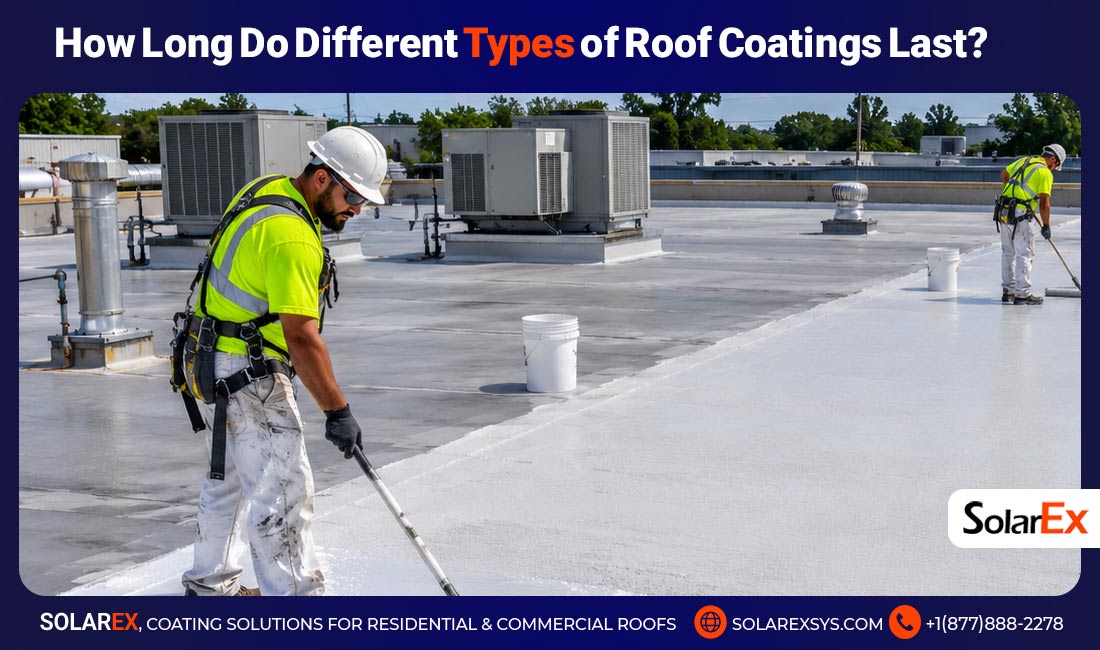
Roof coatings differ in durability, flexibility, and resistance to weather exposure. Silicone and polyurethane systems generally offer longer service lives, while acrylic, asphaltic, and aluminum coatings have different maintenance requirements and applications. The following comparison shows the typical and high-performance service life of each type.
| Roof Coating Type | Typical Service Life | High-Performance Service Life |
|---|---|---|
| Silicone Roof Coating | 15 years | 25 years |
| Acrylic Roof Coating | 7 years | 15 years |
| Polyurethane Roof Coating | 10 years | 20 years |
| Asphaltic Roof Coating | 3 years | 7 years |
| Aluminum Roof Coating | 3 years | 7 years |
These figures are indicative estimates rather than guaranteed lifespans. Actual performance depends on product specifications, application thickness, roof condition, and maintenance.
1. Silicone Roof Coating
- Strong resistance to UV exposure and weathering
- Good resistance to ponding water in properly rated systems
- Flexible, seamless protective membrane
- Requires compatible materials for future recoating
Silicone coatings are a common choice for flat and low-slope roofs, particularly where water drainage is challenging. Their moisture resistance and flexibility make them suitable for long-term roof protection.
2. Acrylic Roof Coating
- Water-based formulation
- High solar reflectivity
- Good UV resistance
- Performs best on roofs with proper drainage
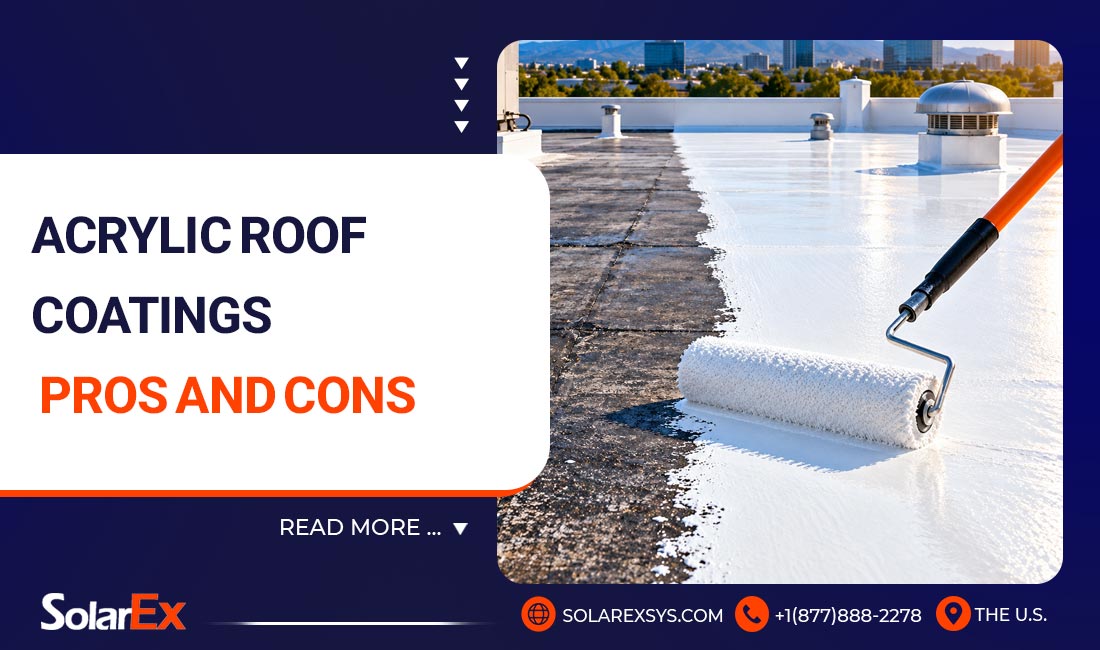
Acrylic coatings are often selected for their reflective properties and relatively affordable application. However, prolonged exposure to standing water can reduce their durability, making proper drainage particularly important.
3. Polyurethane Roof Coating
- High resistance to abrasion and mechanical damage
- Strong adhesion to suitable substrates
- Available in aromatic and aliphatic formulations
- Suitable for roofs exposed to regular foot traffic
Polyurethane coatings are useful for commercial roofs with rooftop equipment and maintenance access. Aromatic formulations are commonly used as base coats, while aliphatic versions provide better UV and color stability as exposed topcoats.
4. Asphaltic Roof Coating
- Asphalt-based protective formulation
- Commonly used on bituminous roofing systems
- Provides additional surface protection
- Requires periodic inspection and maintenance
Asphaltic coatings are generally used for maintaining existing asphalt-based roofs rather than providing the same long-term restoration performance as premium silicone or polyurethane systems. Their suitability depends on the existing roof and product compatibility.
5. Aluminum Roof Coating
- Contains reflective aluminum pigments
- Helps reduce solar heat absorption
- Provides surface protection against weather exposure
- Commonly used for maintenance applications
Aluminum coatings are often applied to built-up and modified bitumen roofs as well as compatible metal surfaces. They provide a reflective finish, but generally require more frequent maintenance than high-performance restoration systems.
6. Elastomeric Roof Coating Systems
- High flexibility under temperature changes
- Ability to accommodate normal roof movement
- Helps bridge compatible minor surface cracks
- Performance depends on formulation and applied thickness
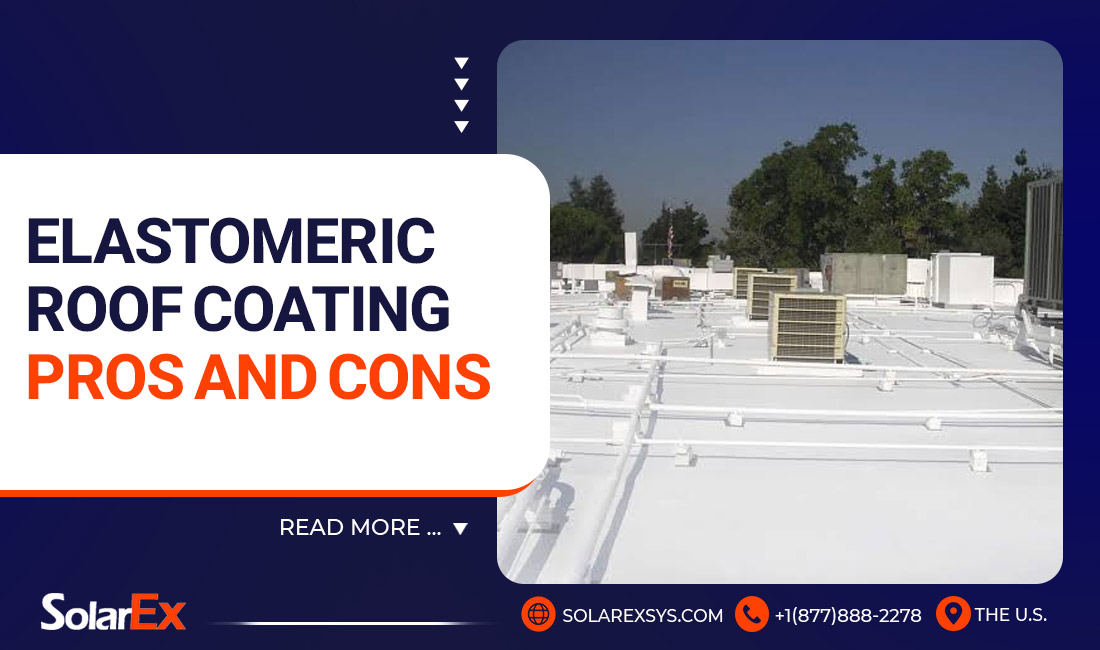
Unlike silicone or polyurethane, elastomeric describes a flexible performance characteristic rather than one specific chemical composition. Acrylic, silicone, and polyurethane products can all have elastomeric properties. You can explore elastomeric roof coating options when flexibility and movement accommodation are important for your roofing project.
What Factors Affect Roof Coating Lifespan?
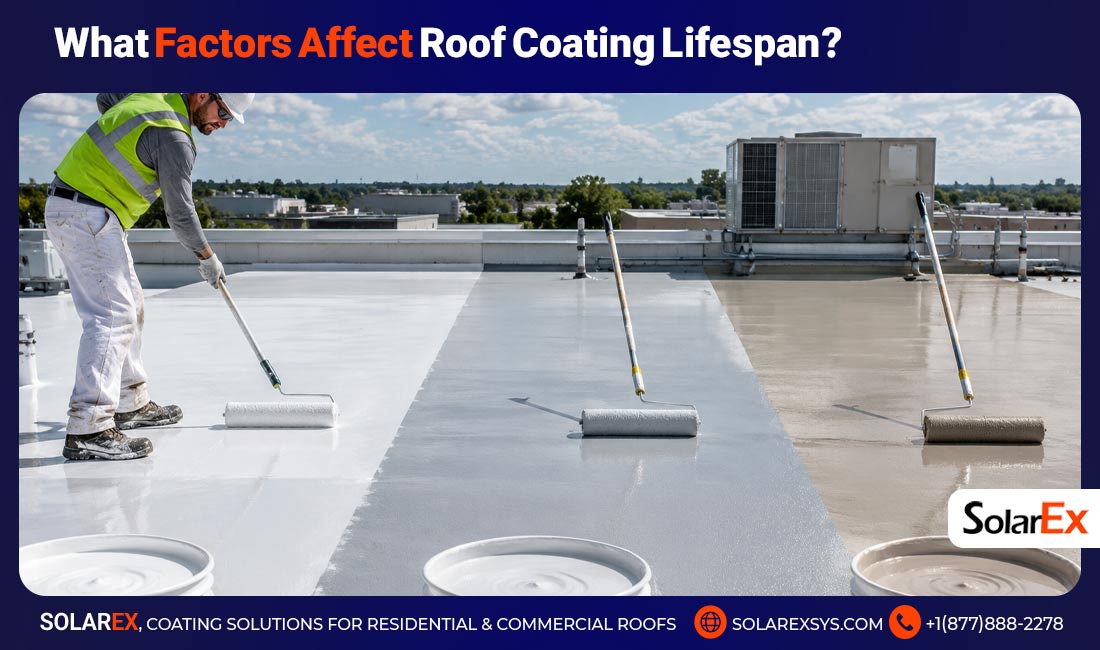
Even a high-quality roof coating can wear out sooner than expected if the roof underneath is damaged or the application is poorly handled. Its lifespan depends on several factors, including product quality, surface preparation, application thickness, weather exposure, and ongoing maintenance.
1. Type and Quality of Roof Coating
Different formulations offer different levels of UV resistance, flexibility, and water protection. Choosing a coating that matches your roof’s material and environmental conditions is essential. For example, an acrylic roof coating can provide good reflectivity and UV protection, but prolonged standing water may affect its performance.
2. Existing Roof Condition
A coating cannot correct major structural problems or restore a severely deteriorated roof. Wet insulation, loose roofing materials, damaged seams, and existing leaks should be addressed before application. Otherwise, underlying problems can shorten the coating’s service life.
3. Surface Preparation and Adhesion
Dirt, oil, moisture, and loose particles can prevent the coating from bonding properly. The roof should be cleaned, dried, and repaired before application. Depending on the existing material, a compatible primer or adhesion test may also be necessary.
4. Coating Thickness and Number of Coats
The required thickness and number of layers depend on the selected coating system. Applying too little material can leave the roof with insufficient protection, while adding extra coats does not automatically guarantee better performance. Follow the manufacturer’s specified coverage rate and dry film thickness.
5. Climate and Weather Exposure
Constant sunlight, extreme heat, temperature fluctuations, heavy rainfall, and freeze-thaw cycles can gradually affect coating performance. Application conditions matter too. Applying a coating outside its recommended temperature or weather conditions can interfere with proper curing and adhesion.
6. Ponding Water and Roof Drainage
Standing water can accelerate deterioration in coatings that are not designed to withstand prolonged moisture exposure. Proper drainage, clear roof drains, and suitable roof slopes help reduce this risk. If water regularly collects on your roof, choose a system specifically rated for those conditions.
7. Foot Traffic and Mechanical Damage
Frequent maintenance visits, rooftop equipment, dropped tools, and unnecessary foot traffic can damage the protective layer. For roofs that require regular access, installing compatible walkway pads can help prevent abrasion, punctures, and premature coating failure.
8. Regular Roof Maintenance
Periodic inspections help identify small problems before they spread. Check for cracks, peeling, blistering, damaged seams, and drainage issues. Repairing these areas promptly and following the manufacturer’s recoating recommendations can help preserve the coating and extend its useful life.
How Long Does Roof Coating Last on Different Roofing Materials?
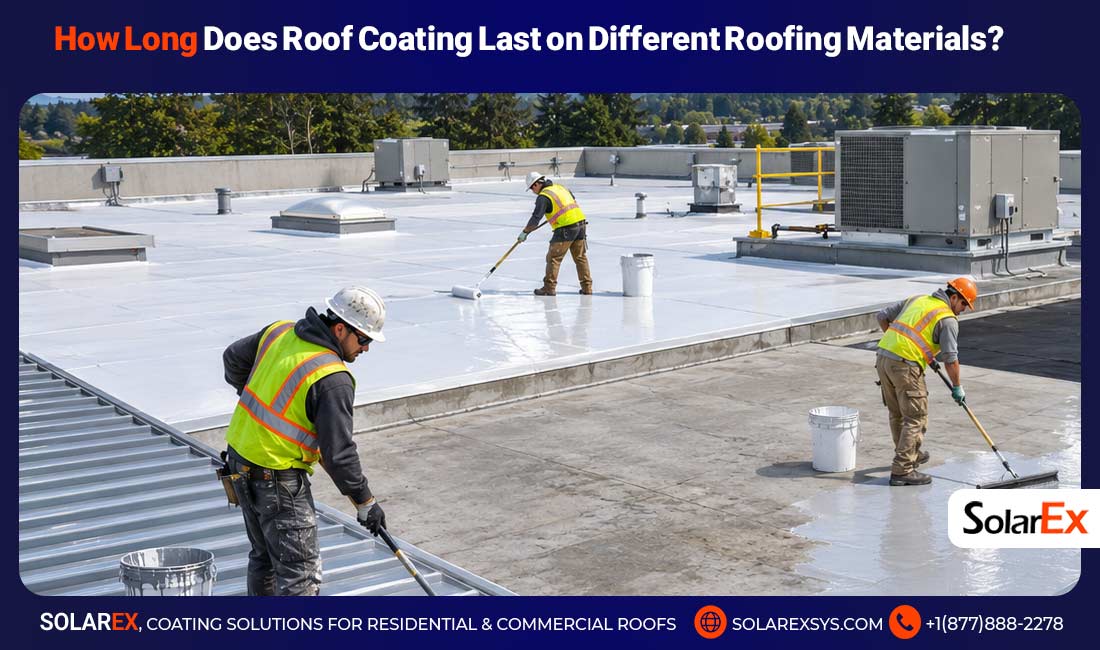
The lifespan of a roof coating depends partly on the material beneath it. Different roofing surfaces have specific adhesion, moisture, and maintenance requirements. Even when using the same coating, these differences can affect how well the protective layer performs over time.
1. Metal Roofs
Metal roofs can support long-lasting coating systems when the panels remain structurally sound. However, rust, loose fasteners, deteriorated seams, and damaged factory finishes can shorten coating life. Remove corrosion, repair vulnerable joints, and use a compatible primer when required before application.
2. Flat and Low-Slope Roofs
Flat and low-slope roofs often face greater exposure to standing water, particularly when drainage is inadequate. Coatings designed for ponding water can perform better under these conditions, but not every formulation offers the same resistance. Proper drainage and a compatible coating system are essential for long-term protection.
3. TPO and EPDM Roofs
TPO and EPDM membranes require particular attention to coating adhesion. Their surface characteristics can make direct application difficult, so a specialized primer or cleaning treatment may be necessary. Always check material compatibility and perform an adhesion test before applying a new coating.
4. Modified Bitumen Roofs
Modified bitumen roofs can be suitable for coating when the existing membrane is in good condition. Before application, inspect for cracks, loose seams, granule loss, and surface deterioration. The coating and any required primer should be compatible with the existing bitumen system to prevent adhesion problems.
5. Spray Polyurethane Foam (SPF) Roofs
SPF roofing relies on a protective coating to shield the foam from UV exposure, moisture, and mechanical damage. If this layer becomes worn, cracked, or damaged, the underlying foam may deteriorate. Regular inspections and timely recoating with compatible materials help maintain the roof system’s protective function.
6. Concrete Roofs
Concrete roofs have a porous surface that can absorb moisture and affect coating adhesion. The concrete should be fully cured, clean, and dry before application. Depending on the product and surface condition, a suitable primer may be needed to seal the pores and create a reliable bonding surface.
For asphalt shingle roofs, take extra care before considering a shingle roof coating. The Asphalt Roofing Manufacturers Association (ARMA) strongly advises against applying field coatings over installed asphalt shingles without checking manufacturer approval and local requirements.
“ARMA strongly advises against the field application of any type of coatings or rejuvenators over installed asphalt shingles.”
This warning matters because an unsuitable coating can affect shingle performance, loosen surface granules, or contribute to moisture-related problems. Always verify whether the specific treatment is approved for your roofing system.
How to Extend the Life of Your Roof Coating?
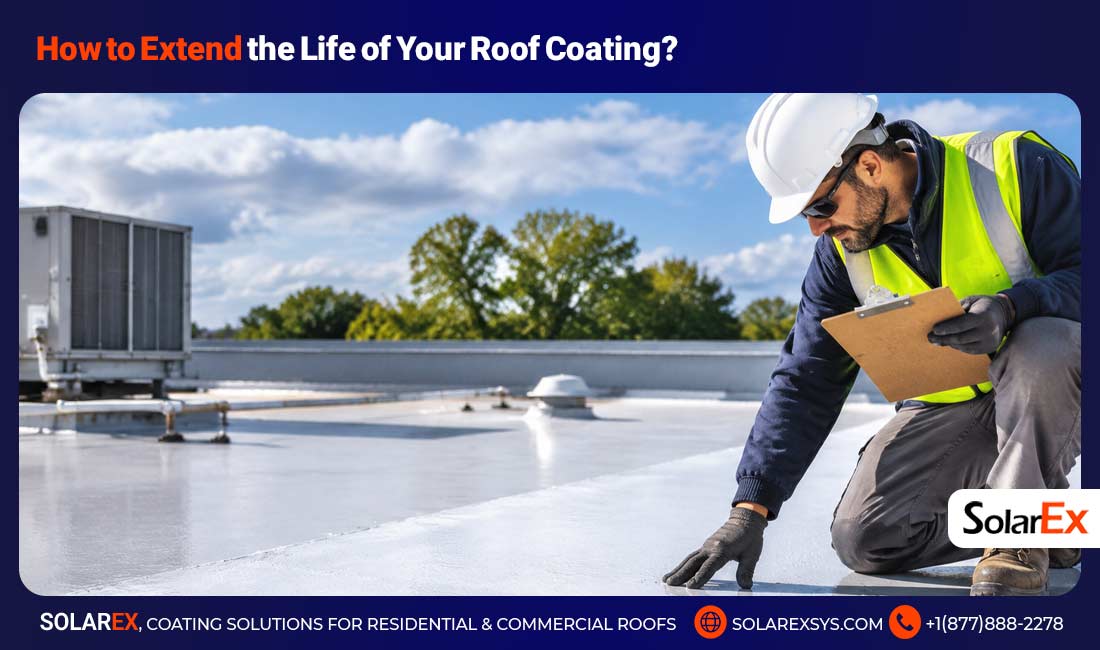
A roof coating can lose its protective performance sooner than expected if minor damage, blocked drains, or maintenance issues go unnoticed. The answer to how long does roof coating last is not determined by product quality alone; regular care also plays an important role. Follow these practical steps to keep your coating in good condition:
- Schedule Regular Roof Inspections: Inspect the roof at least twice a year, preferably in spring and fall. Also arrange an inspection after severe storms or strong winds to identify damage early.
- Keep the Roof Surface Clean: Remove leaves, dirt, branches, and other debris that can trap moisture or interfere with drainage. Use cleaning methods approved by the coating manufacturer to avoid damaging the surface.
- Maintain Proper Roof Drainage: Keep drains, gutters, and scuppers clear so rainwater can flow freely. Standing water can accelerate deterioration in coating systems that are not designed for ponding conditions.
- Repair Minor Damage Early: Address small cracks, punctures, blisters, and peeling areas before they develop into larger problems. Check the underlying roof for moisture or structural damage before applying repair materials.
- Inspect Seams and Flashings: Pay attention to roof edges, joints, penetrations, and flashing connections. Deteriorated sealants or separated seams can create entry points for water even when the main coating remains intact.
- Avoid Unnecessary Foot Traffic: Limit access to the roof and use designated walkways where necessary. Equipment installation and maintenance work should be carried out carefully to prevent scratches, punctures, and surface damage.
- Follow Manufacturer Recoating Guidelines: Check the recommended inspection intervals, coating thickness, application conditions, and recoating requirements. Applying another layer too early or over an incompatible surface may create adhesion problems.
- Use Compatible Repair and Recoating Materials: When restoring damaged areas, select products that work with the existing coating system. A suitable waterproof roof coating can help maintain moisture protection when its formulation is compatible with the roof material and existing layers.
Consistent maintenance helps you identify problems before they affect larger sections of the roof. Rather than waiting for visible leaks or extensive coating failure, use inspection findings and manufacturer recommendations to determine when repairs or recoating are necessary.
Where to Buy Long-Lasting Roof Coatings for Commercial Buildings?
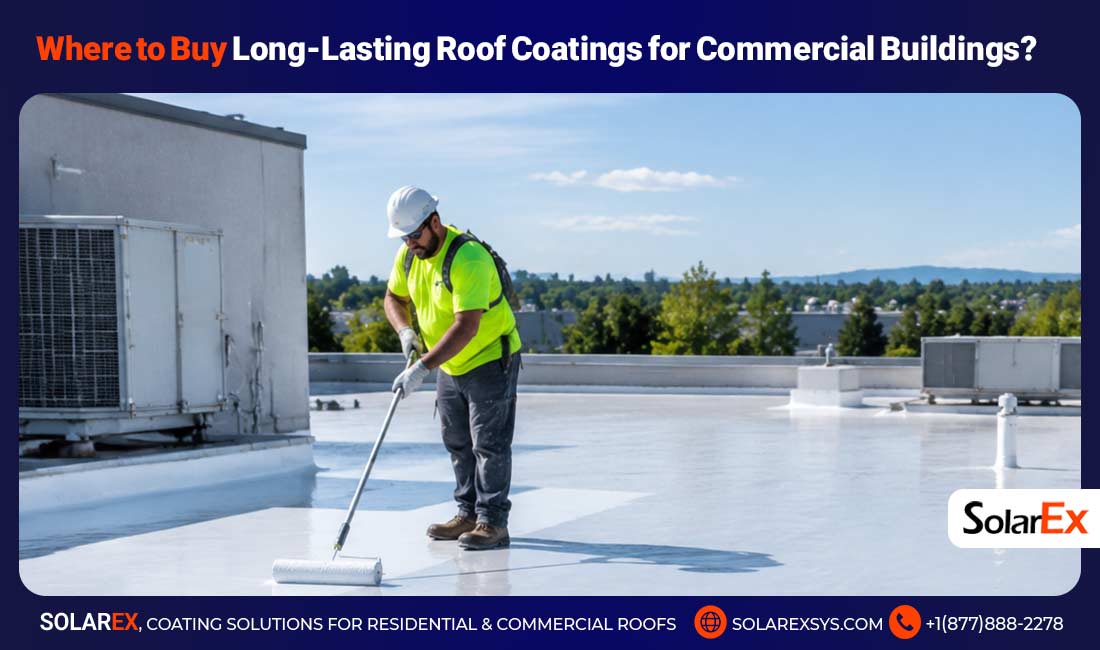
Choosing the right roof coating for a commercial building requires more than comparing product prices. You need a system that matches your roof material, weather exposure, maintenance requirements, and long-term building needs.
At SolarExsys, we provide roof coating solutions for commercial properties, helping building owners and contractors find suitable options for protecting and maintaining their roofs. Our team can help you evaluate your project requirements and choose a coating system that fits your building.
Why Choose SolarExsys?
Our roof coating solutions offer several advantages for commercial roofing projects:
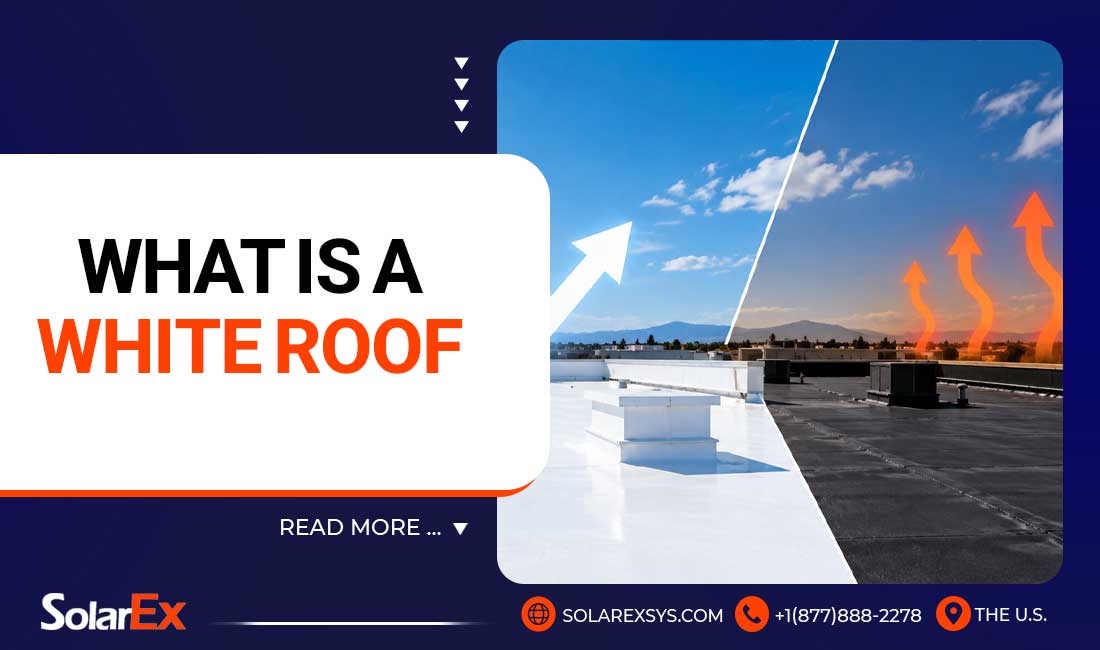
- Lower Cooling Demand: Our reflective coating solutions help reduce roof surface temperatures by reflecting sunlight, potentially lowering the demand for indoor cooling.
- Low-VOC Options: We offer coating solutions designed with low-VOC materials to support more environmentally conscious roofing projects.
- Weather Resistance: Our coating systems are designed to withstand UV exposure, changing weather conditions, and everyday environmental stress.
- Solar Panel Compatibility: Our solutions are designed to work alongside solar panel installations, helping maintain a cooler roof surface without overlooking the roofing system’s protective requirements.
If you are considering a reflective roof coating, our team can help you assess its suitability for your building and roofing conditions.
Contact SolarExsys for a Roof Coating Consultation
Not sure which coating system is right for your commercial property? Contact our team to discuss your roofing requirements, explore available solutions, and receive guidance on selecting a suitable system for your project.
SolarExsys Contact Information
- Address: 700 Allston Way, Berkeley, CA 94710, USA
- Phone: +1 (877) 888-2278
- Email: info@solarexsys.com
Contact SolarExsys today to discuss your commercial roofing project and find a coating solution that meets your building’s protection and maintenance needs.
Conclusion: What Really Determines How Long Your Roof Coating Lasts?
Choosing a roof coating with a long expected service life is only part of protecting your building. Understanding how long does roof coating last requires looking beyond the product itself and considering how well it matches the existing roof, how carefully the surface is prepared, and whether the application follows the manufacturer’s specifications. Even a high-quality coating may deteriorate earlier when drainage problems, poor adhesion, or neglected repairs go unnoticed. For a more reliable long-term result, consider the actual condition of your roof before choosing a coating system and make regular inspections part of your maintenance plan. The right combination of product selection, proper installation, and timely care can help you get more value from your roofing investment without unnecessary recoating or premature replacement.
Frequently Asked Questions How Long Does Roof Coating Last
How Often Should We Inspect a Roof Coating?
We should inspect a coated roof at least twice a year, ideally in spring and fall. It’s also important to check the surface after severe storms. During each inspection, we should look for cracks, peeling, blisters, standing water, and damage around seams or flashing. Catching these problems early can help prevent more extensive repairs.
Can We Apply a New Roof Coating Over an Existing One?
Yes, in some cases. However, we first need to make sure the existing coating is firmly attached, clean, dry, and compatible with the new product. An adhesion test can help us determine whether the new layer will bond properly. If the existing coating has widespread peeling or trapped moisture, we should address those problems before applying another layer.
How Do We Know When a Roof Coating Needs to Be Reapplied?
Visible signs such as cracking, peeling, thinning, blistering, exposed roof surfaces, and recurring leaks can indicate that a coating needs attention. However, not every damaged area requires complete recoating. We should inspect the affected sections, check the manufacturer’s maintenance recommendations, and determine whether localized repairs or a new coating layer will provide the right solution.