
Introduction
If you're standing on a roof deciding between acrylic and silicone coatings, you're not alone. Building owners, facility managers, and roofing contractors face this exact question every day, and the answer isn't the same for every roof.
Both coatings can restore a compatible roof, reflect solar heat, and push back the day you need a full replacement. But they don't perform identically, and the wrong pick can mean redoing the job sooner than planned.
This comparison affects your upfront cost, how the roof handles ponding water, what weather you can install in, and how much maintenance you'll sign up for.
We'll walk through roof condition, substrate, drainage, climate, budget, and appearance so you can match the coating to the actual roof in front of you, not a generic recommendation.
Key Takeaways
- Acrylic works best on well-drained roofs, costs less upfront, and cleans up with water.
- Silicone handles ponding water, intense UV, and humidity better than acrylic in most cases.
- Neither coating fixes structural, drainage, or moisture problems hiding underneath.
- The right choice depends on substrate, climate, water exposure, and your maintenance plan.
- Always inspect the roof and test adhesion before committing to a system.
Acrylic vs Silicone Roof Coatings: Quick Comparison
Here's the side-by-side breakdown building owners and contractors ask for most.
| Factor | Acrylic | Silicone |
|---|---|---|
| Installed cost | ~$1.00–$2.50/sq. ft. | ~$2.50–$4.00/sq. ft. |
| Cure mechanism | Water evaporation | Moisture absorption |
| Ponding water | Not recommended long-term | Commonly selected for this |
| Cleanup | Water and soap | Solvents |
| Recoating | Easier, more flexible | Requires silicone-specific prep |
Cost
Acrylic systems generally cost less because the raw material is cheaper and application equipment is simpler. SolarEx's TropEx 310 acrylic runs roughly $0.96 to $1.30 per square foot on a 10-year system. Broader commercial coating restoration often lands between $1.50 and $3.50 per square foot, depending on the material.
Silicone carries a higher sticker price, but that number doesn't tell the whole story. If a roof floods periodically, an acrylic system may need replacing years earlier and wipe out the initial savings. Compare installed-system cost over the expected service life, not just the price per gallon.
Composition and Curing
Acrylic is water-based. It dries as water evaporates, so it needs the right weather window to cure properly.
The Roof Coatings Manufacturers Association notes that low humidity can let acrylic dry in under two hours, while humidity above 85% substantially slows the process. Cold snaps are a real risk too: a daytime high of 66°F won't save you if temperatures drop to 25°F overnight before the coating sets.
Silicone is moisture-cured. It pulls moisture from the air to trigger the reaction that forms the membrane. According to Mule-Hide's research on humidity and roof coating cure times, humid conditions speed up silicone curing while slowing acrylic, and very dry air does the reverse. That is why silicone often gets specified in coastal or humid climates.

Durability and Weather Exposure
- Acrylic can lose film thickness over time from UV, rain, and temperature cycling, according to RCMA's technical guidance for building owners.
- Silicone is inorganic, which makes it more resistant to long-term UV breakdown.
- Both need correct installation and maintenance to hit their expected lifespan. Neither is maintenance-free.
Ponding-Water Resistance
This is the factor that ends most acrylic-vs-silicone debates fast. RCMA specifically warns that ponding water accelerates acrylic degradation and recommends considering an alternative coating when standing water is expected. Silicone, by contrast, is formulated to tolerate periodic ponding without breaking down.
That said, silicone isn't a substitute for fixing a drainage problem. If water sits on the roof for days at a time because of a structural slope issue, that needs correcting first, regardless of which coating you choose.
Application, Cleanup, and Recoating
Acrylic cleans up with water and soap, which makes job-site logistics simpler. Silicone typically requires solvent cleanup and more specialized spray equipment.
Recoating is where people get caught off guard:
- Acrylic over acrylic — straightforward, assuming the existing coating is sound.
- Silicone over acrylic — often possible, but usually needs a primer and an adhesion test first.
- Anything over cured silicone — traditional coatings, including acrylic, generally won't stick without a silicone-specific primer system.
Always confirm recoat compatibility with the product's technical data sheet before assuming your maintenance plan will work.
Reflectivity, Appearance, and Environmental Considerations
Acrylic offers wider color flexibility. SolarEx 300, for example, offers custom color matching through a 1,020-color fan deck—useful when the roof is visible from the street or an upper floor.
Silicone is usually limited to white or light gray. It can also attract dust over time, which reduces reflectivity unless the surface is pressure-washed periodically.
Both chemistries offer low-VOC formulations, but check the specific product data sheet. VOC content varies by formulation, not by chemistry category alone.
What Are Acrylic and Silicone Roof Coatings?
Acrylic Roof Coatings
Acrylic roof coatings are liquid-applied elastomeric membranes that cure into a seamless, fully adhered layer on a compatible roof. They're water-based, so contractors get simple cleanup and lower material costs.
Contractors often choose acrylic for:
- Lower initial cost than silicone
- Easy water-based cleanup
- Wide color selection on appearance-sensitive roofs
- Strong fit when drainage is reliable
Acrylic struggles with:
- Standing water
- Freezing or rapidly dropping temperatures during cure
- Poor surface prep or a failing substrate
- High humidity that slows drying
Common compatible substrates include metal, modified bitumen, built-up roofing, concrete, and (with the right product) TPO, PVC, or EPDM. Gravel-surfaced and shingle roofs are often excluded, and approvals vary by manufacturer. Always check the product data sheet before specifying a system.
Before application, plan on:
- Cleaning and fully drying the roof
- Repairing leaks and reinforcing seams
- Running an adhesion test at the specified wet- and dry-film thickness
Use Cases of Acrylic Roof Coatings
Acrylic makes sense when:
- The roof has adequate slope and reliable drainage
- The budget is tighter and material cost matters
- Appearance and color options are a priority
- The crew wants a water-based, low-odor application
Residential shingle restoration deserves its own note. Products like SolarEx's ShinglEx 800 are built for 5- to 15-year-old asphalt-shingle roofs and use an acrylic-based film rather than an oil soak.
Shingle condition, granule loss, attic ventilation, local code requirements, and manufacturer approval still need checking first. Coating is not a universal fix for every aging shingle roof.
Silicone Roof Coatings
Silicone roof coatings are flexible, moisture-cured membranes built to handle water, UV exposure, and thermal movement on compatible substrates. They cure by pulling moisture from the air rather than drying it out, which is why they perform well in humid climates where acrylic struggles.
Key strengths include:
- Strong resistance to ponding water
- High UV stability
- Flexibility across temperature swings
- Reliable performance in humid or rainy regions
Plan for these tradeoffs:
- Higher upfront cost
- Dirt and dust pickup over time
- Slippery surface when wet (aggregate additives can help)
- Solvent cleanup and specialized equipment
- Primers required on some substrates
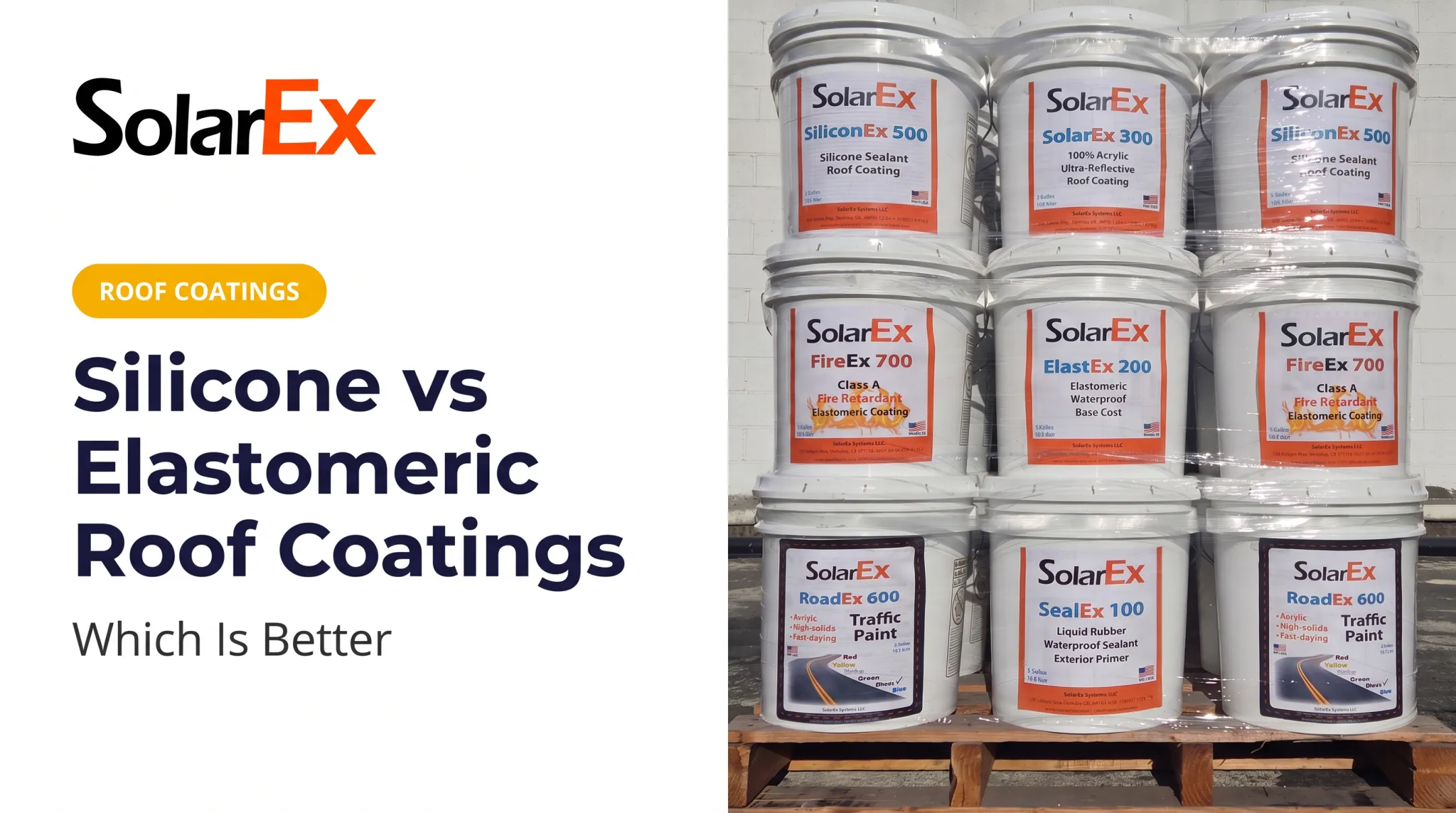
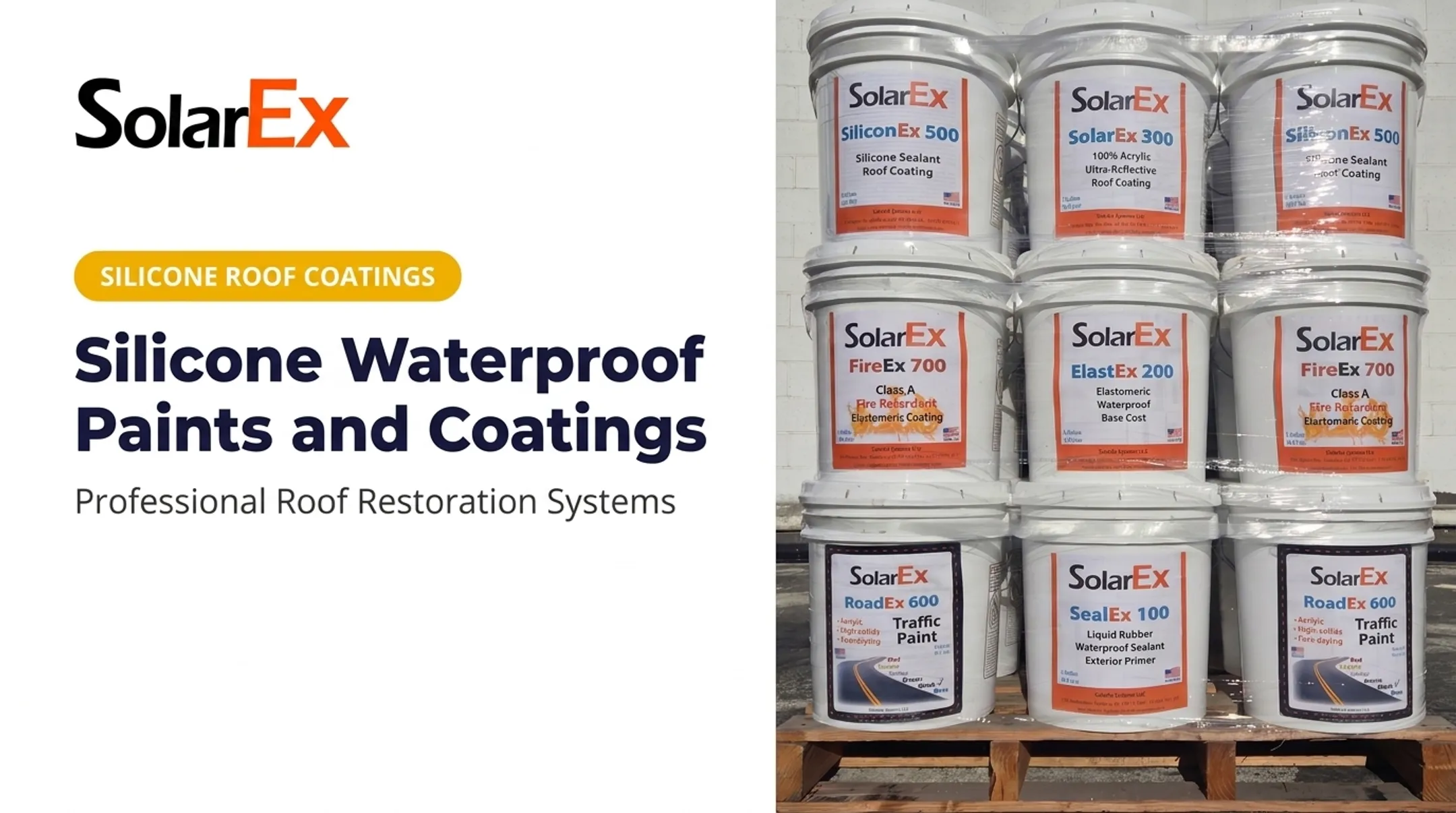
Common commercial applications include low-slope membrane roofs, metal, modified bitumen, built-up roofs, concrete, and spray polyurethane foam (SPF). SolarEx's SiliconEx 500 is a professional-grade 100% silicone formulation built for permanent ponding-water resistance across this substrate range.

Silicone still needs proper prep:
- Repair damaged SPF before coating
- Patch concrete cracks and joints
- Fix loose fasteners and treat corrosion on metal roofs
Use Cases of Silicone Roof Coatings
Silicone is the practical choice when:
- The roof has periodic ponding water that drainage fixes haven't fully solved
- The building sees intense, sustained UV exposure
- The climate is humid or rainy for much of the year
- Long-term durability outweighs upfront cost
Maintenance still matters. Schedule periodic inspections, clean the surface occasionally to restore reflectivity, and add walk pads in high-traffic areas. The coating gets slippery when wet.
FacilitiesNet documented this approach at the Orland Park Sportsplex in Illinois. A PVC roof over steel decking received a reflective silicone recoating across more than 70,000 square feet in two phases, supporting the building's energy-saving goals.
Acrylic vs Silicone Roof Coatings: What Is Better?
Neither chemistry wins outright. The better coating is the one that matches your roof's condition, drainage, climate, substrate, budget, and warranty requirements, not the one with the flashier spec sheet.
Choose acrylic when:
- Initial cost and easy cleanup matter most
- The roof drains well and won't hold water
- Appearance and color options are a priority
- Weather conditions allow proper drying
Choose silicone when:
- Ponding water is a recurring issue
- UV exposure or humidity is severe
- Long-term durability outweighs upfront price
- The building is in a region with frequent temperature swings
Neither coating is the answer when:
- The roof has active structural failure
- Insulation underneath is saturated
- Drainage defects haven't been corrected
- Leaks haven't been properly diagnosed and repaired
Before buying, walk through this checklist:
- Roof age, condition, and current substrate
- Drainage history: has water ever pooled for more than 48 hours?
- Local climate and the installation-week forecast
- Foot traffic and access needs
- Dry-film thickness required by the manufacturer
- Warranty terms and future recoat compatibility
If solar is already on the roadmap, add that to the same decision pass. Reflective coatings and solar generation work well together: a cooler roof surface can support panel efficiency and cut building heat load. Confirm product claims and warranty language against the manufacturer's technical data before you buy.
Real-World Applications and Case Studies
The Orland Park Sportsplex project mentioned earlier is a useful reference point. A public facility with an aging PVC roof over steel decking received a two-coat, high-solids silicone system across two construction phases (2022 and 2023), with the recoat tied to the building’s energy-saving strategy.
It is a commercial example. It should not be generalized to a residential shingle roof: different substrate, different exposure, different expectations.
Commercial low-slope silicone
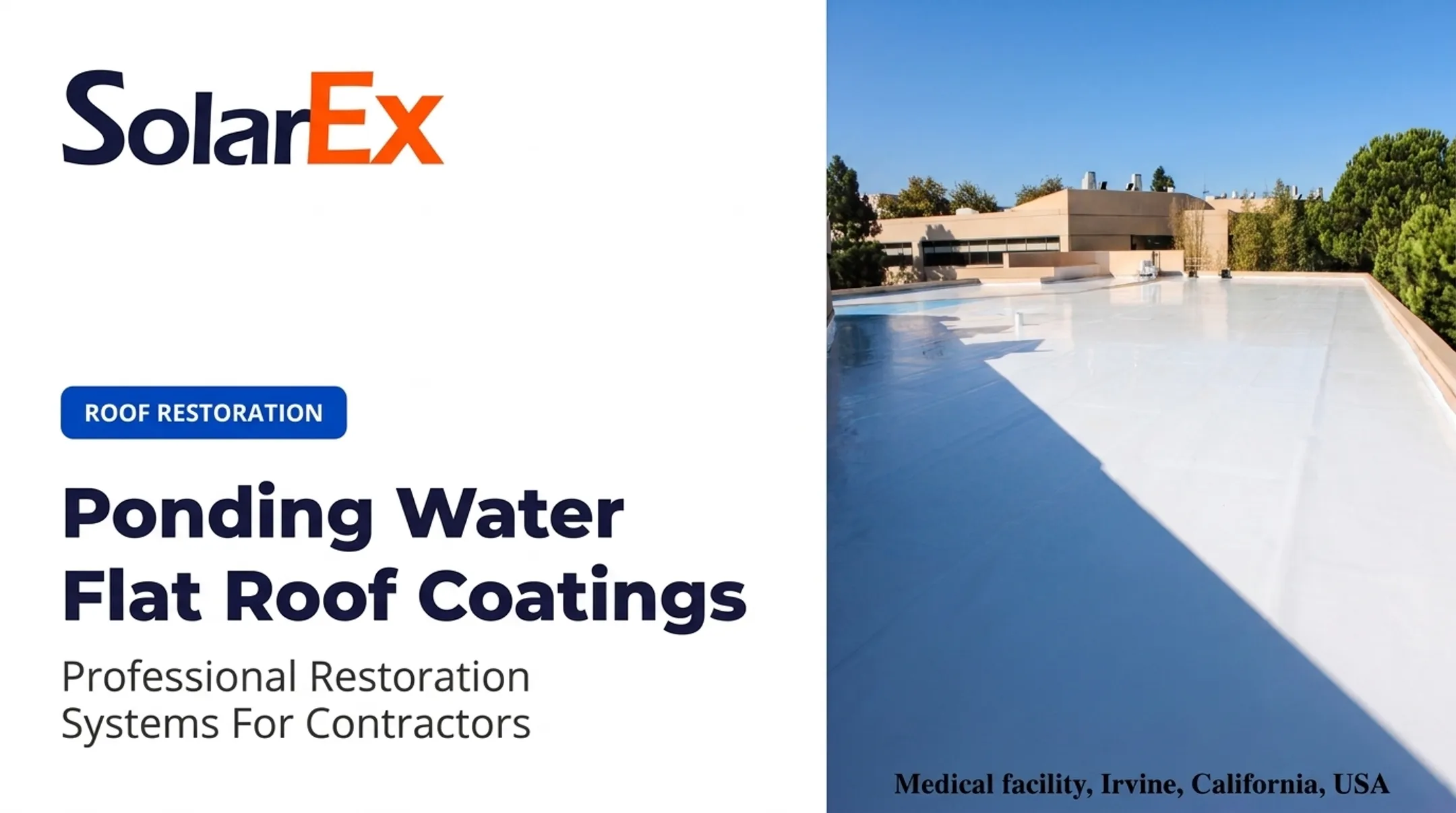
On the commercial side, SolarEx has documented a 15-year silicone restoration on a 6,500-square-foot modified-bitumen roof in Bakersfield, California. The building’s flat profile created recurring ponding, so silicone was the more durable fit over acrylic.
Contractor-scale shingle restoration
For a shingle-roof example, SolarEx’s ShinglEx 800 line is positioned for contractor-scale restoration of asphalt-shingle roofs between 5 and 15 years old. That is a different use case from commercial low-slope silicone work, and a reminder that shingle roofs need their own evaluation criteria.
What these projects share:
- Match the coating chemistry to substrate and drainage, not to a generic “roof coating” label
- Treat ponding and low-slope commercial roofs as silicone-first candidates
- Evaluate aging shingles on age, granule loss, and contractor scope before choosing a rejuvenator

If you’re weighing which system fits your building, SolarEx offers a professional assessment based on substrate, drainage, and climate exposure. Reach the team at +1 (877) 888-2278 or info@solarexsys.com before you commit to a system.
Conclusion
Acrylic tends to be the sensible fit for well-drained roofs, cost-conscious projects, and jobs where easy cleanup and color options matter. Silicone earns its higher price tag on roofs facing ponding water, intense UV, or humid, variable climates where acrylic would break down faster.
Chemistry is only part of the equation, though. A proper inspection, substrate compatibility check, drainage correction, and careful application matter just as much as which coating you pick.
Get those right, and either system can extend roof life, cut heat absorption, and delay a costly replacement. Just don't expect results the specific roof hasn't earned through proper prep.
Frequently Asked Questions
What is acrylic silicone coating?
Acrylic and silicone are two distinct roof-coating chemistries, not one product. "Acrylic silicone coating" usually means a comparison between the two, or occasionally a blend. Always check the product data sheet to confirm what you're buying.
Which is better, acrylic or silicone roof coating?
Acrylic is often chosen for lower cost, appearance, and easy cleanup on roofs with reliable drainage. Silicone is typically preferred where ponding water, high UV, or humidity create tougher performance demands.
What is the best coating for a TPO RV roof?
There's no universal answer. The coating must be specifically approved for TPO and RV use. Confirm compatibility, required primer, movement tolerance, and manufacturer warranty terms before applying anything.