
Asphalt shingle roofs are the most common residential roofing system in the country, and aging is universal. But coating isn't a blanket fix for every roof showing wear. This article covers when coating makes sense, the product categories available, proper preparation and application, realistic durability expectations, warning signs that mean "stop and call a professional," and when repair or full replacement is the safer path.
Key Takeaways
- Use coating only on structurally sound, dry, well-ventilated shingle roofs with a compatible product.
- Coatings improve reflectivity and surface protection but can't fix failing decking or major shingle damage.
- Always check the shingle manufacturer's guidance, the coating's technical data sheet, and local code requirements first.
- Active leaks, sagging, or soft spots mean it's time for a professional inspection, not a coating job.
Can Asphalt Shingle Roofs Be Coated?
Some asphalt shingle roofs can accept a compatible coating. Many can't. There is no blanket answer — and the industry's leading trade association says so directly.
The Asphalt Roofing Manufacturers Association (ARMA) strongly advises against field-applying coatings or rejuvenators over installed asphalt shingles. Their bulletin cites reported risks including coating shrinkage, shingle curling or cupping, loosened granule surfacing, and reduced fire classification or algae resistance. ARMA also notes that documentation is limited on whether these treatments actually extend roof life or reduce energy use — and some require repeat reapplication just to maintain appearance (ARMA technical bulletin).
Still, some products are formulated for shingles. Be selective, confirm compatibility, and check warranty and code status before you apply anything.
Coating, Rejuvenator, Sealant, or Replacement?
These terms get used interchangeably, but they're not the same thing:
- Roof coating – a liquid film applied over the shingle surface for weather protection and reflectivity
- Rejuvenator/penetrant – a treatment (often oil or ester-based) that soaks into aged asphalt rather than sitting on top as a film
- Sealant – used for localized repairs at seams, fasteners, or penetrations, not whole-roof treatment
- Replacement – full tear-off down to the deck, with damaged substrate repaired
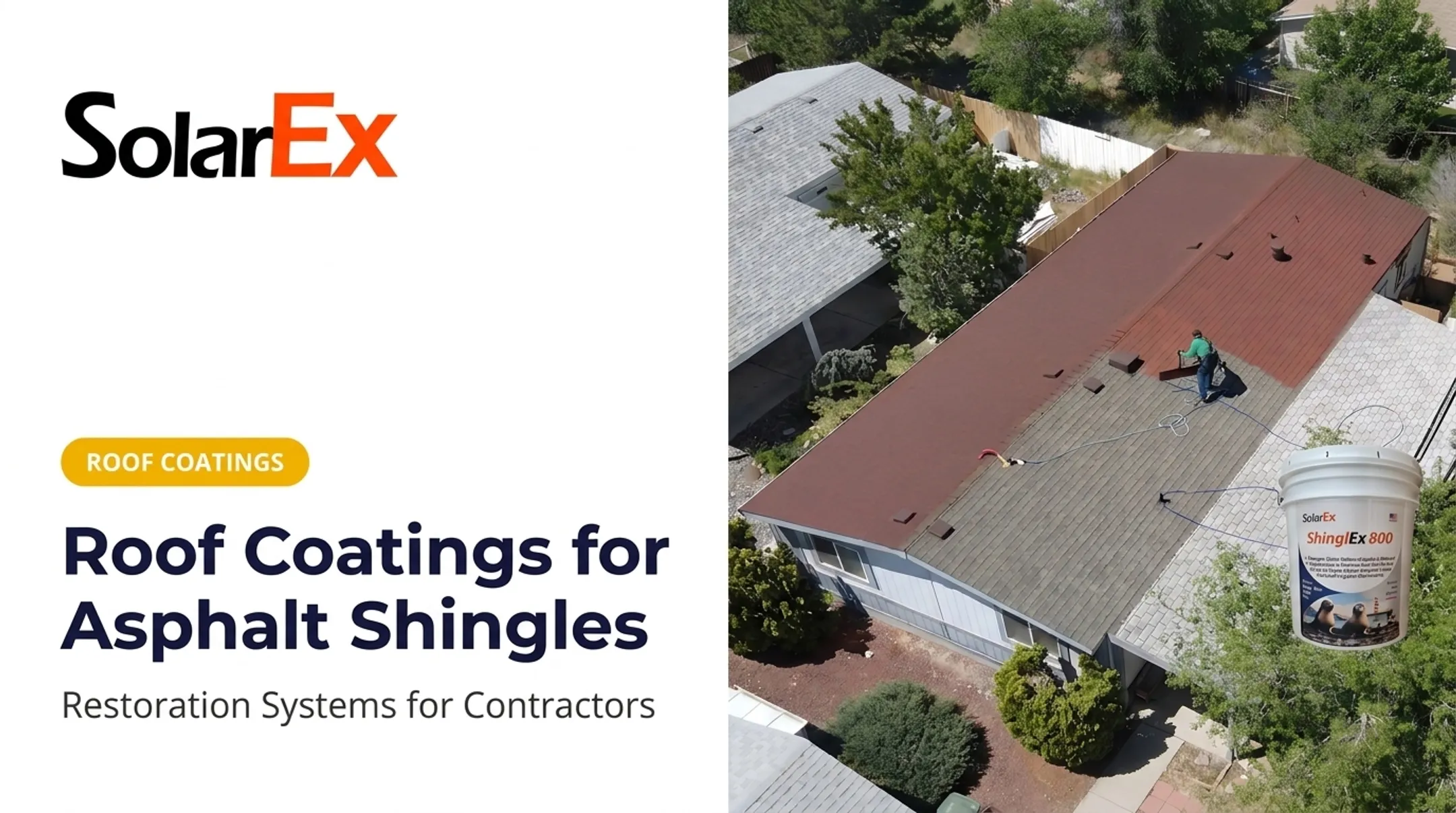
Products like ShinglEx 800, a waterborne acrylic rejuvenator for shingles roughly 5 to 15 years old, sit in the coating/rejuvenator category. They bond to the shingle surface and help lock down worn granules instead of soaking in like an oil-based penetrant.
Why Code and Warranty Status Matter
The 2021 International Residential Code lists specific roof types eligible for a recover coating — existing coatings, metal panels, mineral-surfaced roll roofing, built-up roofing, modified bitumen, single-ply, and spray polyurethane foam. Asphalt shingles are not on that list (2021 IRC, Chapter 9). That doesn't automatically prohibit coating, but it means local building departments and the shingle manufacturer need to be consulted directly.
Before applying anything, inspect for:
- Granule retention and any exposed black asphalt
- Curling, cracking, or blistering shingles
- Algae or moss growth
- Flashing condition and roof penetrations
- Drainage patterns and attic ventilation
Skip these checks and you can trap active leaks, loose granules, or ventilation problems under a film that only hides the damage.
What Are the Potential Benefits and Limitations of Coating Asphalt Shingles?
Coating a shingle roof can deliver measurable gains on a sound system—and none on a failing one. The work is separating verified product performance from marketing assumptions.
What a Compatible Coating Can Do
- Slow UV-driven aging. ShinglEx 800 adds a UV shield intended to reduce sun damage and color fade, available in several tints.
- Protect remaining granules. Independent lab testing by PRI Asphalt Technologies found ShinglEx 800-treated shingles lost approximately 88% less granule material than untreated shingles under ASTM D4977 testing (0.06g versus 0.52g).
- Add reflectivity. Compatible coatings create a cooler surface that can cut heat transfer into the attic.
- Tighten minor surface cracking. Reseals small gaps around nail heads on otherwise sound shingles.
Cool-roof surfaces can affect indoor temperature. The EPA reports that in air-conditioned homes, reflective roofing may reduce peak cooling demand by 11% to 27%, and in non-air-conditioned homes it may lower peak indoor temperature by roughly 2 to 6°F (EPA Heat Island guidance). That is general cool-roof data, not a guarantee for every coated shingle roof, but it shows the mechanism is real.

What It Absolutely Cannot Do
Coatings don't reverse structural problems. They will not:
- Replace shingles that are already cracked, broken, or missing
- Rebuild rotted or water-soaked decking
- Correct failed flashing or fastener issues
- Stop structural movement or sagging
- Restore granules that have already washed away in bulk
- Make a 20-year-old roof perform like a new one
A coating extends what's already working. It doesn't fix what's already broken.
Coating vs. Repair vs. Overlay vs. Replacement
| Option | Best Use Case | Disruption | Typical Cost vs. Replacement |
|---|---|---|---|
| Localized sealant repair | Isolated leaks, fastener gaps | Minimal | Lowest |
| Coating/rejuvenator | Sound roof, early aging, granule loss | Low | ShinglEx 800 typically runs 50–80% less than a full tear-off |
| Overlay (new layer over old) | Deteriorated but stable substrate, code-permitting | Moderate | Mid-range |
| Tear-off replacement | Structural damage, end-of-life shingles | High | Full cost |
If your roof only needs surface refreshing, a coating is worth investigating. If you're finding soft spots or active leaks, skip straight to a professional assessment.
How to Choose and Apply a Shingle Roof Coating
Not all coatings are built the same, and matching the product to the substrate matters more than picking a brand name.
Comparing Coating Categories
- Acrylic: Water-based and flexible; common for cool-roof and shingle rejuvenation. ASTM D6083 covers liquid-applied acrylic elastomeric coatings, but substrate approval comes from manufacturer testing.
- Silicone: Highly durable and ponding-water resistant, but typically formulated for low-slope membrane and spray foam roofs, not sloped shingle surfaces.
- Specialty shingle treatments: Purpose-built for asphalt shingles, like ShinglEx 800, which covers up to 250 square feet per gallon per coat and applies by spray, roller, or brush.
Reading the Technical Data Sheet
Before buying anything, check the product's TDS for:
- Approved substrates — does it list asphalt shingles specifically?
- Coverage rate and required dry-film thickness
- Temperature limits during application (ShinglEx 800 requires 50°F/10°C and rising, with no rain or freeze forecast for 24–48 hours)
- Recoat window and cure time
- Warranty terms tied to application rate
Reflective Coatings for Heat Reduction
SolarEx 300 is a 100% acrylic reflective coating designed to reflect a high percentage of UV and infrared radiation on compatible shingle roofs.
Confirm asphalt-shingle compatibility, exact mil thickness, and warranty conditions with the manufacturer before use. Reflective acrylics built mainly for low-slope commercial substrates don't always transfer directly to sloped residential shingles.
Professional Application Sequence
A properly done job generally follows this order:
- Inspect the roof and flag any repairs needed
- Complete repairs and allow full drying
- Clean the surface — remove dirt, algae, and mildew
- Mask flashing, vents, and adjacent surfaces
- Apply a test patch to confirm adhesion
- Apply the coating at the specified rate, often in two coats
- Allow proper cure time before foot traffic or rain exposure

Why DIY Application Carries Real Risk
Roof work at height is inherently dangerous, regardless of how simple the coating process looks. DIY attempts risk uneven coverage, blocked ventilation, overspray, and falls. Steep, high, or damaged roofs should go to a qualified applicator, both for safety and to keep any warranty intact.
When Coating Is Not the Right Solution
Coating a roof that needs repair doesn't fix the problem. It only hides it temporarily.
Skip coating and get a full inspection if you see:
- Active, widespread leaks
- Sagging along the ridge or across the deck
- Soft or spongy areas underfoot
- Severe shingle curling, cracking, or cupping
- Exposed underlayment or bare decking
- Extensive granule loss down to bare asphalt
- Recent storm damage (hail bruising, torn shingles)
- Mold, rot, or failed flashing
The Asphalt Roofing Manufacturers Association (ARMA) is blunt on this point: coatings shouldn't be used to mask unresolved leaks or structural issues. Isolated wear is one thing. Systemic failure is another, and no surface film changes that distinction.
If you do proceed with coating a sound roof, keep the job safe:
- Check weather: no rain or freezing temps during the cure window
- Protect ventilation intakes from overspray
- Manage runoff so wet coating doesn't reach landscaping or storm drains
- Use fall protection for anyone working above ground level
- Ventilate occupied spaces during application, even with low-VOC products
How Long Can a Shingle Roof Coating Last and How Should It Be Maintained?
There's no universal lifespan number here, and any source claiming otherwise is oversimplifying. Service life depends on the specific product, film thickness, roof exposure, climate, and how well the substrate was prepped beforehand.
What the data does show: ShinglEx 800 carries a 7-year material warranty on qualifying two-coat applications. Manufacturer guidance suggests up to 10 years of added roof life, depending on roof condition at application.

Treat that as a product-specific figure, not an industry standard. Always confirm against the current technical data sheet and warranty document before relying on it.
Getting that full service life still depends on routine care after the coating is down.
A Basic Maintenance Framework
- Visual inspection twice yearly and after major storms
- Clean debris off the surface to prevent moisture retention
- Check seams, flashing, and penetrations for early separation
- Watch for ponding water, which shortens film life significantly
- Repair failed spots promptly rather than waiting for the next inspection cycle
Documentation Worth Keeping
Save these records at installation:
- Product name and batch number
- Pre-application roof condition (photos help)
- Application date and weather conditions
- Measured coverage rate or thickness applied
- Contractor details and warranty paperwork
This paper trail matters if you ever need to file a warranty claim or sell the home.
Frequently Asked Questions
Can you put a roof coating over shingles?
Yes—if the roof is structurally sound, dry, and free of failing shingles. Confirm compatibility in both the shingle manufacturer's guidance and the coating's technical data sheet before application.
How long does a shingle roof coating last?
Service life varies with the product, prep quality, climate, and existing roof condition. Use the specific product's warranty documentation for the coverage period that applies to your project—not a generic industry average.
Do roof coatings work on shingle roofs?
Compatible coatings can improve reflectivity, slow UV aging, and help protect remaining granules. They cannot repair structural damage, active leaks, or shingles that are already failing.
What is the best coating for a shingle roof?
No single product fits every roof. Choose based on approved substrate, current roof condition, climate, and warranty requirements, and match the system to your specific shingles.