
Introduction
A roof terrace takes a beating. Rain, UV radiation, freeze-thaw cycles, foot traffic, and furniture all work against the waterproofing layer protecting everything below it. Add poor drainage to the mix, and leaks become almost inevitable.
When that waterproofing fails, the damage doesn't stay on the roof. Ponding water seeps into joints, stains appear on ceilings below, mold takes hold, and embedded steel reinforcement starts to corrode. Finishes bubble and peel. Repair bills pile up faster than most owners expect.
This guide compares the main waterproofing systems used on roof terraces today and explains how each one works. It also covers the criteria that matter most when matching a system to your roof's substrate, climate, use, and current condition.
Key Takeaways
- Treat waterproofing as a full system: inspection, repairs, drainage, detailing, and maintenance.
- Match liquid coatings, cementitious systems, or sheet membranes to conditions and traffic.
- Get surface prep, penetrations, parapets, and joints right before the membrane.
- Rank compatibility, ponding resistance, and service life above sticker price.
What Is Roof Terrace Waterproofing and Why Does It Matter?
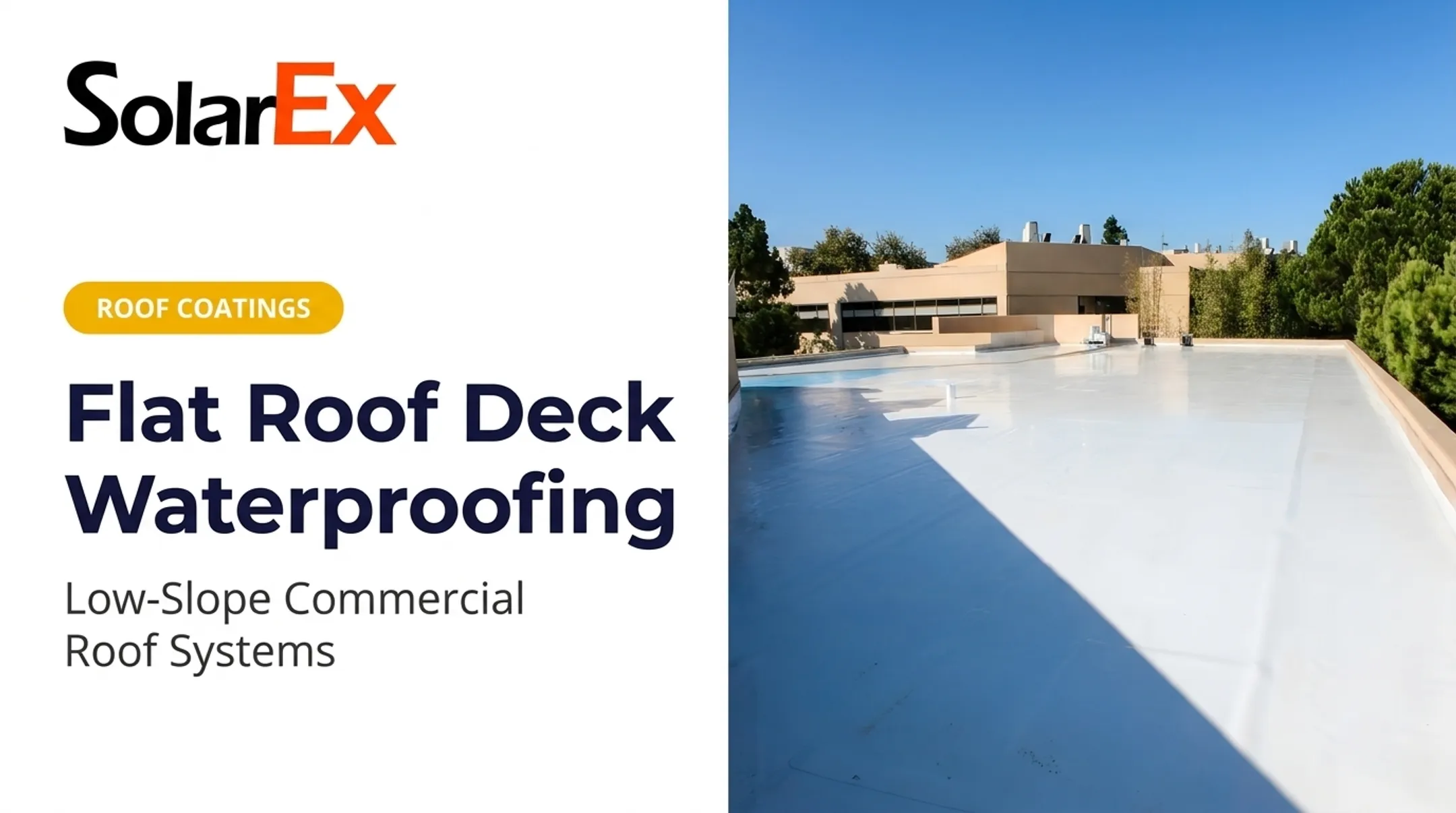
Roof terrace waterproofing means installing a continuous, water-resistant barrier plus all the supporting details, flashing, drain connections, joint seals, and edge terminations that stop water from entering through the deck, joints, or penetrations. It's used on concrete roof decks, low-slope commercial roofs, occupied terraces, and restoration projects, though the right system always depends on what's already there.
Waterproofing is distinct from roof repair, full replacement, or a cool-roof coating alone. A reflective coating can lower surface temperature and cut energy costs, but it won't fix structural cracks, correct poor drainage, or bond properly to an incompatible existing membrane. Those problems need to be solved first.
What Happens When Waterproofing Fails
Neglected waterproofing doesn't just leak. It accelerates deterioration across the whole assembly:
- Water migrates under finishes and tile, spreading damage far from the original entry point
- Freeze-thaw cycles widen cracks in colder climates
- Corrosion attacks embedded steel reinforcement in concrete decks
- Interior dampness creates conditions for mold growth
The EPA notes that moisture control is the key factor in controlling mold, which is why a failed membrane on a terrace can become an indoor air-quality problem a floor below.
Early warning signs to watch for:
- Recurring leaks or ceiling stains after rain
- Blistering, peeling, or soft spots in the surface
- Cracks, exposed reinforcement, or algae growth
- Standing water that doesn't drain within a day or two after rainfall
NRCA treats ponding as a real problem once it persists beyond 48 hours under normal drying conditions—not just a cosmetic nuisance.
Types of Roof Terrace Waterproofing
Three system categories dominate roof terrace projects. Which one fits depends on the deck material, existing membrane, sun and weather exposure, drainage design, traffic load, and the warranty you need.
Liquid-Applied Elastomeric or Silicone Coatings
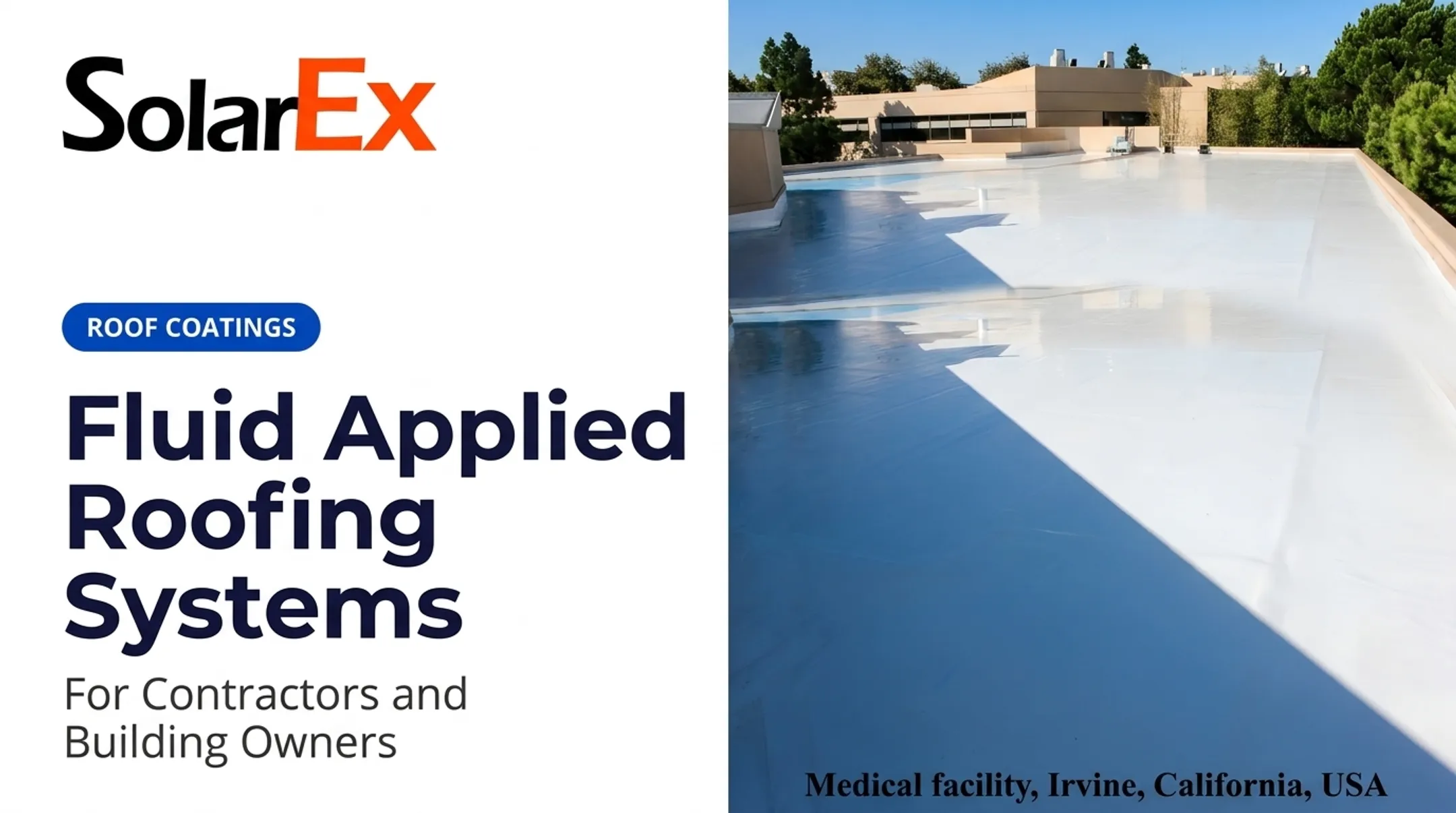
These are fluid-applied materials that cure into a seamless membrane directly over a prepared roof surface. Because they're applied wet and cure in place, they cover irregular details, curbs, and penetrations without the laps and seams that sheet systems require.
Strengths:
- Seamless coverage across an entire terrace, including tricky details
- Flexibility that accommodates thermal movement
- Restoration potential over a structurally sound existing roof
- Compatible with many existing assemblies without full tear-off
Limitations: A coating can't fix saturated insulation, active structural movement, failed drainage, or an unstable substrate. Performance depends heavily on coverage rate, dry-film thickness, and curing conditions at the time of application.
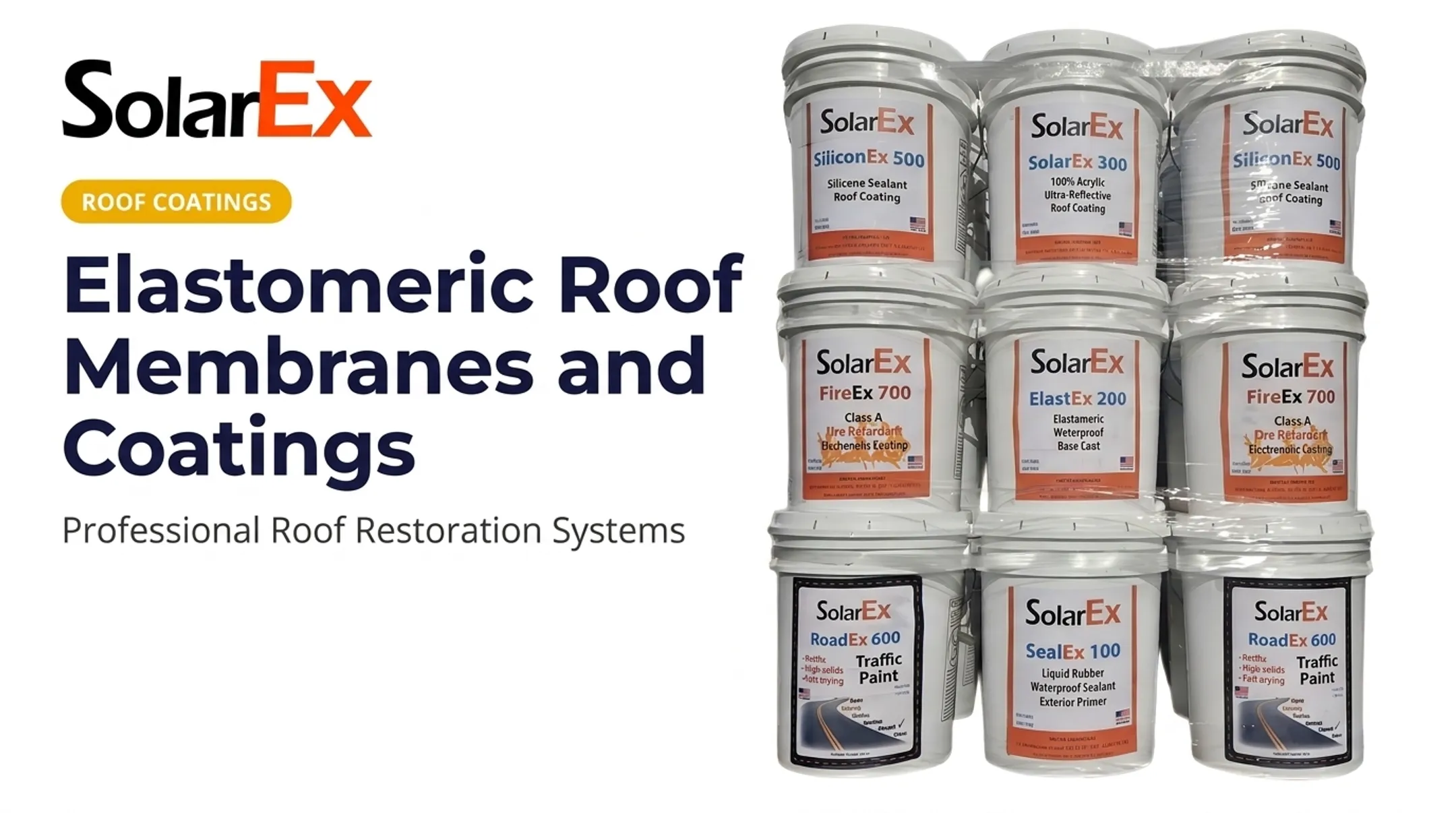
SolarEx's SiliconEx 500 is a practical example of a coating built for this work. It is a 100% silicone, solvent-free, single-component, moisture-cured coating that forms a monolithic membrane instead of overlapping panels.
Key traits include:
- Resistance to permanent ponding water
- Brush, roller, or airless-spray application
- Low-VOC formulation
- Reflects up to 88% of solar radiation
- 10-, 15-, and 20-year material warranty options when applied per spec
That said, coverage rates, primer requirements, and substrate compatibility (metal, concrete, TPO, EPDM, modified bitumen) vary by project condition.
Before treating any coating as a recommendation, confirm approval for your substrate, expected foot traffic, local climate, and warranty terms in writing. High-traffic areas typically need an added traffic layer over standard silicone coating.

Cementitious and Polymer-Modified Waterproofing Systems
These cement-based or polymer-enhanced materials bond directly to concrete or masonry, forming a waterproofing layer that's chemically compatible with mineral substrates. They're common on concrete roof decks, repair zones, upstands, and parapets, especially where a protective screed or tile finish will go over the top.
Where they fit well:
- Concrete decks that will receive a screed or paver finish
- Repair zones needing a cement-compatible bond
- Parapet upstands and transition areas
Trade-offs: Cementitious systems can be sensitive to movement and may crack if applied over an unstable base. They also require proper curing time, and joints or transitions usually need reinforcement or flexible detailing since the base material itself isn't flexible.
Sheet Membranes and Bituminous Systems
Sheet membranes and torch-applied, self-adhered, or mechanically attached bituminous systems are factory-produced with controlled thickness. Installers join them with lapped, sealed seams. Their strength is consistent material properties and decades of practice on larger, more complex low-slope roofs.
Failures still concentrate at seams, penetrations, and edge details. Torch application also brings fire and heat considerations, and weather limits the installation window.
| Factor | Liquid-Applied | Cementitious | Sheet/Bituminous |
|---|---|---|---|
| Installation | Sprayed/rolled, seamless | Trowel/roll-applied | Lapped, sealed sheets |
| Flexibility | High | Low-moderate | Moderate |
| Detailing around penetrations | Easiest | Moderate | Requires skill |
| Ponding water suitability | Good (system-dependent) | Limited | Moderate |
| Repairability | Simple recoat | Patch repair | Seam/patch repair |
How to Choose the Right Solution
The right system comes from the roof's actual condition and your project's requirements, not from whichever product has the flashiest marketing or the lowest sticker price.
Assess the Existing Roof and Substrate
Before anything gets specified, inspect:
- Deck, existing membrane or coating, and insulation
- Screed, flashing, parapets, and joints
- Drains, penetrations, and any ponding areas
Where you see blistering, soft spots, or recurring leaks, moisture testing, adhesion testing, or core sampling may be needed before you can trust a substrate to hold a new system.
Match the System to Exposure and Use
Climate matters as much as the material. Factor in:
- UV exposure and heavy rainfall
- Snow load and freeze-thaw cycling
- Thermal movement and wind exposure
- Seasonal temperature windows for installation
Intended use matters just as much. A terrace with occasional access needs different protection than one with regular foot traffic, furniture, planters, or rooftop equipment. Higher-traffic terraces often need a dedicated walkway, pavers, or protective screed layer over the waterproofing, not just a thicker coat of the same material.
Prioritize Drainage and Critical Detailing
Waterproofing works with drainage. It doesn't replace it. Adequate slope, clear drains, functioning overflows, and correctly sized downspouts all have to be in place. If water is ponding, that's a defect to investigate, not a problem to coat over.
The 2024 IBC requires secondary emergency drains or scuppers wherever raised construction could trap water if primary drains fail. It also sets a 2% minimum slope for new modified-bitumen, single-ply, and liquid-applied roof systems per the 2024 IBC, Chapter 15.

Pay close attention to the details that fail most often:
- Parapet-to-roof transitions
- Wall junctions and expansion joints
- Scuppers, drains, and edge terminations
- Flashing around any penetration
Compare Lifecycle Value and Documentation
Comparing product price alone misses most of the actual cost. Weigh preparation, labor, access, repairs, recoating intervals, and disruption over the system's expected service life.
Before signing off on any proposal, check:
- Technical data sheets for coverage rates and required coats
- Compatible primers and curing windows
- Warranty exclusions, including maintenance obligations
- Whether the proposal states the full roof assembly, prep method, and acceptance criteria
One 18,000-square-foot commercial roof restoration showed why this step can't be skipped. A previous low-cost acrylic coating had been applied without primer over EPDM, resulting in widespread blistering and complete material failure within 14 months.
Moisture scans and a properly specified silicone system corrected the problem afterward. The facility saw a 20% drop in cooling costs once the reflective coating was fully installed.
What to Check Before Finalizing a Roof Terrace Waterproofing System
A few final checks separate a durable job from a repeat repair call.
Don't select a system before finding the actual source of leakage. Surface cracks and failed flashing are different problems than structural movement, saturated insulation, or a defective drain line, and each requires a different fix.
Don't coat over unprepared surfaces. Dust, grease, trapped moisture, loose material, or an active leak will undermine adhesion no matter how good the coating is.
Documented cleaning, drying, and repair steps should come first. Where concrete is involved, run a moisture check—SolarEx guidance recommends concrete moisture below 5% before coating.
Verify code and safety requirements, including:
- Manufacturer application limits and weather windows
- Building code fire and VOC compliance
- Fall protection for rooftop work
- Qualified, trained applicators
Confirm the maintenance plan up front. Lock in answers before the job closes:
- How drains will be cleaned
- How often the roof gets inspected
- How punctures get repaired
- What records keep the warranty intact
Most systems also need a curing period—often about 48 hours without traffic under normal conditions—before the terrace goes back into use.

Conclusion
Effective roof terrace waterproofing depends on more than a single product choice. Long-term performance comes from getting several elements right together:
- Compatible material matched to the substrate and climate
- Sound substrate preparation
- Working drainage
- Flexible detailing at every transition
- Correct application
- A real maintenance plan afterward
Compare system types against your roof’s actual condition rather than the cheapest option or the loudest marketing claim. That approach means fewer repeat leaks and better long-term value.
Frequently Asked Questions
What is the best waterproofing solution for a roof terrace?
It depends on your substrate, existing roof assembly, drainage, climate, movement, and traffic level. Get a professional assessment before choosing a system rather than picking based on price alone.
Can roof coatings stop an existing leak?
A compatible coating can help restore a structurally sound roof, but active leaks, wet insulation, structural cracks, and drainage defects need diagnosis and repair first. Coating over an unresolved leak just hides the problem temporarily.
How long does roof terrace waterproofing last?
Service life depends on system type, prep quality, application, exposure, and maintenance, so ignore universal lifespan claims. Ask for the specific manufacturer warranty and maintenance terms tied to your project.
Can waterproofing be applied over an existing roof membrane or tiles?
Some systems can go over existing materials once compatibility, adhesion, moisture, and stability checks pass. Loose, saturated, or incompatible assemblies typically need removal first.
How do I prevent ponding water on a roof terrace?
Make sure slope, drains, and overflow paths are all functioning, and correct any low spots or damaged detailing. If ponding persists past a day or two after rain, have a professional evaluate the drainage design.
Should I waterproof a roof terrace myself or hire a professional?
Minor maintenance, like clearing a drain or patching a small spot, is different from a full waterproofing installation. Hire a qualified roofing professional for large areas, recurring leaks, occupied terraces, or any work that needs to carry a manufacturer warranty.