
Introduction
A single roof leak in an industrial warehouse rarely stays a single problem. Water finds pallets of inventory, drips into electrical panels, pools near loading docks, and creates the kind of slip hazard that turns into a safety incident report.
According to the National Roofing Contractors Association, most roof leaks and problems occur at flashings and penetrations rather than the open field of the roof. That's exactly why so many facility teams miss the source until damage is already spreading.
Choosing the right waterproofing system isn't about picking whatever coating gets the most marketing attention. It depends on your roof's material, slope, drainage, current condition, and what your operation actually needs from it.
This guide covers why waterproofing matters, how to assess your roof before committing to a system, and how to choose among the main options. It also walks through what proper installation looks like, how to plan maintenance, and how to select a contractor you trust.
Key Takeaways
- Treat waterproofing as a full system: inspection, drainage, prep, details, and QC—not a coating alone.
- Match the system to roof material, slope, ponding, movement, and existing layer condition.
- Use a professional assessment to decide restoration versus repair or replacement.
- Base reflective coating energy savings on project-specific analysis, not blanket promises.
Why Industrial Warehouse Roof Waterproofing Matters
Water doesn't stay where it lands. Once it gets past a seam or membrane, it travels along structural members, insulation, and wiring until it finds the path of least resistance, often nowhere near the point where it first got in.
What a Leak Actually Damages
Water infiltration puts several assets at risk:
- Stored inventory and packaging materials
- Machinery, conveyors, and electrical panels
- Roof and wall insulation, which loses R-value once saturated
- Ceiling tiles, structural steel, and metal decking
- Interior lighting and fire-suppression systems
The highest-risk zones are seams, penetrations, drains, and roof edges.
The Operational Cost of Ignoring It
A leaking roof rarely stays a maintenance-department problem. Recurring leaks can:
- Force teams to rope off storage areas or relocate inventory
- Interrupt loading dock activity and production schedules
- Create slip hazards, mold growth, or electrical risks
- Turn a planned coating project into an unplanned emergency repair bill
What starts as a wet ceiling tile can turn into a corroded steel purlin.
Secondary Benefits Worth Planning For
Beyond stopping active leaks, a properly specified system:
- Slows corrosion on metal panels and fasteners
- Extends the useful life of a roof that's still structurally sound
- Reduces emergency service calls and unpredictable costs
- Supports budgeted maintenance instead of reactive spending
Reflective Coatings and Energy Use
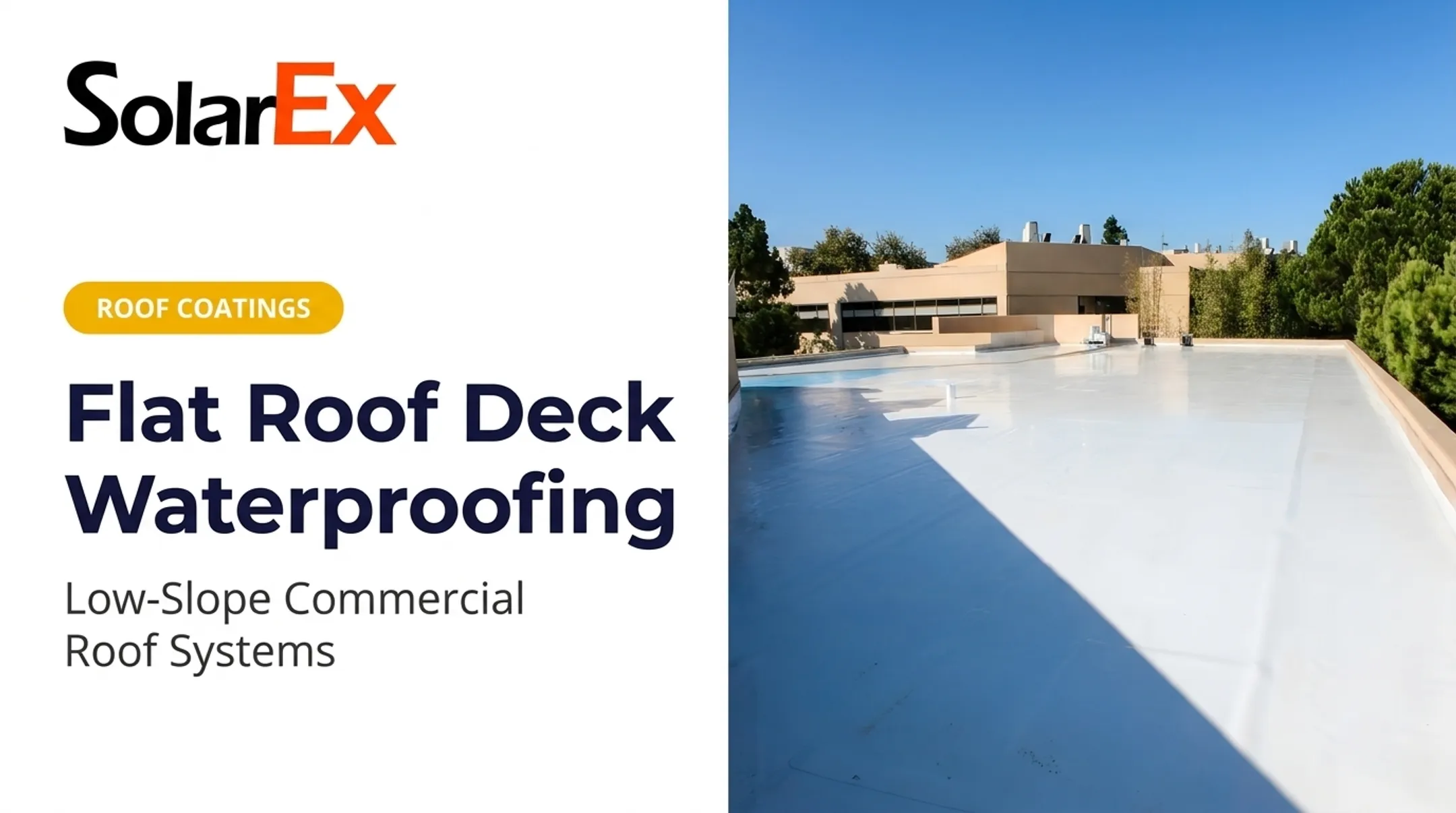
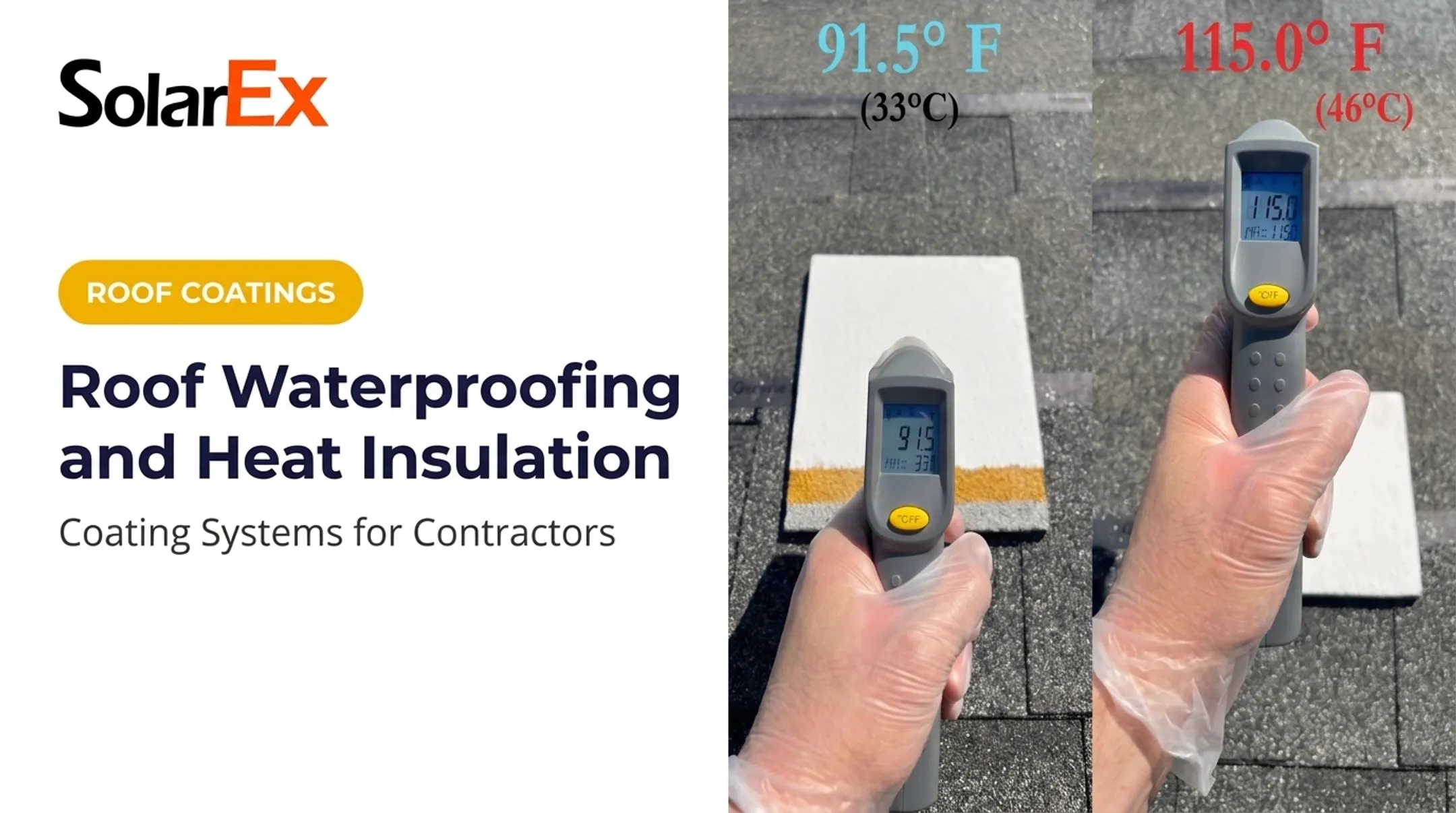
The same specification choice can also cut cooling load. Some coating systems, including silicone-based products, are reflective—they bounce solar energy away from the building instead of absorbing it. The Department of Energy notes that white commercial roofs can save building owners up to $0.20 per square foot annually, though actual savings vary by climate, insulation levels, and HVAC use, with the biggest gains in hot, sunny regions.
Don't approve a coating project on a promised percentage cut in cooling costs alone. Ask for a project-specific analysis instead.
What Waterproofing Can't Fix
A coating or membrane restores water resistance. It doesn't fix what's underneath. Waterproofing cannot correct structural deterioration, inadequate roof slope, failed drainage, or widespread roof-system failure. Those need repair or replacement work first.
How to Assess an Industrial Warehouse Roof Before Waterproofing
Start With a Documented Condition Assessment
A useful assessment records:
- Roof type, age, and slope
- Construction details and prior repair history
- Existing coatings or membranes and their condition
- Drainage layout, including drains, scuppers, and gutters
- Rooftop equipment, curbs, and access routes
- Interior locations where leaks or staining appear
Inspect the Usual Failure Points
Most leaks trace back to a short list of locations:
- Metal seams, fasteners, and panel laps
- Membrane laps, flashing, and parapet walls
- Skylights, HVAC curbs, vents, and pipe penetrations
- Expansion joints, gutters, valleys, and drains
Trace the Water, Not Just the Stain
An interior stain doesn't always sit under the actual leak. Water travels along purlins, insulation, and deck seams before it drips through. When tracing a leak, check for:
- Wind-driven rain entering lapped seams
- Condensation forming under metal decking
- Blocked drains pushing water sideways under flashing
- Capillary movement through porous substrates
- Thermal expansion opening gaps at fasteners
Prepare the Substrate Before Anything Else
Before any coating or membrane goes down, the substrate typically needs:
- Removal of loose material and failed coatings
- Rust treatment on corroded metal
- Complete cleaning and drying
- Repair of cracks, joints, and blisters
- Compatibility testing when coating over an existing system
Silicone coating systems often need concrete moisture below 5% and a pressure-washed, fully dry surface before application. That's the kind of detail a proper substrate check catches, and a drive-by inspection misses.
Restoration or Replacement?
| Roof Condition | Likely Path |
|---|---|
| Localized defects, sound substrate | Restoration |
| Widespread corrosion or saturated insulation | Broader rehabilitation |
| Structural movement or severe membrane failure | Replacement |
| Inadequate drainage throughout | Replacement or regrading |
Documentation to Request Before Work Begins
Request these documents before anyone steps on the roof:
- Roof plans and previous repair records
- Product data sheets
- Safety requirements and warranty conditions
- A written, itemized scope of work
Warehouse Roof Waterproofing Systems and How to Choose Among Them
Industrial warehouses typically choose from a handful of proven categories: liquid-applied coatings (silicone, acrylic, or elastomeric), single-ply membranes (EPDM, TPO, PVC), modified bitumen, or full replacement. None is universally "best." Suitability comes down to your existing roof assembly, not which product has the biggest marketing budget.

Liquid-Applied Coatings as a Restoration Option
Liquid-applied systems create a continuous, seamless-looking protective layer over a compatible existing roof. Performance depends on:
- Surface preparation quality
- Reinforcement at seams and details
- Application thickness, both wet and dry film
- Curing conditions during installation
- Attention to penetrations and edge details
Skip any of these steps, and even a premium coating underperforms.
Silicone vs. Acrylic or Elastomeric Coatings
| Factor | Silicone | Acrylic/Elastomeric |
|---|---|---|
| Ponding water tolerance | Generally strong; built to withstand chronic ponding | More prone to moisture absorption on flat areas |
| UV/heat stability | Stable under continuous solar exposure | Can chalk after prolonged heat exposure |
| Reflectivity over time | Tends to hold up longer | Can drop as the coating weathers or gathers dirt |
| Flexibility | Stays flexible through freeze-thaw cycles | Often higher elongation for heavier structural movement |
| Upfront cost | Higher | Typically lower, but needs reliable drainage |
Confirm current performance data against manufacturer technical documentation before comparing products head-to-head. Formulations and test results vary by product line.
EPDM, TPO, and PVC Membranes
These single-ply systems handle movement differently than coatings do:
- EPDM relies on adhered or mechanically fastened seams that need regular checks for shrinkage and separation
- TPO and PVC use heat-welded seams, which resist punctures well but require skilled welding for a watertight result
- All three face rooftop traffic and penetration risks, and repairability depends on the sheet's age and condition
Modified Bitumen and Other Membrane Options
Modified bitumen can work well on compatible low-slope assemblies, particularly with two-ply installations and positive drainage.
Limitations include added roof weight, heat sensitivity during installation, and detailing complexity around penetrations. Those constraints matter more on an active facility where shutting down operations isn't an option.
Matching the Roof to the Approach
- Isolated defects, sound deck: targeted repair
- Weathered but structurally sound roof: reinforced coating restoration
- Aging single-ply membrane, mostly intact: membrane overlay
- Failing roof section, rest intact: partial replacement
- Widespread failure or structural compromise: full replacement
Where a Cool-Roof Coating Like SiliconEx 500 Fits
For warehouses where the existing roof is structurally sound but showing wear, a silicone cool-roof coating such as SiliconEx 500 is worth evaluating as part of a restoration plan. It is made for compatible substrates—including metal, concrete, TPO, EPDM, and modified bitumen—and addresses moisture protection and heat absorption together.
Before specifying it, confirm current technical data sheets, required primers, warranty terms, and approved substrates for your specific roof.
The Industrial Waterproofing Process: From Inspection to Quality Control
Industrial waterproofing holds when crews follow a controlled sequence—not when product alone goes on the roof. Skip a step and coatings fail early, usually at seams, fasteners, or wet substrate.
Before Work Starts
- Complete a full roof inspection and document existing conditions
- Confirm the scope of work in writing
- Isolate vulnerable inventory or work areas
- Plan access routes and fall protection
- Coordinate scheduling with facility operations
- Check weather windows for adequate curing time
- Establish emergency procedures for unexpected rain
Surface Preparation
Preparation determines whether anything applied afterward holds. Typical steps include:
- Pressure washing to remove dirt, oils, and biological growth
- Removing failed or incompatible coatings
- Treating rust and corrosion
- Letting the surface dry completely
- Repairing damaged panels and loose fasteners
- Correcting deteriorated flashing before it fails further
Detail Work Before Broad-Area Application
Details fail before fields do. Before the main coat goes on, reinforce:
- Seams, laps, and joints
- Penetrations, drains, and curbs
- Skylights and parapet transitions
Typical detail work uses two pre-coats of elastomeric base coat at roughly 1 gallon per 100 square feet, extended at least 2 inches beyond each repair edge. Seal screws, pipes, and voids watertight before broad-area application.
Application Controls That Actually Matter
Getting material on the roof correctly requires controlling:
- Primer selection based on substrate (rust-inhibitive, bleed-blocking, or bonding primers)
- Mixing ratios and coverage rates
- Wet-film and dry-film thickness, checked with a wet-mil gauge
- Curing time between coats and before foot traffic resumes
- Temperature and humidity limits—most systems need 50°F or higher and a dry surface
- Protection of fresh coating from traffic or contamination
Inspection and Testing
Quality control isn't just a final walk-through. Build checks into the job:
- Visual review for coverage and missed spots
- Adhesion testing where bonding is uncertain
- Dry-film thickness verification
- Close inspection of seams and details
- Drainage review after work
- Targeted leak testing in high-risk areas

What a Complete Handover Should Include
Before crews leave, request:
- Product records and batch information
- Photographs of finished work and critical details
- Written maintenance instructions
- Warranty documentation
- Approved repair methods for future work
- A list of areas that need ongoing monitoring
Maintenance, Lifecycle Planning, and Choosing a Waterproofing Contractor
A Post-Installation Maintenance Plan
Keep the system performing with a simple post-install routine:
- Clean drains and gutters on a set schedule
- Inspect after severe weather
- Watch for new ponding water or cracks
- Limit unauthorized foot traffic
- Repair punctures and damaged details promptly The NRCA recommends inspecting roofs at least twice a year, in spring and fall, plus after severe storms; facilities with heavy exhaust or debris may need more frequent checks.
Judge Lifecycle Value, Not Just Price
The cheapest bid rarely reflects true cost. Compare proposals on:
- Expected service conditions and climate exposure
- Scope of preparation and repair included
- Repairability of the system over time
- Access requirements and safety planning
- Energy objectives, if reflective coatings are part of the goal
- Downtime during installation and warranty exclusions
Contractor Selection Checklist
Before signing anything, confirm the contractor:
- Has relevant industrial roofing experience
- Provides a written diagnosis, not just a price
- Proposes a system matched to your roof's actual condition
- Carries a documented safety plan
- Uses trained installers and a defined quality-control process
- Offers references, clear warranty terms, and ongoing maintenance support
Pairing Cool-Roof Assessments With Solar Planning
If solar is anywhere on your facility's roadmap, a cool-roof assessment is worth doing first, not as an afterthought. SolarEx's technical consultants typically confirm roof condition, structural load capacity, remaining service life, existing penetrations, and access requirements before any solar planning moves forward. That sequence avoids the costly scenario of pulling panels off later to fix a roof problem underneath them.

Before You Approve Any Project
Get a documented roof assessment and at least one itemized proposal before signing off on coating, membrane restoration, or replacement work. That paperwork turns waterproofing into a planned maintenance cost instead of an emergency shutdown.
Frequently Asked Questions
What is the best waterproofing for a warehouse roof?
It depends on the roof's material, condition, slope, drainage, ponding water, movement, and climate. Coatings, membranes, or full replacement can each be the right call after a documented assessment.
What type of roofing is best for a warehouse?
Metal, single-ply membrane, and low-slope built-up systems are all common choices. Durability, drainage, insulation needs, maintenance demands, and future rooftop equipment should guide the decision.
Is waterproofing better than replacing a warehouse roof?
Restoration can extend a structurally sound roof's life at a fraction of replacement cost. Widespread corrosion, saturated insulation, structural defects, or extensive failure usually make replacement the better option.
Can a roof coating be applied over an existing warehouse roof?
Yes, if the substrate is clean, dry, and structurally sound, and adhesion testing confirms compatibility. Defects need repair and details need reinforcement before any coating goes on, per manufacturer requirements.
How often should an industrial warehouse roof be inspected?
Most warehouses should run documented inspections at least twice a year, typically in spring and fall, plus after severe weather, major repairs, rooftop work, or reported leaks. Aging or high-risk roofs may need more frequent checks.
What should be included in a warehouse roof waterproofing quote?
A solid quote should cover inspection findings, preparation and repair scope, system specification, and application requirements. It should also spell out safety measures, quality checks, warranty terms and exclusions, schedule, and maintenance responsibilities.