
Property owners researching this topic often run into confusing terminology. A sheet-applied elastomeric membrane — typically a modified-bitumen roll product — is a completely different material from a liquid-applied elastomeric roof coating that's rolled or sprayed onto an existing roof. Both are flexible, both waterproof, but they're built, installed, and used differently.
This guide covers how elastomeric membranes are constructed, how they're installed, their real benefits and limitations, how to choose between restoration and replacement, and how they stack up against TPO, EPDM, and liquid-applied coatings.
Key Takeaways
- Elastomeric membrane roofing is a flexible sheet system built primarily for flat and low-slope roofs
- Performance hinges on membrane construction, seam quality, drainage, and installation workmanship, not the material alone
- Sheet membranes and liquid-applied elastomeric coatings are different products for different situations
- Match the system to roof condition, climate, drainage, budget, and fire codes before choosing
What Is Elastomeric Membrane Roofing?
An elastomeric membrane is a roofing sheet formulated to stretch under stress and then recover its shape. That elasticity lets it move with the building instead of cracking against it, so it can handle temperature swings, minor structural movement, and substrate expansion or contraction without splitting.
You'll find these membranes most often on:
- Flat and low-slope commercial buildings (warehouses, retail centers, office parks)
- Institutional roofs, including schools and hospitals
- Light-industrial facilities
- Some low-slope residential applications
Typical Construction
The most common elastomeric sheet membrane is SBS-modified bitumen: asphalt modified with a styrene-butadiene-styrene polymer to improve flexibility and cold-weather performance. A typical assembly includes:
- A waterproofing asphalt/polymer base
- Reinforcement (fiberglass, polyester, or a combination)
- A protective surface layer, such as mineral granules or a reflective coating
The ASTM D6163 specification defines SBS modified bituminous sheet using glass-fiber reinforcement in granule-surfaced or smooth grades, intended for multiple-ply roofing assemblies. Exact formulation varies by manufacturer, so confirm specs against the current product data sheet.
Multi-Ply vs. Single-Ply
This is where a lot of confusion starts. Elastomeric modified-bitumen systems are typically installed as two-ply or multi-layer assemblies: a base sheet plus a cap sheet, each contributing to total waterproofing thickness. Single-ply membranes like TPO or EPDM, by contrast, rely on one layer doing the whole job.
Neither approach is universally "better." They're different engineering philosophies for solving the same problem: keeping water off a roof deck that has almost no slope to help it.
One distinction matters: "elastomeric" describes a performance characteristic (stretch and recovery), not a single chemical family. Acrylic, silicone, and modified-bitumen products can all be marketed as elastomeric. Always check the manufacturer's data sheet for the specific formulation before assuming two "elastomeric" products behave the same way.
How Elastomeric Membranes Are Built and Installed
Reinforcement Matters More Than Most People Realize
The reinforcement layer inside a modified-bitumen membrane drives a lot of its real-world performance:
| Reinforcement | Strengths |
|---|---|
| Fiberglass | Strong dimensional stability, high tensile strength, unaffected by heat or tension |
| Polyester | High elongation, strong puncture and tear resistance, good fatigue endurance and crack bridging |
| Combination (glass + polyester) | Blends stability with flexibility, tested under ASTM D6162 |
Surface finishes also play a role beyond looks. Mineral granules and reflective surfacing help block UV degradation, add wear resistance, and, depending on color, reduce surface heat gain.
Installation Methods
Modified-bitumen membranes go down using one of four common methods:
- Torch-applied – A torch heats the bitumen so it bonds to the substrate
- Cold-applied adhesive – Adhesive bonds the sheet without heat, often used in occupied buildings like schools and hospitals
- Self-adhered – Peel-and-stick sheets that skip the flame and the adhesive tank
- Mechanically attached – Fasteners and plates secure the membrane, sometimes paired with adhesive
The right method depends on the specific membrane, the deck, and the building's occupancy. A hospital roof, for example, isn't a great candidate for open-flame torch work.

Substrate Prep Isn't Optional
Before anything gets installed, the substrate needs:
- A moisture inspection
- Removal or repair of damaged decking or insulation
- Cleaning
- Priming, where the manufacturer requires it
Skipping this step is one of the most common causes of premature membrane failure, and it's rarely visible until leaks show up.
Where Watertightness Actually Gets Decided
Field membrane rarely fails. Details fail. The areas that determine whether a roof stays dry include:
- Seams and laps
- Penetrations and vents
- Drains and scuppers
- Curbs and parapet transitions
- Edges and skylights
- Flashing details
These spots need trained installers and careful inspection — not because the membrane itself is weak, but because geometry gets complicated at every transition.
Fire Safety and Hot Work
Torch application isn't something to take lightly. OSHA's hot-work standard requires combustible hazards to be removed or protected, extinguishing equipment on hand, and fire-watch personnel posted where more than a minor fire risk exists. That fire watch must continue for at least 30 minutes after work stops.
Those rules are a big reason cold-applied and self-adhered systems are increasingly preferred on occupied buildings where open flame is impractical.
Benefits and Limitations of Elastomeric Membrane Roofing
The Real Benefits
- Flexibility. Accommodates thermal movement without cracking
- UV and weathering resistance. Especially with granule or reflective surfacing
- Strong waterproofing potential. Holds when detailing is done right
- Low-slope suitability. Works where drainage margin is thin
- Localized repairability. Viable if the underlying assembly is still sound
On energy performance: a light or reflective surface can reduce solar heat absorption, but don't oversell it. Actual energy savings depend on color, insulation levels, ventilation, how the building is used, and climate — not the membrane alone.
The Honest Limitations
- Installation is more complex than rolling on a liquid coating
- Poor seam or flashing work creates vulnerable points
- Punctures and mechanical abuse (foot traffic, dropped tools) can compromise the surface
- Effective drainage is a requirement, not a nice-to-have
Ponding water deserves special mention. Water sitting on a roof for 48 hours or longer is generally considered detrimental, according to NRCA guidance on positive drainage.
Short-duration ponding after rain may be unavoidable, but chronic ponding accelerates aging, promotes debris buildup, and stresses seams over time. Trapped moisture, incompatible materials, chemical exposure, and neglected detailing also shorten service life. Check manufacturer literature for specific limits before assuming any product is immune.

Environmental Considerations, Without the Green-Washing
Sustainability here isn't one blanket claim. It breaks into separate questions:
- Recycled content — varies by manufacturer
- Reflectivity — measured through CRRC testing, specific to each surface
- VOCs — regulated differently depending on state and local air-quality rules
- Repairability — localized repairs can extend service life without full replacement
- End-of-life — modified-bitumen roofing can often be recycled, though it typically requires separation from fasteners and insulation
How to Choose and Maintain an Elastomeric Membrane Roof
Selection Checklist
Before committing to a system, evaluate:
- Roof slope and drainage capacity
- Condition of the existing membrane
- Substrate moisture levels
- Local climate and UV exposure
- Snow or ice load conditions
- Expected foot traffic
- Number and type of penetrations
- Fire-code requirements
- Compatibility with existing insulation or roofing materials
Restoration or Replacement?
Restoration can make sense when the roof deck is structurally sound and moisture intrusion is limited. Replacement becomes the safer call when you're dealing with:
- Widespread wet insulation
- Deck damage or deterioration
- Severe membrane deterioration
- Persistent drainage problems that a coating or patch won't fix
A Maintenance Routine Worth Keeping
At intervals recommended by a qualified roofing professional, check:
- Seams and flashings
- Drains and scuppers
- Penetrations
- Granule loss
- Blisters, punctures, or cracking
- Interior signs of leakage
Service Life Isn't a Guarantee
Manufacturer-published lifespan ranges vary, so always confirm against current product literature rather than treating any number as fixed. Installation quality, membrane type, sun exposure, maintenance history, and warranty terms all move that number up or down.
Where a Liquid Coating Fits (and Where It Doesn't)
If your roof is structurally sound but showing weathering, minor leaks, or UV wear, a liquid-applied restoration coating can be a practical alternative to full membrane replacement. Treat it as a different product category than a factory-made sheet membrane, and only after a compatibility check and roof-condition assessment.
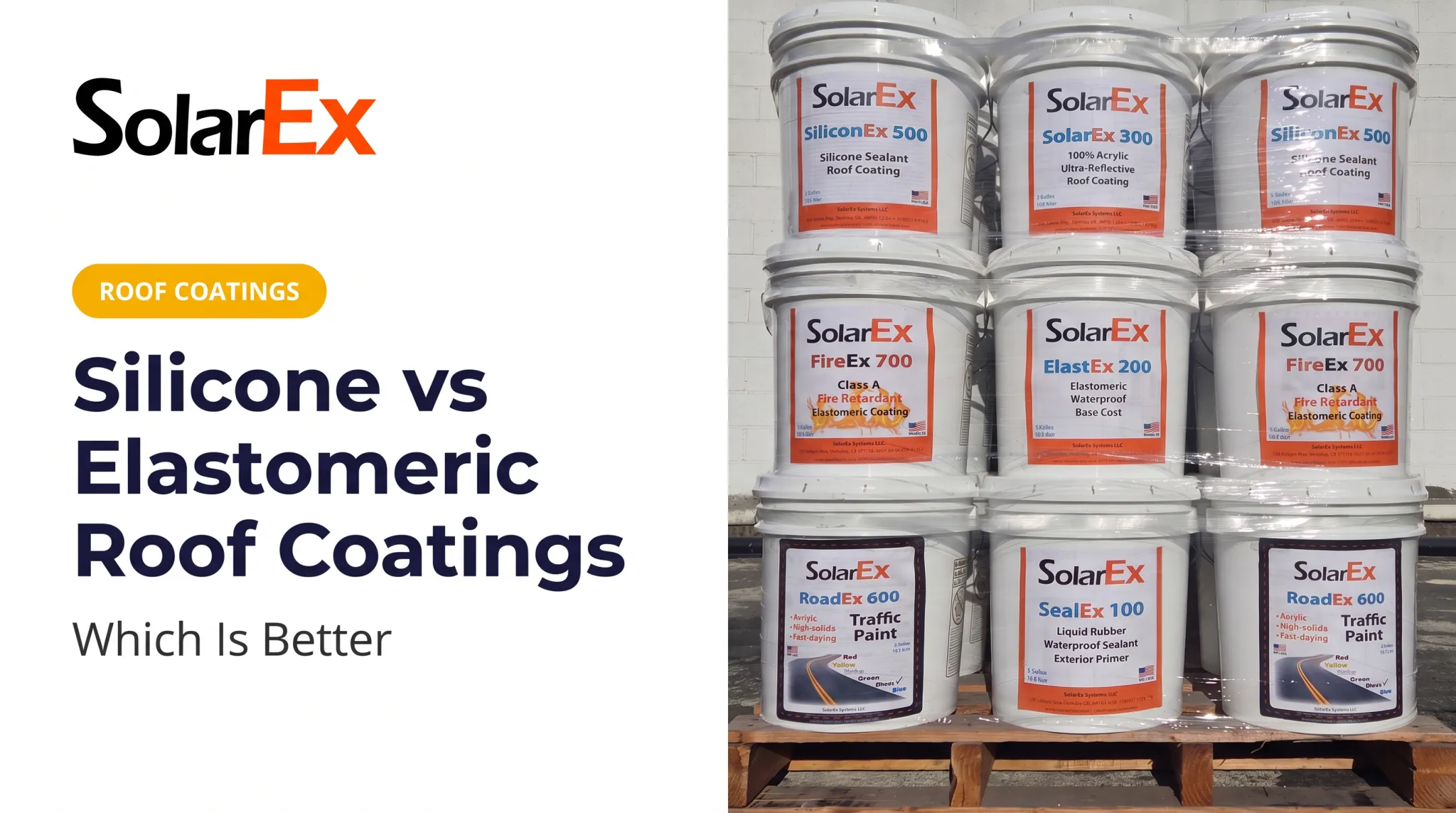
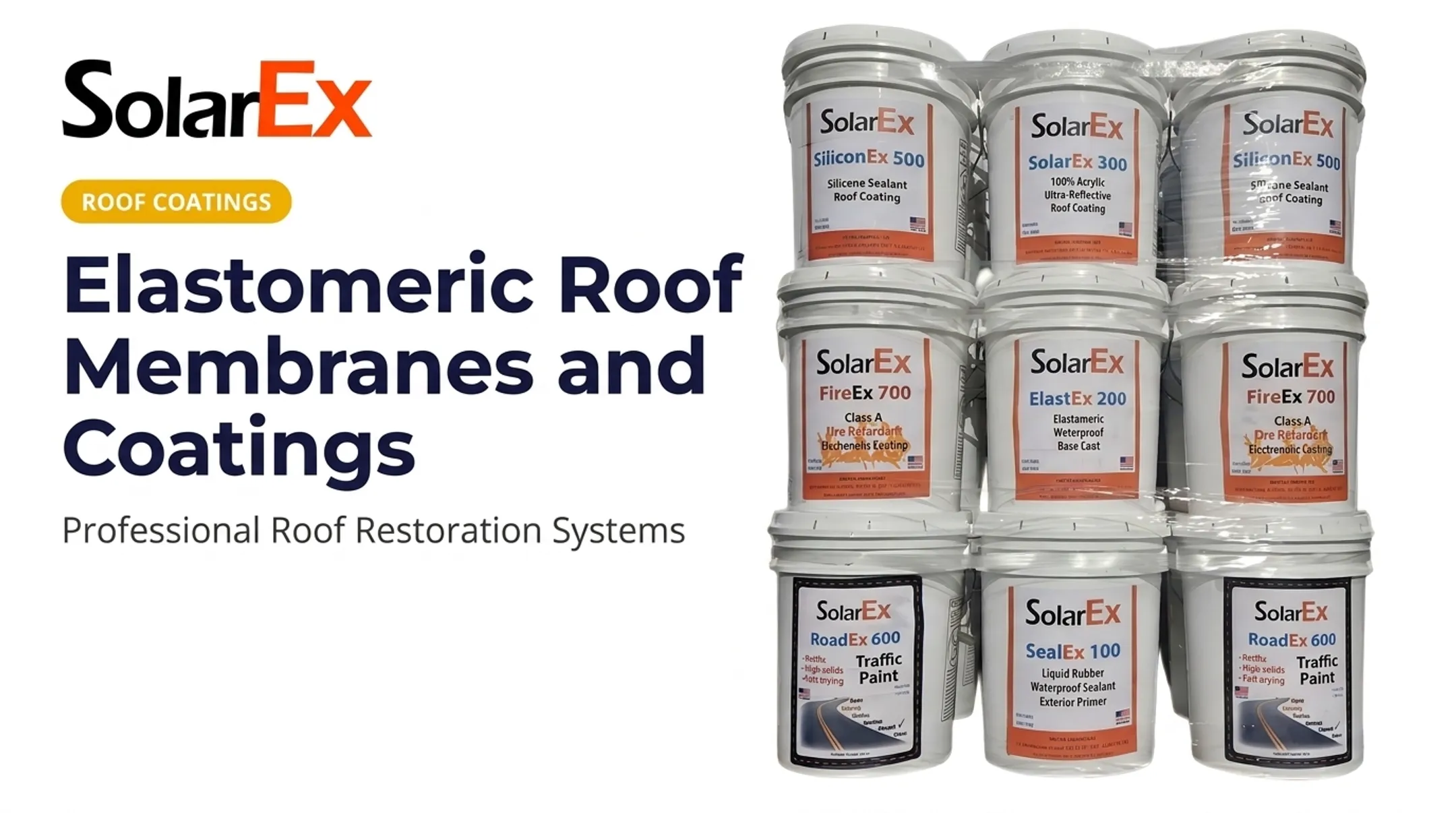
SolarEx's SiliconEx 500, for example, is a single-component, moisture-cure silicone coating built for structurally sound roofs, not roofs with wet insulation, structural failure, or severe deck damage. It is meant to go over existing substrates like TPO, EPDM, metal, or granulated membranes rather than replace them outright.
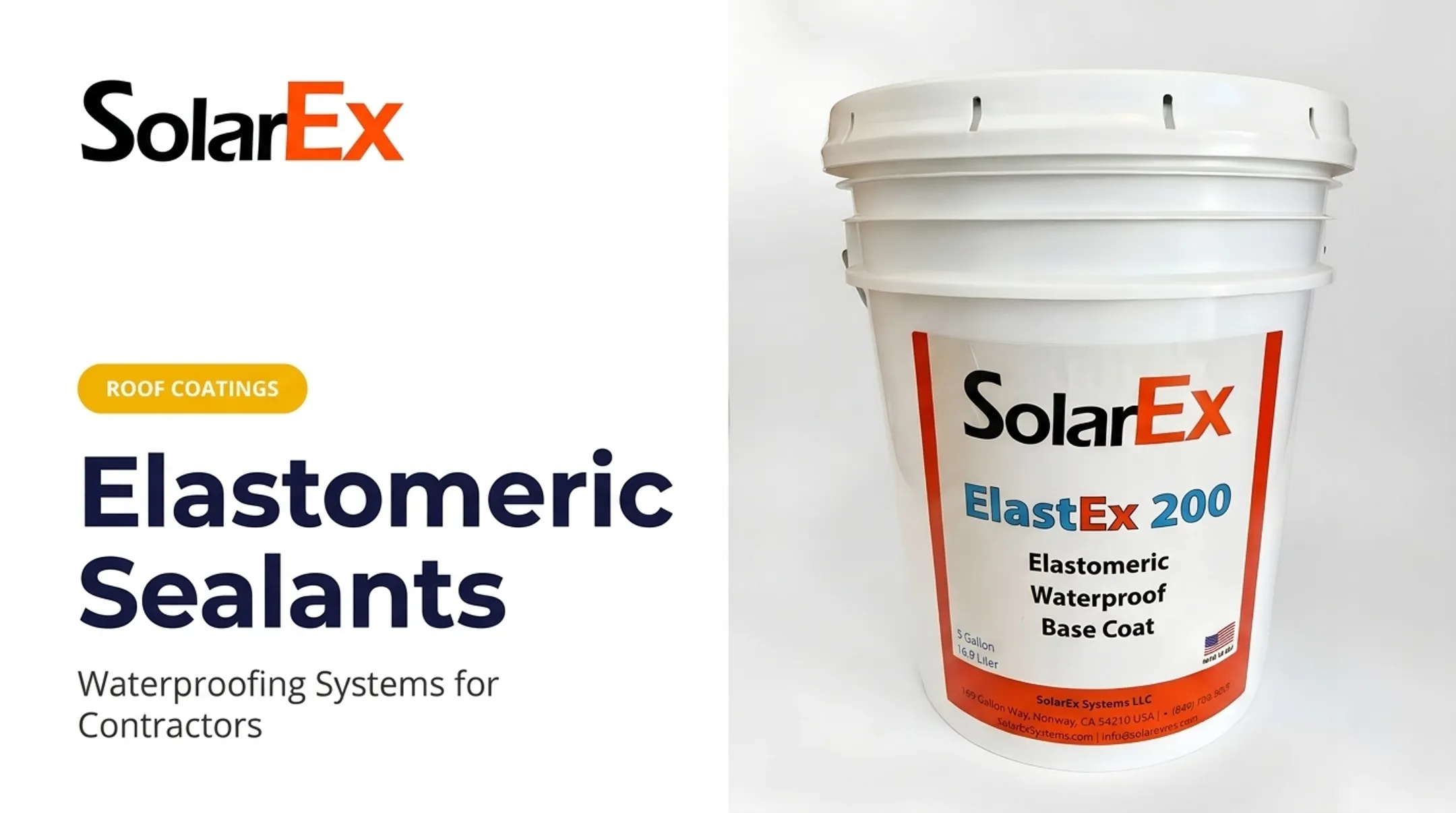
ElastEx 200 is a water-based elastomeric primer/basecoat used in coastal, humid, and high-heat environments where flexibility and UV resistance matter most. Neither product replaces a sheet-applied elastomeric membrane; both are restoration tools for roofs that do not yet need a teardown.
Before approving any project (membrane or coating), get in writing:
- A professional roof assessment
- A detailed scope of work
- Product data sheets
- Warranty terms
- A drainage plan
- A jobsite safety plan
- Maintenance expectations
Elastomeric Membrane vs. Other Roofing Systems
| Factor | Elastomeric Membrane (Mod-Bit) | TPO | EPDM | Liquid Silicone Coating |
|---|---|---|---|---|
| Material | Polymer-modified bitumen, multi-ply | Thermoplastic single-ply | Synthetic rubber single-ply | Liquid-applied, cures monolithic |
| Seams | Torch, adhesive, or self-adhered laps | Heat-welded | Adhesive or taped | None (seamless) |
| Installation | New membrane, often full assembly | Usually requires full replacement | Full membrane replacement | Applied over existing compatible roof |
| Best for | Robust waterproofing on new or full-tear-off jobs | Reflective single-ply projects | Budget-friendly single-ply where color isn't a priority | Restoring a sound roof without tear-off |
Elastomeric vs. TPO
Both can perform well; the differences come down to structure and process. TPO relies on heat-welded seams across a single layer, while modified-bitumen elastomeric membranes typically build waterproofing through multiple plies with torch, adhesive, or self-adhered lapping. Neither is universally superior. The right choice depends on project priorities like reflectivity needs, budget, and installer familiarity.
Elastomeric vs. EPDM
EPDM is a synthetic-rubber thermoset, not a modified-bitumen product. It is a different material despite both being flexible, low-slope options. EPDM traditionally comes in black (though white versions exist), uses adhesive or tape seams rather than heat-welding, and tends to absorb more heat unless a reflective variant is specified. In hot climates, that heat absorption matters more than it does in cooler regions.
Elastomeric Membrane vs. Liquid Silicone Coating
This comparison trips people up the most. A sheet membrane is manufactured off-site with controlled, consistent thickness. A liquid coating like SiliconEx 500 is field-applied and cures into a seamless layer with no laps to fail. Final thickness depends on application technique, and the coating is designed for restoration over a compatible existing roof rather than as a standalone new-construction assembly.

Coatings also tend to handle ponding water differently than sheet laps do, since there are no seams to stress.
Quick Decision Framework
- Choose a sheet membrane when you need a robust, multi-ply waterproofing assembly, especially on new construction or full tear-offs
- Consider TPO or EPDM based on specific reflectivity, budget, or installer-availability needs
- Evaluate a liquid coating when the existing roof is structurally sound, compatible, and a candidate for restoration rather than replacement
Always confirm performance, lifespan, warranty, and cost claims against current manufacturer documentation, not generalized marketing language.
Frequently Asked Questions
How long does elastomeric roof coating last?
Service life depends on the formulation, surface prep, application thickness, roof exposure, and maintenance. Many liquid-applied elastomeric coatings run 10 to 20 years, but confirm the product warranty.
What is elastomeric roof coating used for?
It's used for waterproofing, roof restoration, sealing compatible surfaces, and reducing solar heat absorption when a reflective formulation is specified. It isn't automatically suitable for every roof type or condition.
What is a roof elastomeric membrane?
It's a flexible sheet material, most commonly SBS-modified bitumen, installed on flat and low-slope roofs. It's a different product from a liquid-applied elastomeric coating.
What are the key differences between elastomeric and TPO membranes for roofing?
Elastomeric membranes are typically multi-ply modified-bitumen sheets with torch, adhesive, or self-adhered seams. TPO is a single-ply thermoplastic with heat-welded seams. Pick based on seam method, substrate, and long-term maintenance needs.
Is elastomeric the same as EPDM?
No. Elastomeric modified-bitumen membranes and EPDM synthetic-rubber membranes use different chemistry, seaming methods, and performance profiles, even though both serve low-slope roofs.
Which is better, elastomeric or silicone?
Match the system to the job: a sheet membrane fits new construction or full replacement, while a silicone coating suits a structurally sound roof that needs restoration. Let roof condition, ponding water, and warranty requirements drive the choice.