
But with so many options, how do you know which one to choose? This guide cuts through the noise. We'll compare the leading coating types, explain how to select the right one for your building, and detail the critical preparation steps. We'll also cover when a coating is the right solution—and when it's not.
Key Takeaways
- Silicone, acrylic, and elastomeric coatings serve different purposes and are not interchangeable. Match the chemistry to your roof's specific needs.
- The most important factors are substrate compatibility, resistance to ponding water, solar reflectance, and proper surface preparation—not the price per gallon.
- Coatings can seal and protect a structurally sound roof, but they cannot fix underlying failures like saturated insulation, severe deterioration, or major leaks.
- An integrated approach that combines cool roof coatings with energy-efficiency goals can maximize value, a strategy central to SolarEx's consultation process.
Overview of Roof Paint and Coatings in the US Roofing Market
"Roof paint" usually means a thinner, decorative product used to refresh the color of a metal roof. A "roof coating" is a thicker, fluid-applied system that forms a seamless membrane for waterproofing, solar reflectance, and roof restoration.
Common coating types differ by chemistry and best use:
- Acrylic coatings: Water-based formulas with high reflectivity and broad color options; best on sloped roofs with reliable drainage.
- Silicone coatings: Strong moisture and ponding-water resistance for low-slope or flat commercial roofs; cure into a durable seamless membrane.
- Elastomeric coatings: A flexibility trait (not one chemistry). Acrylic or silicone versions stretch with the roof and help bridge small cracks.
- Factory finishes (PVDF/SMP): Factory-applied paints such as PVDF (Kynar 500) or SMP on metal panels before install—not field-applied coatings.
Compatibility is everything. The coating must be approved for your substrate—metal, modified bitumen, TPO, EPDM, or concrete—so always confirm the manufacturer's technical data sheet. The options below are grouped by practical use case so you can match product type to the job.

Best Roof Paint and Coatings
To determine the best option, we evaluate products based on substrate compatibility, waterproofing performance, reflectivity, flexibility, weather resistance, adhesion, and warranty support.
SolarEx Silicone Roof Coating
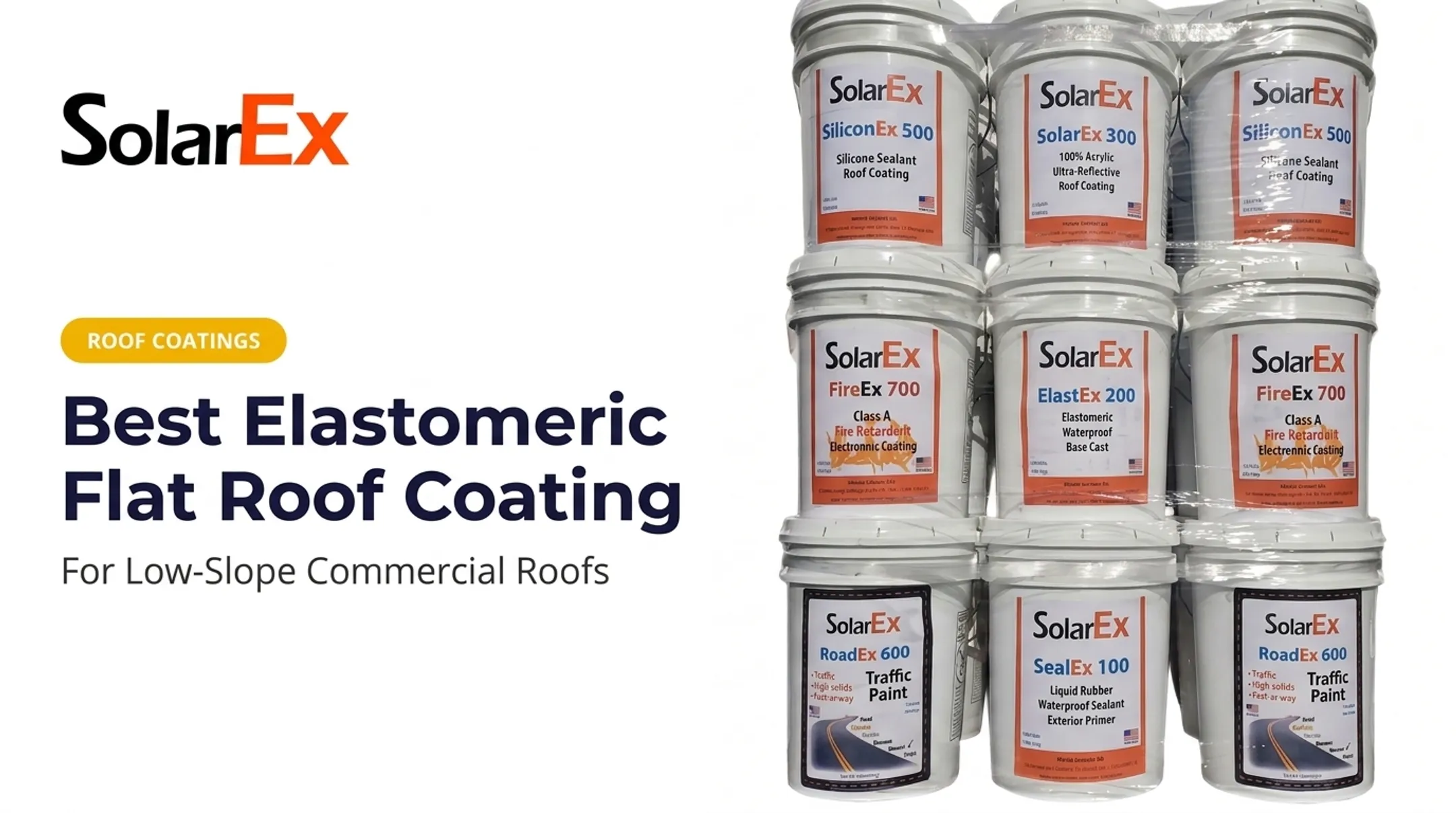
For property owners focused on long-term waterproofing and energy efficiency, a high-solids silicone coating is a leading choice. SolarEx’s SiliconEx 500 is a professional-grade, moisture-cured silicone that forms a seamless, elastic, and impermeable membrane. It’s engineered in the USA to handle harsh weather, from freezing winters to high-heat summers.
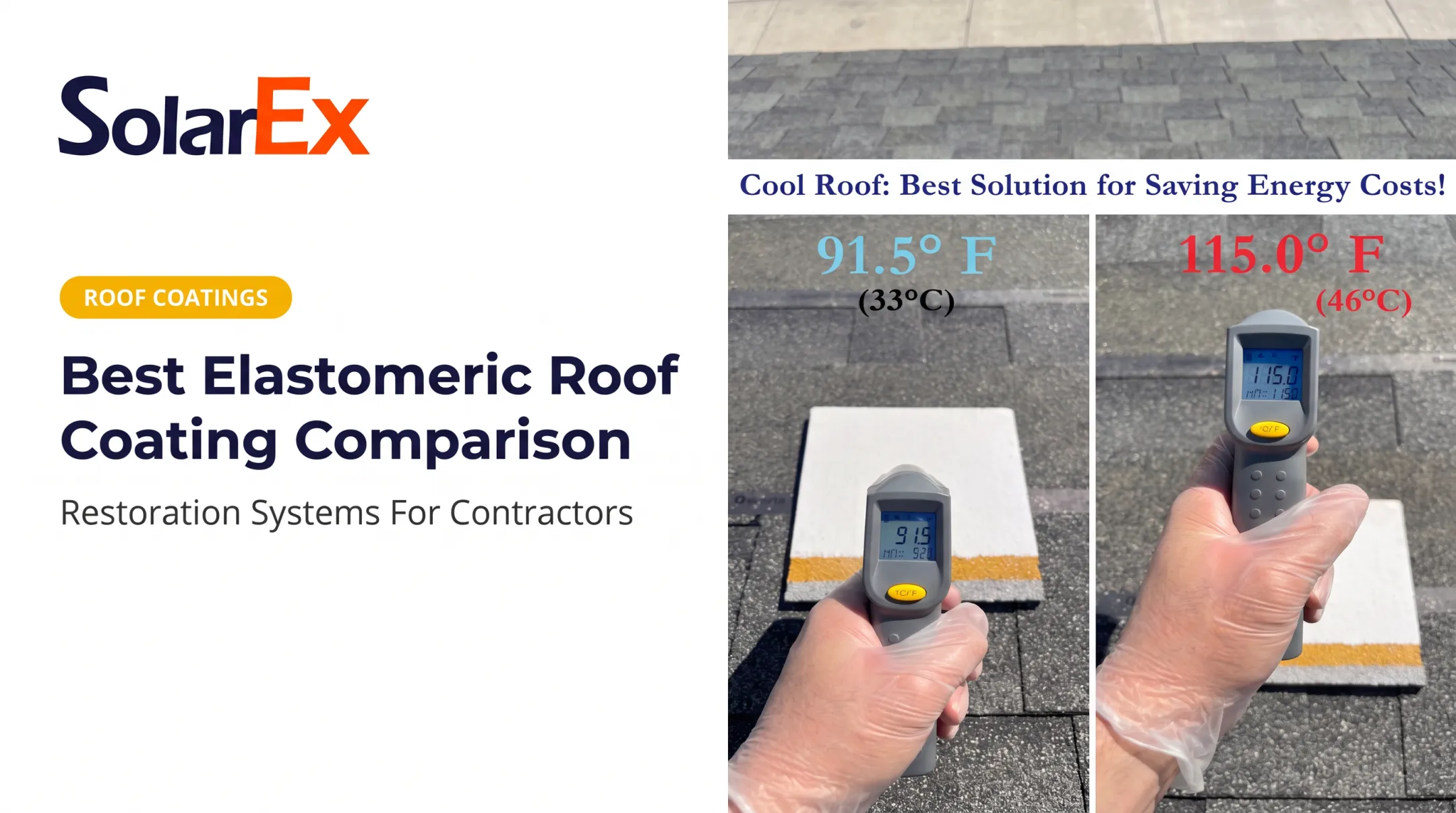
Its key advantage is its ability to withstand permanent ponding water, making it ideal for flat and low-slope commercial roofs where drainage is a challenge. According to technical data, it can reflect up to 88% of solar radiation, significantly lowering roof surface temperatures and reducing HVAC cooling loads. SolarEx provides specific mil-thickness calculations for each roof type to ensure performance and warranty compliance.
| Factor | SolarEx SiliconEx 500 |
|---|---|
| Compatible Roofs | Metal, concrete, TPO, EPDM, modified bitumen, BUR, SPF, and previously coated roofs. |
| Ponding Water Performance | Excellent; engineered to resist permanent ponding water. |
| Solar Reflectance | High (up to 88% initial reflectance). |
| VOC Information | Low-VOC formulation (8 g/L). |
| Expected Service Life | Systems offer up to a 20-year material warranty. |
| Application | Professional installation is recommended to ensure proper prep and thickness for warranty. |
Acrylic Elastomeric Roof Coating
Acrylic elastomeric coatings are a common and cost-effective choice for reflective roof restoration, especially on sloped roofs with positive drainage. Products like SolarEx AcrylEx 300 offer excellent UV resistance and come in various colors, helping to cool the roof surface and refresh its appearance.
However, acrylics have limitations. They are water-based, so their performance can be compromised by persistent standing water, which can cause them to soften or lose adhesion. Application must also occur within a specific temperature and moisture window to ensure proper curing.
| Factor | Acrylic Elastomeric Coatings |
|---|---|
| Suitable Substrates | Metal, concrete, TPO, EPDM, and some asphaltic roofs (with proper primer). |
| Ponding Water Limitations | Not recommended for flat roofs or areas with poor drainage or standing water. |
| Reflectance Options | Excellent; widely available in highly reflective white and custom colors. |
| Flexibility | Good; able to bridge small hairline cracks. |
| Primer Requirements | Often required, especially over asphalt-based surfaces to prevent bleed-through. |
| Warranty Conditions | Warranties typically require positive drainage and verified application thickness. |
Silicone Roof Coating
Silicone coatings have become the standard for restoring low-slope roofs, particularly in regions with heavy rainfall. Their primary strength is superior waterproofing and the ability to withstand ponding water. Unlike acrylics, solvent-free silicones do not soften or re-emulsify when exposed to standing water after they have fully cured.
Proper preparation is non-negotiable. An adhesion test is critical to ensure the coating will bond to the existing surface.
While silicone handles water well, you must still repair all leaks, dry out wet insulation, and fix major drainage issues before application. Silicone surfaces can also attract dirt and become slippery when wet.
| Factor | Silicone Coatings |
|---|---|
| Water Resistance | Excellent; the top choice for roofs with existing or potential ponding water. |
| UV Performance | Highly resistant to UV degradation, chalking, and cracking. |
| Substrate Compatibility | Broad; adheres well to most common commercial roofing materials with proper prep. |
| Surface Preparation | Requires a thoroughly clean, dry surface and an adhesion test. |
| Recoat/Repair | Requires a silicone-compatible sealant or coating for future repairs, as other materials won't stick. |
| Dirt Pickup | Can be higher than acrylics, potentially reducing reflectivity over time if not cleaned. |
Elastomeric or Rubberized Roof Coating
"Elastomeric" describes a coating's ability to stretch and recover, a key feature for roofs that experience thermal movement. While both acrylic and silicone coatings are elastomeric, this category often refers to high-build, flexible acrylics like SolarEx ElastEx 200. These coatings are designed to bridge minor surface cracks and move with the building, providing a durable, waterproof barrier.
Look past the "elastomeric" label and compare the product's actual resin type, solids content, and recommended dry-film thickness (DFT). No coating can fix major structural gaps or stabilize loose roofing materials.
| Factor | Elastomeric/Rubberized Coatings |
|---|---|
| Flexibility | Excellent; designed to expand and contract without cracking. |
| Crack-Bridging Ability | Good for hairline cracks, but not for larger, active cracks or joints. |
| Compatible Substrates | Metal, concrete, aged single-ply membranes, and asphalt (with primer). |
| Reinforcement Needs | May require fabric reinforcement at seams, flashings, and penetrations. |
| Reflectance | Typically high, especially for white formulations. |
| Limitations | Cannot fix structural issues or be applied over unstable surfaces. |
Metal-Roof Paint or Factory-Finish Restoration Coating
Restoring a metal roof is different from coating a membrane roof. You must first distinguish between repainting a factory finish and applying a full restoration system.
Factory-applied finishes like PVDF (Kynar 500) and SMP are applied in a controlled environment and offer superior long-term color and chalk resistance. Field restoration involves applying a liquid coating, often acrylic or silicone, over an aged metal roof.
This requires meticulous preparation: all rust must be removed and treated with an inhibitor, and every fastener and seam must be inspected and sealed. According to a 2022 comparison by Sheffield Metals, PVDF offers better fade resistance while SMP provides greater scratch resistance.
| Factor | Metal Roof Coatings |
|---|---|
| Substrate Compatibility | Must be compatible with the specific metal (e.g., galvanized, Galvalume) and existing finish. |
| Corrosion Resistance | Critical. Requires complete rust removal and often a rust-inhibitive primer. |
| Color Retention | Varies by chemistry; PVDF factory finishes are the benchmark. |
| Flexibility | Must accommodate the thermal expansion and contraction of metal panels. |
| Primer Needs | Almost always required to ensure adhesion and prevent corrosion. |
| Application Method | Often involves detailed work sealing thousands of fasteners and seams before field coating. |

How We Chose the Best Roof Paint and Coatings
A successful coating project is 90% preparation. The selection process should be based on evidence and a thorough roof assessment, not just marketing claims.
Start with a Thorough Roof Inspection
Before you even think about a product, inspect the roof. Identify:
- The substrate: What is the roof made of? (Metal, TPO, modified bitumen, etc.)
- Drainage: Is there a positive slope? Are there areas of ponding water?
- Existing condition: Are there active leaks, rust, blisters, saturated insulation, or exposed fabric? Repair these before coating.
Compare Critical Performance Factors
Once inspection confirms the roof is a good coating candidate, compare products based on their technical data sheets (TDS), not their labels.
- Waterproofing & Ponding Water Resistance: Is the roof flat or sloped? If water ponds for more than 48 hours, you need a coating specifically rated for "permanent ponding water," like a high-solids silicone.
- Solar Reflectance & Thermal Emittance: For energy savings, look for products with high initial and aged ratings from the Cool Roof Rating Council (CRRC). This ensures the "cool roof" performance is verified.
- Adhesion: The coating is only as good as its bond. Always perform an adhesion test on a small, clean area to ensure compatibility, especially over previously coated surfaces.
- Flexibility & Elongation: The coating needs to be flexible enough to handle temperature swings without cracking. Check the elongation properties listed in the TDS, which are often tested according to standards like ASTM D6083 for acrylics.
- Application Requirements: The TDS will specify the required dry-film thickness (DFT), coverage rates, and weather restrictions (temperature, humidity, and rain). Ignoring these often leads to premature failure.
Avoid These Common Selection Mistakes
- Coating over active leaks: Coatings cannot seal active leaks. Find and repair the source first.
- Using acrylic where water ponds: This is one of the most common failures. If your roof doesn't drain well, use silicone.
- Ignoring substrate compatibility: Applying a coating to an unapproved surface or without the right primer will lead to delamination.
- Miscalculating coverage: A textured or porous surface will require more product than a smooth one. Measure, don't guess.
DIY vs. Professional Application
For a small, accessible project like a porch roof, an experienced DIYer might manage. For large commercial roofs, steep slopes, or any project where a warranty is desired, professional application is essential.
As the National Roofing Contractors Association (NRCA) guidelines emphasize, professionals have the equipment and expertise to clean, prep, and apply the coating to the correct thickness for long-term performance.

Conclusion
The best roof paint or coating is a complete system matched to a specific roof. The right choice depends on your roof material, water exposure, climate, energy goals, and application quality.
Instead of comparing the price per bucket, focus on the lifecycle value. Weigh performance data, prep requirements, and warranty terms side by side. A well-chosen, properly applied coating system can protect the building, cut energy costs, and add years of service life.
If you are a property owner, contractor, or facility manager weighing options, SolarEx can help you select the right cool-roof coating and check whether a reflective roof setup supports your energy goals. Reach out at +1 (877) 888-2278 or info@solarexsys.com.
Frequently Asked Questions
What is the best paint for a roof?
The best choice depends on roof type and conditions. Acrylic coatings often suit sloped metal roofs, while 100% silicone is better for flat commercial roofs with ponding water. Match the product to the substrate and exposure.
How long will roof paint last?
Service life varies widely based on the coating chemistry, preparation quality, film thickness, and climate. A cheap acrylic might last only a few years, while a professionally installed silicone system can come with a manufacturer warranty for up to 20 years.
What is the best product to seal a leaking roof?
Find and repair the leak source first—apply a coating only after the roof is watertight. Then a compatible silicone or fabric-reinforced elastomeric system can create a durable, seamless seal.
What is the best roof coating to stop leaks?
No coating fixes saturated insulation, failed flashing, or structural damage. After a professional repairs those issues, silicone is generally the best long-term waterproof barrier—especially on low-slope roofs.
Does roof sealer really work?
Yes—when the product matches the roof and conditions. Success depends on a compatible coating on a clean, dry, structurally sound surface, applied at the correct thickness.
What is the best way to apply roof coating?
Follow the manufacturer's instructions precisely: inspect, clean, and dry; finish repairs; prime where required; detail seams and penetrations; then apply at the specified thickness in proper weather.