
A high-performance coating reduces heat absorption, boosts energy efficiency, and protects a sound flat or low-slope roof for years to come. This guide will compare leading coating options, helping you identify the best fit for different roof conditions rather than declaring one product universally superior.
Key Takeaways
- Silicone coatings are generally the best choice for flat roofs with existing ponding water issues due to their inorganic, moisture-cured nature.
- Acrylic coatings offer a cost-effective, reflective solution for well-drained roofs and are often easier to recoat.
- Polyurethane coatings provide superior resistance to impact and foot traffic, making them ideal for roofs with regular maintenance activity.
- Surface preparation and substrate compatibility are non-negotiable for success; a coating is only as good as the surface it’s applied to.
- Technical data sheets (TDS) and manufacturer warranties should be your final guide, as they contain the specific performance data and application requirements.
Overview of Elastomeric Flat Roof Coatings in the US Market
An elastomeric roof coating is a liquid-applied membrane that cures to form a durable, flexible layer over an existing roof. Unlike simple roof paint, its "elastomeric" properties allow it to stretch and contract with the roof's natural movement during temperature changes, preventing cracks and failure.
For US residential and commercial flat roofs, these coatings offer:
- Creates a seamless moisture barrier against water intrusion
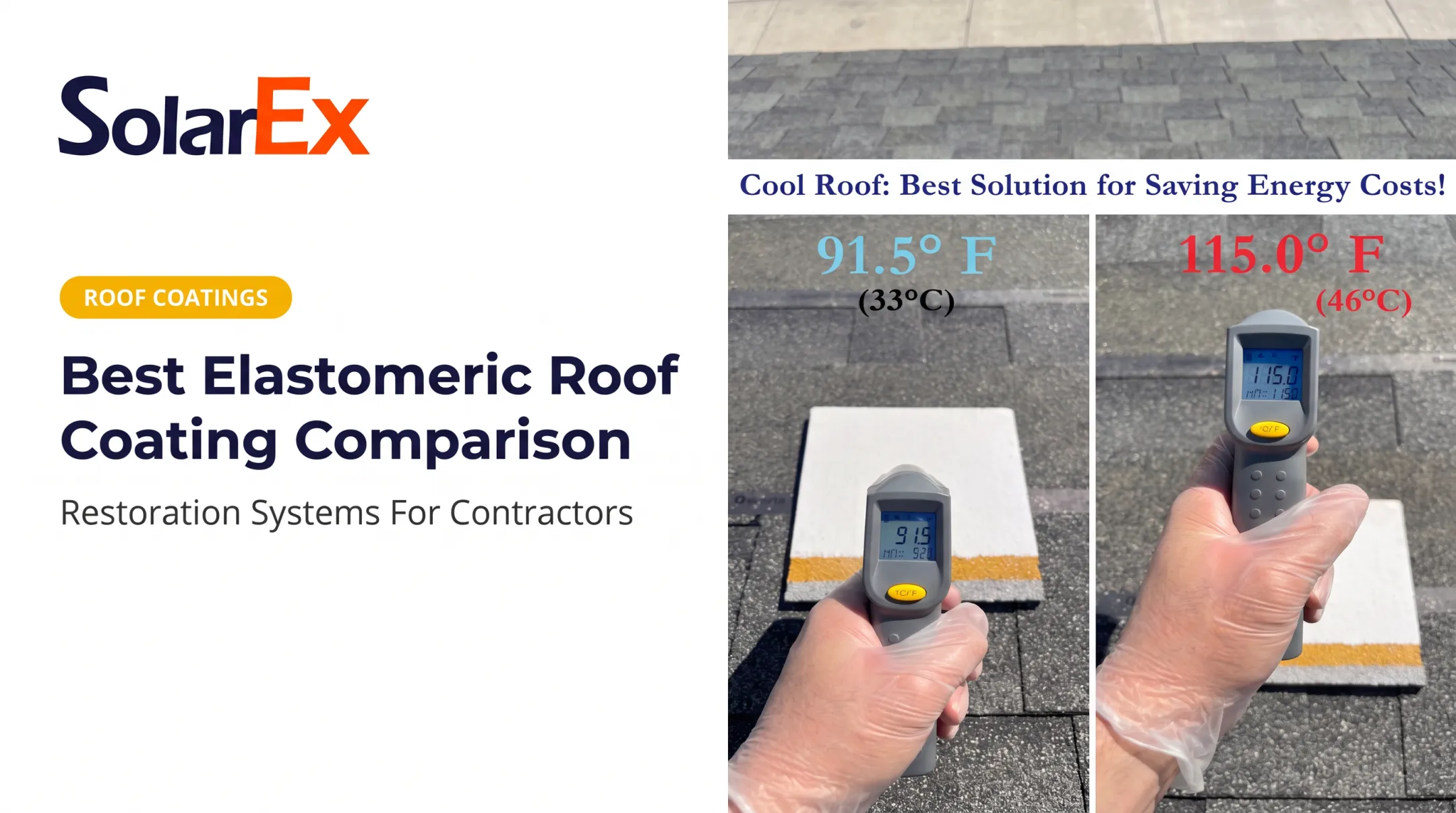
- Resists UV damage and reflects solar heat away from the roof
- Lowers HVAC load and energy costs with a cooler roof surface
- Adds 10–20 years of service life on a structurally sound roof, deferring a full tear-off
The main chemistry options you'll encounter are silicone, acrylic, and polyurethane, each with distinct advantages. A coating only belongs on a roof that is already in good structural condition.

Before selecting a product, inspect for and repair:
- Trapped moisture
- Failed seams
- Major leaks
- Membrane deterioration
- Drainage problems
A coating is a restoration solution, not a fix for a failing roof structure.
Best Elastomeric Flat Roof Coatings
Our evaluation focuses on products with verifiable technical documentation, distinguishing between the coating chemistry and the complete restoration system. We assessed each based on performance, substrate compatibility, ponding-water tolerance, and warranty support.
SolarEx Silicone Roof Coating
SolarEx Systems is a US-based supplier focused on integrated energy efficiency, combining high-performance cool roof coatings with solar-ready solutions. Their approach is to reduce a building's heat load first, then optimize energy production.
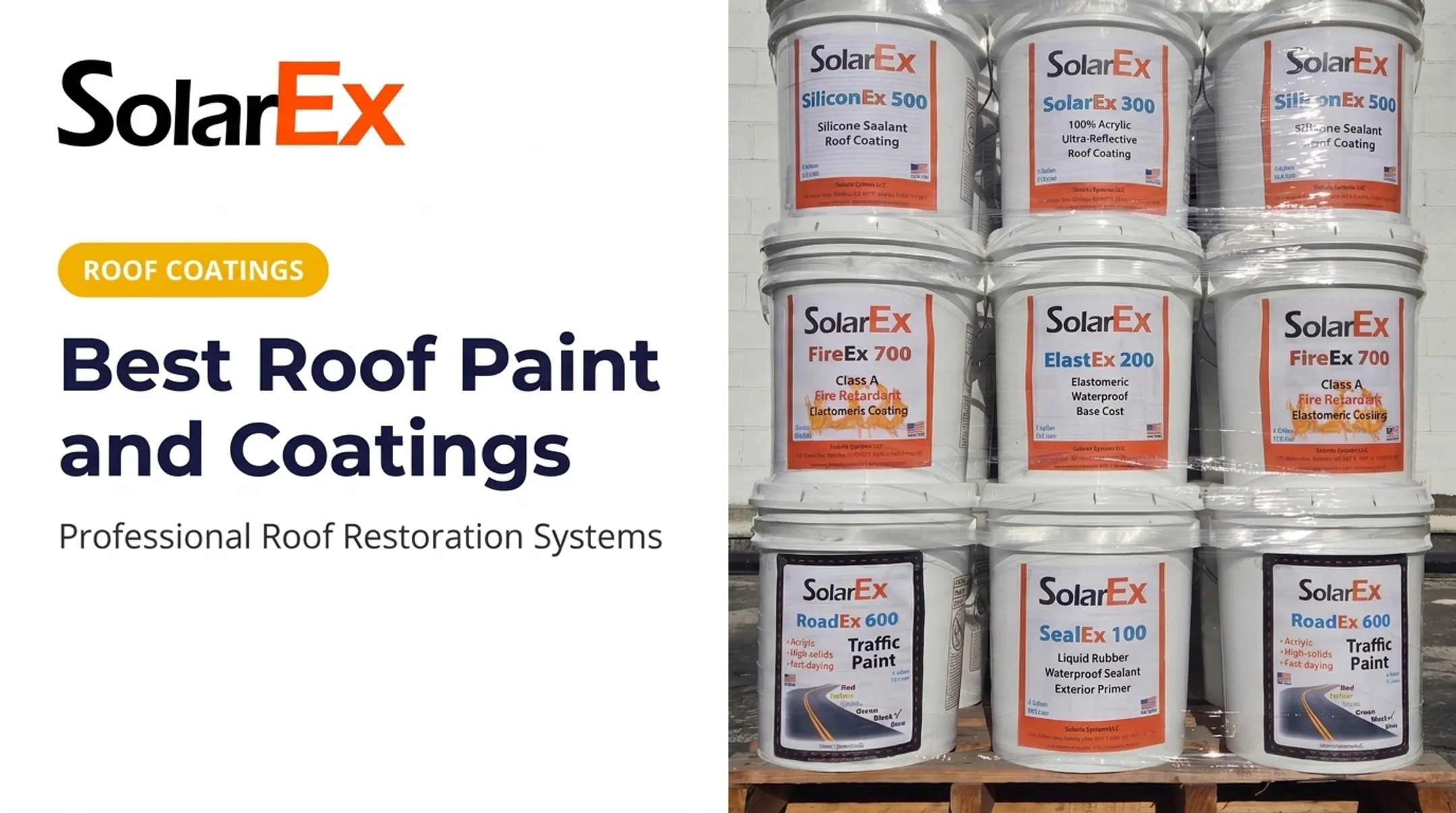
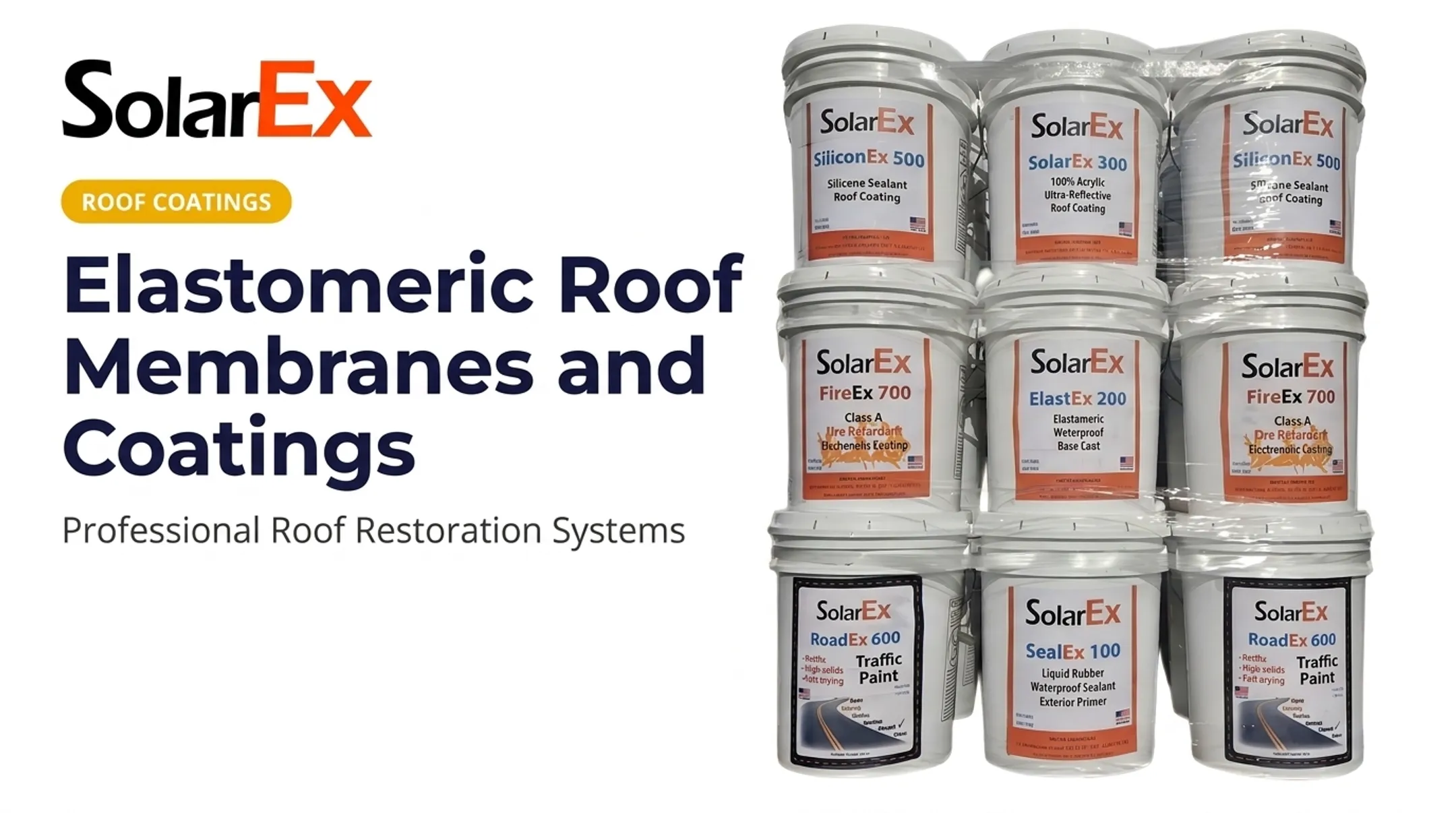
Their SiliconEx 500 uses 100% silicone chemistry that resists ponding water and UV degradation. As a moisture-cured product, it forms a seamless membrane built for weathering and formulated to meet strict low-VOC standards.
SolarEx backs systems applied to specification with 15–20+ year warranties, which supports long-term flat roof protection.
| Feature | SolarEx SiliconEx 500 |
|---|---|
| Chemistry | 100% Silicone (Moisture-Cured) |
| Best Use | Flat or low-slope roofs with ponding water; solar-ready applications. |
| Ponding Water | Excellent resistance; designed for permanent ponding water. |
| Substrates | Metal, TPO, EPDM, modified bitumen, and concrete (with proper prep). |
| Reflectance | Up to 88% |
| Differentiator | Integrated cool-roof / solar-ready system with spec support for warranty compliance. |
Henry Pro-Grade 988 Silicone Roof Coating
Henry is a well-established manufacturer in the building materials market. Their Pro-Grade 988 Silicone is a high-solids formula designed to create a durable, waterproof membrane with excellent resistance to weathering.
The Henry Pro-Grade 988 data sheet rates it for permanent ponding water and lists strong physical property data. Like many silicones, the cured surface can be extremely slippery when wet.
| Feature | Henry Pro-Grade 988 Silicone |
|---|---|
| Chemistry | Silicone |
| Best Use | Low-slope commercial roofs where ponding water and long-term UV exposure are primary concerns. |
| Ponding Water | Excellent; rated for permanent ponding water resistance. |
| Substrates | Smooth BUR, cap sheet, TPO, EPDM, PVC, metal, SPF, and prior coatings; primers required on some substrates. |
| Reflectance | Initial: 0.87 / 3-Year Aged: 0.84 |
| Differentiator | High solids content (92%) and a Lifetime Limited Warranty (requires use of a complete Henry system). |
GAF Acrylic Top Coat
GAF is a major name in roofing, and their acrylic coating systems are a popular choice for restoration projects. Acrylics like the GAF Acrylic Top Coat are water-based, making for easier application and cleanup. They offer good reflectivity and are often more budget-friendly than silicones.
However, their primary limitation is performance in standing water. GAF's documentation explicitly requires positive drainage, meaning the roof must be sloped to prevent water from remaining for more than 48 hours. They are an excellent choice for well-drained low-slope roofs where cost and future recoatability are priorities.
| Feature | GAF Acrylic Top Coat |
|---|---|
| Chemistry | Water-Based Acrylic |
| Best Use | Well-drained low-slope metal, asphaltic, or single-ply roofs where high reflectivity is desired. |
| Ponding Water | Not recommended; requires positive drainage. |
| Substrates | Metal, concrete, TPO, PVC, Hypalon, SPF, EPDM, and asphaltic roofs. Primer is often required. |
| Reflectance | Initial: 0.83 / 3-Year Aged: 0.71 |
| Differentiator | Complies with ASTM D6083 and offers a balance of performance and value for roofs without drainage issues. |
Sikalastic-646 Lo-VOC RoofCoat
For roofs with foot traffic or impact from equipment maintenance, a polyurethane coating offers higher mechanical durability. Sika’s Sikalastic systems are built for those conditions.
Sikalastic-646 is an aliphatic polyurethane, so it stays UV-stable and won’t yellow under sun exposure. Tensile strength is 700 psi, which helps resist punctures and abrasion.
Application is more complex, but it fits roofs under and around heavy HVAC units or service pathways. For frequent traffic, add a wear coat with aggregate.
| Feature | Sikalastic-646 Lo-VOC |
|---|---|
| Chemistry | Aliphatic Polyurethane |
| Best Use | Roofs with regular foot traffic, equipment, or high-impact exposure (e.g., hail-prone areas). |
| Ponding Water | Good resistance, but proper drainage is still recommended. |
| Substrates | Concrete, metal, wood, modified bitumen, TPO, EPDM, and existing liquid-applied membranes. Requires specific primers. |
| Tensile Strength | 700 psi |
| Differentiator | High mechanical resistance for service roofs; warranties up to 20 years by system thickness. |
Karnak 229AR Elastomeric
Sometimes, the best solution is one that's chemically similar to the existing roof. Karnak 229AR is an SBS rubber-reinforced asphalt coating. This makes it an excellent choice for restoring aged modified bitumen (mod-bit) or built-up roofing (BUR) systems.
This product forms a thick, rubber-like shield with excellent water resistance and flexibility. Its main trade-offs are a lack of solar reflectivity (it's black) and a requirement for positive drainage. It's a specialized tool for asphaltic roof restoration, where compatibility is more important than cooling performance.
| Feature | Karnak 229AR Elastomeric |
|---|---|
| Chemistry | SBS Rubber-Reinforced Asphalt |
| Best Use | Restoring and waterproofing existing asphalt-based roofs like modified bitumen and BUR. |
| Ponding Water | Not recommended; requires positive drainage. |
| Substrates | BUR, SBS/APP modified bitumen, concrete, SPF, and metal. |
| Elongation | 700% (Brush Grade) |
| Differentiator | Excellent compatibility and adhesion to asphaltic surfaces, providing a robust, flexible repair. |

How We Chose the Best Elastomeric Flat Roof Coating
Our evaluation prioritizes roof-specific suitability and long-term value over a simple "best overall" label. Choosing the right coating means avoiding common mistakes like picking by price alone, coating over active leaks, ignoring ponding water, or skipping a crucial adhesion test.
Technical Performance Criteria
Verified physical properties drive real-world performance. We evaluated each product on:
- Substrate Compatibility: Manufacturer approval for your roof type, such as TPO, EPDM, or metal
- Ponding-Water Resistance: Chemical stability when submerged for more than 48 hours
- Elongation & Tensile Strength: Ability to stretch without breaking and resist tearing
- Reflectivity & Emittance: Solar heat reflection and release, preferably with Cool Roof Rating Council (CRRC) ratings
- Solids by Volume: Higher solids leave more product on the roof after curing and build a thicker protective film
Installation and Warranty Conditions
A product's warranty is only valid if you follow the instructions exactly. That means:
- Surface Preparation: Clean, repair, and prime as required
- Reinforcement: Add fabric at seams, flashings, and penetrations
- Application Conditions: Stay within temperature and weather limits during curing
- Dry-Film Thickness (DFT): Meet the manufacturer's minimum thickness in mils
- Adhesion Test: Run a test patch before full application to confirm the coating bonds
A Quick Decision Framework
- Silicone when permanent ponding-water tolerance is the top priority
- Acrylic when the roof drains well, you want a reflective budget-friendly option, and easy recoating matters
- Polyurethane when the roof sees heavy foot traffic or impact risk
Conclusion
The best elastomeric flat roof coating is the one that correctly matches your roof’s membrane, drainage profile, climate, and intended use. Long-term value and performance matter more than the lowest upfront price.
Before you commit to a system:
- Repair all leaks and structural defects
- Thoroughly clean the surface
- Perform an adhesion test
- Verify substrate compatibility with the manufacturer
Always compare total lifecycle cost, including required application thickness and warranty terms.
A well-chosen, properly applied roof coating protects your building and improves energy efficiency. If you want a documented cool-roof approach that supports solar-ready and efficiency goals, contact the SolarEx team for a professional consultation.
Frequently Asked Questions
What is the best elastomeric roof coating for a flat roof?
The best choice depends on your roof's conditions. Silicone is usually best where water ponds; acrylics fit well-drained roofs that need reflectivity; polyurethanes handle impact and foot traffic better.
Can elastomeric roof coatings be applied over any flat roof membrane?
No. Use only a system approved for your substrate, such as EPDM, TPO, PVC, modified bitumen, or metal. An adhesion test and the correct primer are almost always required for a reliable bond.
Is silicone or acrylic better for a flat roof?
Silicone is better for ponding water and long-term UV exposure. Acrylic costs less, reflects well, and recoats more easily, but it needs positive drainage and is not suited to standing water.
Can an elastomeric roof coating stop leaks?
A coating can form a seamless waterproof surface and bridge minor cracks, but it cannot fix major defects. Repair active leaks, failed flashings, open seams, and wet insulation before any coating goes down.
How long does an elastomeric flat roof coating last?
Service life depends on chemistry, dry film thickness, prep quality, and climate. A 10-year lifespan is common; systems applied to manufacturer specs, including SolarEx, often carry 15- or 20-year warranties.
Can you apply acrylic roof coating over silicone?
Generally, no. Water-based acrylics will not bond reliably to cured silicone. Recoat with compatible silicone or a manufacturer-approved tie-coat primer.