
Introduction
There's no single "best" metal roof coating—and picking the wrong one is a common, costly mistake. The right choice depends on what your roof actually needs: ponding-water resistance, heat reflection, corrosion control, flexibility during thermal movement, impact resistance, or a lower upfront cost.
A well-matched coating can protect a compatible existing metal roof, cut heat absorption, and push back the replacement date by years. What it can't do is fix structural damage, saturated insulation, or a roof that's already failing.
This guide compares silicone, acrylic, polyurethane, elastomeric, and specialty coatings, plus the factors US homeowners and building owners need to check before buying any of them.
Key Takeaways
- Silicone typically leads for roofs with ponding water; acrylic works well on sloped roofs with reliable drainage.
- Polyurethane and elastomeric coatings suit roofs needing impact resistance or extra flexibility for thermal expansion.
- Substrate condition, seams, fasteners, slope, and prep quality matter as much as coating chemistry.
- Factory-applied SMP and PVDF finishes protect new panels — don't confuse them with liquid restoration coatings.
- Compare full lifecycle cost and warranty terms, not just price per gallon.
Overview of Metal Roof Coatings in the US Market
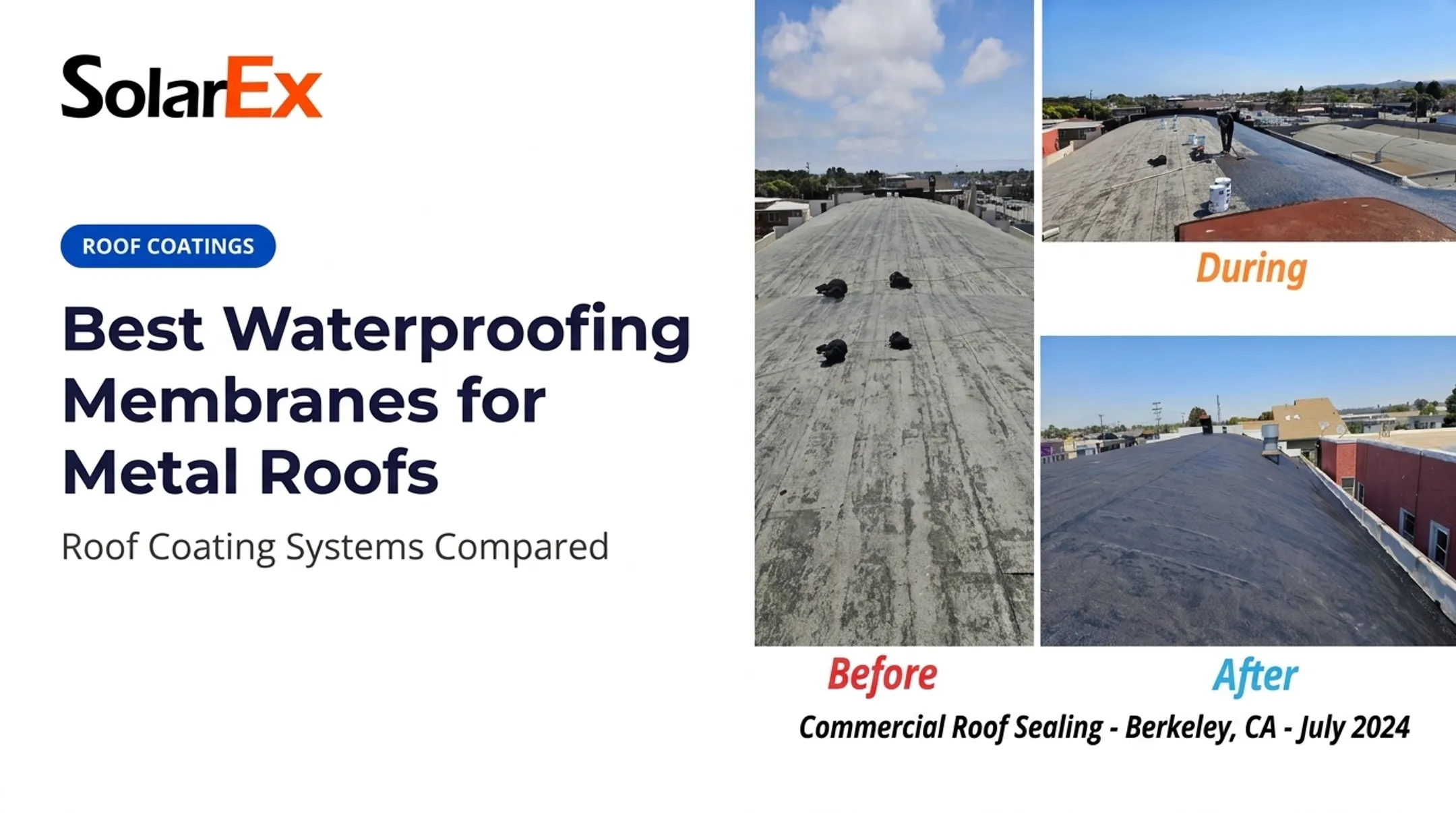
A metal roof coating is a liquid-applied protective layer installed over a prepared existing roof. Its job is to reduce water intrusion, corrosion, UV exposure, and solar heat absorption, without the cost and disruption of a full tear-off.
That's different from what comes on a brand-new metal panel. Polyester, silicone-modified polyester (SMP), and PVDF are factory-applied finishes baked onto sheets and coils before they're ever installed on a roof. These systems protect new panels from the start; they aren't something a contractor sprays on later to restore an aging roof.
Why compatibility matters so much on metal:
- Panels expand and contract with temperature swings, stressing seams and fasteners over time.
- Exposed fastener heads and lap seams are common leak points, even on roofs that look fine from the ground.
- Scratched or worn factory finish leaves bare steel exposed, which can corrode quickly once moisture gets in.
Because of this, GAF's liquid-applied roofing guidance requires clean, dry substrates, positive drainage, and repair of any existing leaks before a coating goes on. It defines ponding as water that sits for more than 48 hours after precipitation.

That one detail determines whether ponding-water resistance is a "nice to have" or a hard requirement for your project.
The "best" product, then, isn't a fixed ranking. It's whatever matches your roof's condition, drainage, climate, and substrate.
Top 5 Metal Roof Coating Options
Each option below is scored on the same factors: waterproofing, ponding-water resistance, solar reflectivity, corrosion protection, flexibility, impact resistance, adhesion, maintenance, application complexity, warranty support, and installed cost.
| Coating Type | Best For | Ponding Water | Typical Lifespan | Approx. Cost (per sq ft) |
|---|---|---|---|---|
| Silicone (e.g., SiliconEx 500) | Flat/low-slope roofs, ponding | Excellent | 15–20+ years | $1.25–$1.64 |
| Acrylic (e.g., TropEx 310) | Sloped roofs, good drainage | Poor | 7–12 years | $0.96–$1.30 |
| Polyurethane | High traffic, impact resistance | Fair | 10–15 years | Varies by system |
| Elastomeric acrylic/silicone hybrids | Flexible restoration on moving panels | Good–Excellent | 10–20 years | Varies by product |
| Bitumen / metallic specialty | Targeted rust and weatherproofing | Fair–Varies | Varies | Varies by product |
Silicone Roof Coatings
Silicone is the usual pick for low-slope or flat metal roofs where ponding water and UV are the main threats. It cures into a seamless membrane that holds up even when water never fully drains.
Manufacturer data supports that profile. Uniflex Silicone44, for example, is rated for metal substrates with 127% elongation, 177 psi tensile strength, 0.88 reflectivity, and an SRI of 111 at a 30-mil dry-film thickness, per its revised technical data sheet. The same sheet notes a structural caveat: ponding water adds weight, which is a deck issue as much as a coating issue.

Before applying silicone, fix:
- Active rust or loose, failing coating
- Open seams or failed fasteners
- Trapped moisture or active leaks
Tradeoffs: dirt pickup over time, a truly dry substrate for proper cure, and higher upfront cost than acrylic.
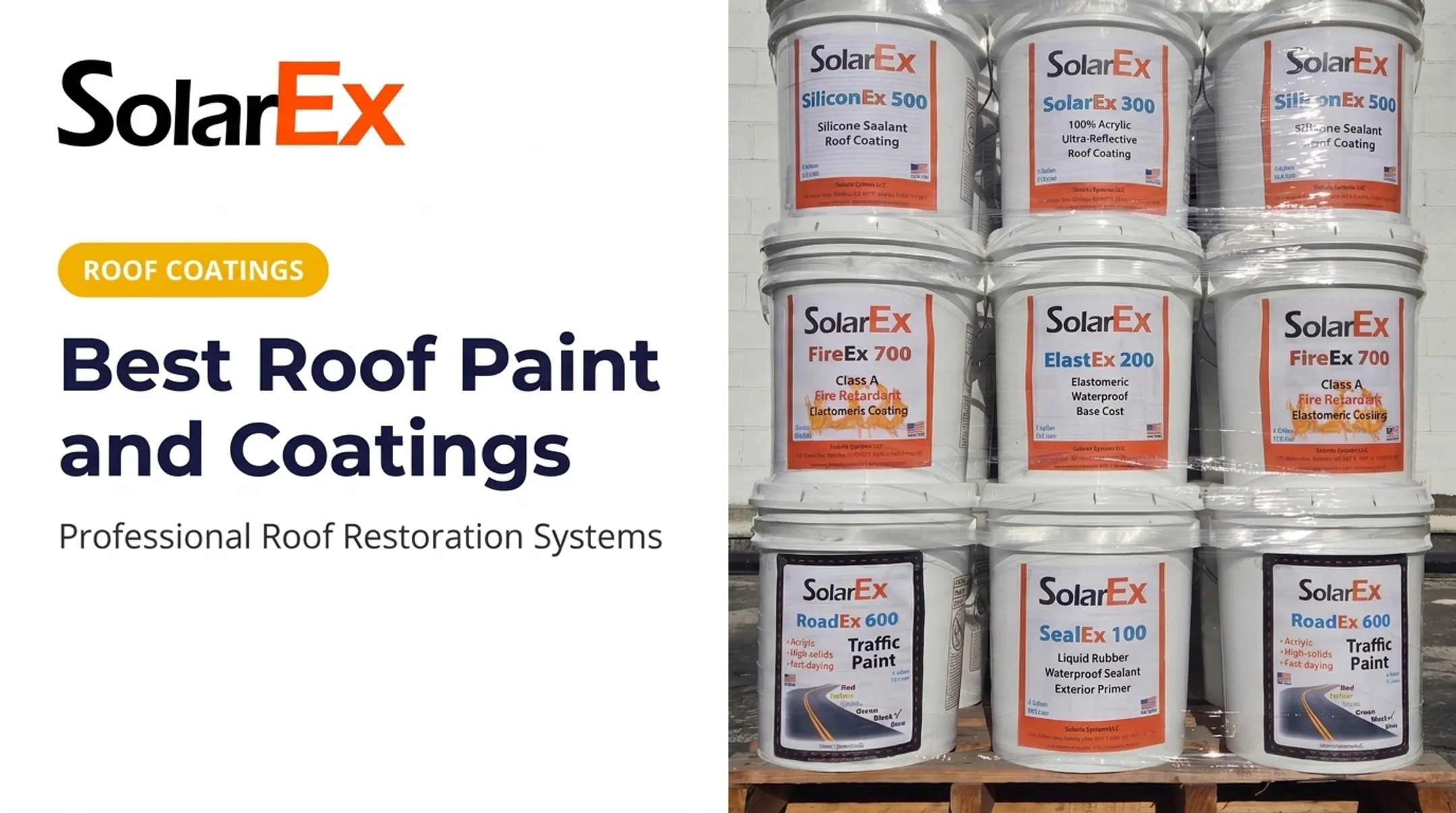
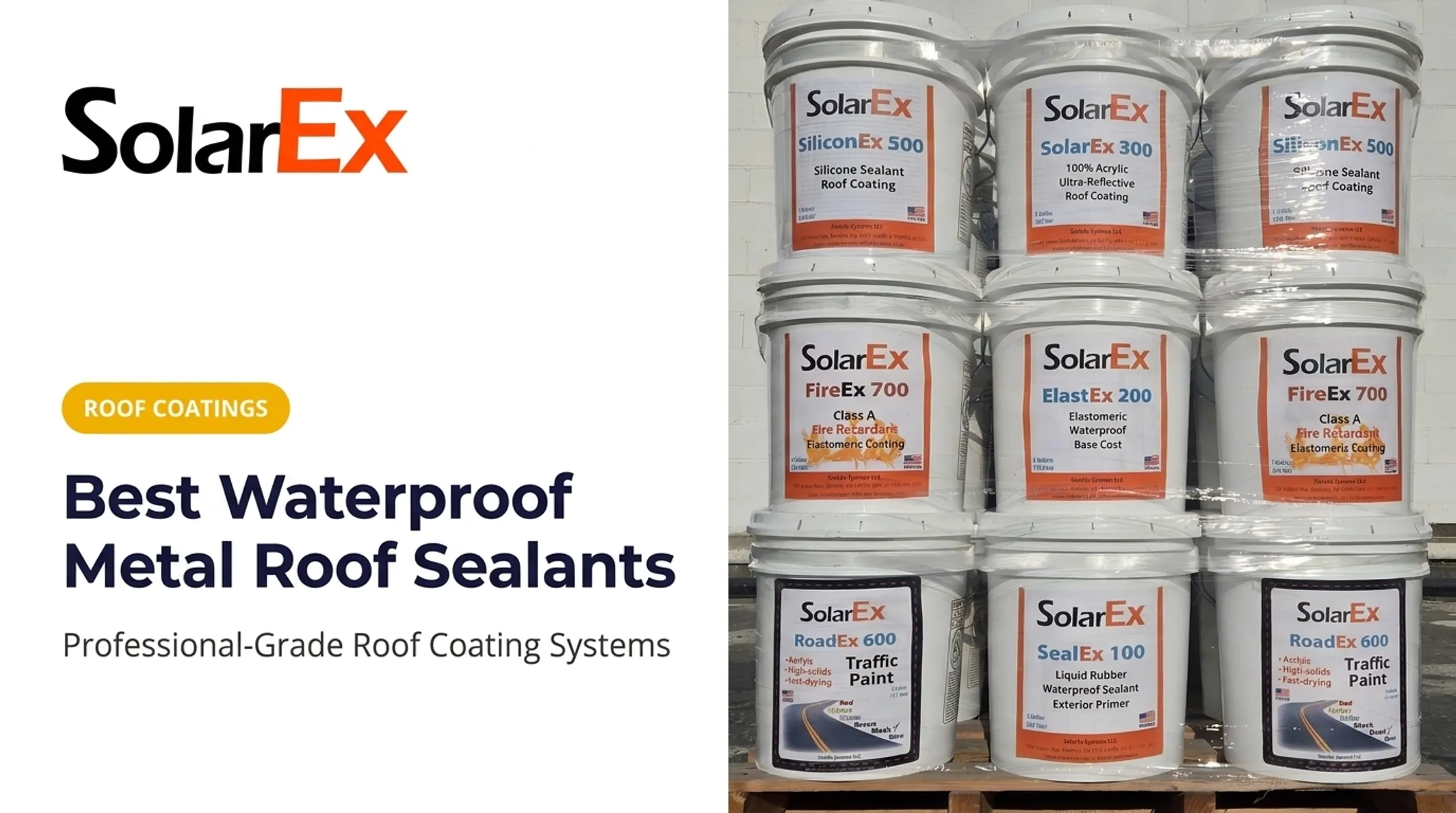
Example: SolarEx SiliconEx 500
SiliconEx 500 is a 100% silicone, solvent-free, single-component moisture-cure coating for compatible metal roofs, single-ply membranes, masonry, and sprayed foam. It fits structurally sound, weathered roofs you want to restore instead of replace, including roofs that already pond water.
Verify on the current TDS before you specify it:
- Solar reflectance ~0.87, thermal emittance ~0.90, SRI ~110
- Tensile strength ~230 psi with 250% elongation at break
- Minimum dry-film thickness of 22 mils; material warranties up to 20 years
- VOC content listed at 8 g/L; CRRC-rated
Skip it on structurally unsound decks, below-grade surfaces, or continuously submerged areas. A roof assessment decides suitability, not the data sheet alone.
Acrylic Roof Coatings
Acrylic is a water-based reflective coating that works best on sloped metal roofs with reliable drainage. It usually costs less than silicone and still posts strong reflectivity. TropEx 310, for example, lists 0.83 initial reflectivity, roughly 310 psi tensile strength, and 125% elongation.
Wet service is the limit. Acrylic is not built for prolonged ponding, freeze-thaw cycling, or roofs that stay wet for long stretches. Product TDS documents call these out as standard limitations, so compare the sheet for the exact formula you plan to use.
Typical acrylic planning notes:
- Skin-over in 30–60 minutes on many products
- Keep application windows clear of freezing temperatures in the hours after coating
- Lower cost per gallon, balanced by a shorter recoat cycle (often 7–12 years)
Polyurethane Roof Coatings
Polyurethane earns a place when abrasion, impact, or chemical exposure matters more than maximum reflectivity. Two subtypes show up in most systems:
- Aromatic polyurethane: common base coat with strong mechanical properties, weaker UV stability and color retention
- Aliphatic polyurethane: usual topcoat with better UV resistance, color hold, and dirt resistance
These systems handle thermal movement and high tensile demand well, which suits roofs with foot traffic or rooftop equipment. Watch moisture sensitivity during application and complete substrate prep; review the safety data sheet before spray work.
Elastomeric and Other Specialty Coatings
"Elastomeric" is a performance trait, not its own chemistry. Acrylic, silicone, and polyurethane products can all be built to stretch with panel expansion so the film does not crack.
Specialty niches:
- Bitumen-based coatings: polymer-modified asphalt with corrosion inhibitors for targeted rust control; weak cool-roof reflectivity
- Metallic-pigmented coatings: aimed at rustproofing and weatherproofing, not peak solar reflectance
They seldom match dedicated cool-roof systems on appearance or reflectance. They do solve narrow waterproofing or corrosion jobs efficiently when surface prep is done to spec.
How We Chose the Best Metal Roof Coating
Ranking coatings by a single product claim misses the point. A fair comparison looks at the complete system: primer, base coat, seam treatment, topcoat, labor, and warranty, not one number on a data sheet.
Roof Condition and Substrate Compatibility
Coatings need to bond to something sound. That means checking whether the roof is galvanized steel, Galvalume, aluminum, or previously painted panel, and confirming the manufacturer approves that specific substrate.
- Run an adhesion test patch before committing to a full job.
- Rusted metal generally needs an anti-rust primer first, not a direct topcoat.
- Severe corrosion, structural deterioration, widespread panel failure, or saturated insulation usually means repair or replacement comes before any coating.
Climate, Drainage, and Exposure
Hot, sunny climates favor high-reflectance coatings that cut cooling load. Coastal and humid regions need stronger corrosion resistance. Freeze-thaw regions demand coatings that stay flexible in cold weather without cracking.
Slope and drainage decide whether ponding resistance is essential or irrelevant.
California's cool-roof code guidance, for instance, splits requirements by slope category. Low-slope roofs under 2:12 pitch face different aged reflectance and emittance thresholds than steep-slope roofs. If your building falls under a similar energy code, that threshold, not personal preference, should drive the reflectance spec.
Performance and Application Requirements
Compare products using actual technical data: solar reflectance, thermal emittance, elongation, tensile strength, and adhesion values, not marketing copy.
Application quality matters just as much as the product:
- Surfaces must be clean, dry, and free of loose material before coating.
- Joints, cracks, and penetrations need sealing before the main coat goes on.
- Wet-film and dry-film thickness should be checked during application, not assumed after the fact.
Lifecycle Cost and Warranty Value
Price per gallon tells you almost nothing about total project cost. Materials, labor, roof access, prep work, and repairs all shift the real number.
For reference, SiliconEx 500 runs roughly $1.25–$1.64 per sq ft for a 20-year system, while an acrylic option like TropEx 310 runs $0.96–$1.30 per sq ft for a 10-year system. Lower upfront cost with a shorter recoat cycle can cost more over 20 years than paying more once for a longer-rated system. Run the math both ways before deciding.

Conclusion
Silicone tends to be the strongest all-around choice for compatible metal roofs that need waterproofing and ponding-water resistance. That said, acrylic, polyurethane, elastomeric, or specialty systems can outperform silicone under different conditions: sloped roofs with clean drainage, high foot-traffic areas, or targeted corrosion problems.
Before signing off on any product:
- Confirm substrate compatibility
- Fix underlying defects
- Compare verified technical data across brands
- Get a written scope covering prep, application thickness, warranty, and maintenance
SolarEx, based in Berkeley, California, offers SiliconEx 500 and related coating systems for property owners and contractors who want a cool-roof, energy-efficiency approach. A roof assessment is still the starting point. Reach out to SolarEx for product and project guidance before assuming any coating fits your roof.
Frequently Asked Questions
What is the best coating for a metal roof?
It depends on roof condition, slope, drainage, and climate. Silicone is a common choice for ponding-water resistance, while acrylic, polyurethane, or elastomeric coatings may fit better on sloped, high-traffic, or budget-driven projects.
What is the average cost of coating a metal roof?
Pricing varies with roof size, prep needs, rust or leak repairs, coating type, labor, and required thickness. Silicone systems like SiliconEx 500 run about $1.25–$1.64 per sq ft; acrylic options like TropEx 310 run about $0.96–$1.30 per sq ft.
How long does a metal roof coating last?
Service life depends on chemistry, application quality, climate, and maintenance. Silicone systems often carry 15- or 20-year warranties (sometimes longer); acrylic systems typically run 7–12 years. Always check the manufacturer's written warranty terms.
What types of roof coatings are available for metal roofs?
Options include silicone, acrylic, polyurethane, elastomeric, bitumen-based, and corrosion-control coatings. These are liquid restoration products for existing roofs, not factory-applied SMP or PVDF finishes baked onto new panels.
Are metal roof coatings worth it?
Coating is often cost-effective when the roof is structurally sound but weathered, leaking minimally, or losing reflectivity. It's not appropriate for severe structural damage, advanced corrosion, recurring major leaks, or a substrate that can't hold a coating reliably.