
Many building owners assume the only choice is "keep the old roof" or "tear it off and start over." That's rarely true. A dark, aging roof surface can absorb the majority of the sun's energy and push surface temperatures well above 150°F on a summer afternoon. Coating, restoration, and cool-roof retrofits often sit between those two extremes.
This guide covers how cool roofs actually work, which materials and coating systems qualify, where the real benefits and limits fall, how to plan a project without overpaying, and how reflective roofing connects to solar power decisions.
Key Takeaways
- Cool roofs reflect more sunlight and release heat faster, lowering surface and interior temperatures.
- "Cool roof" is a performance category, not a single color or product type.
- Match the fix to roof condition, climate, insulation, and drainage—not price alone.
- Compare restoration, coating, repair, replacement, and solar-readiness together before committing to any one path.
What Is a Cool Roof and How Does It Work?
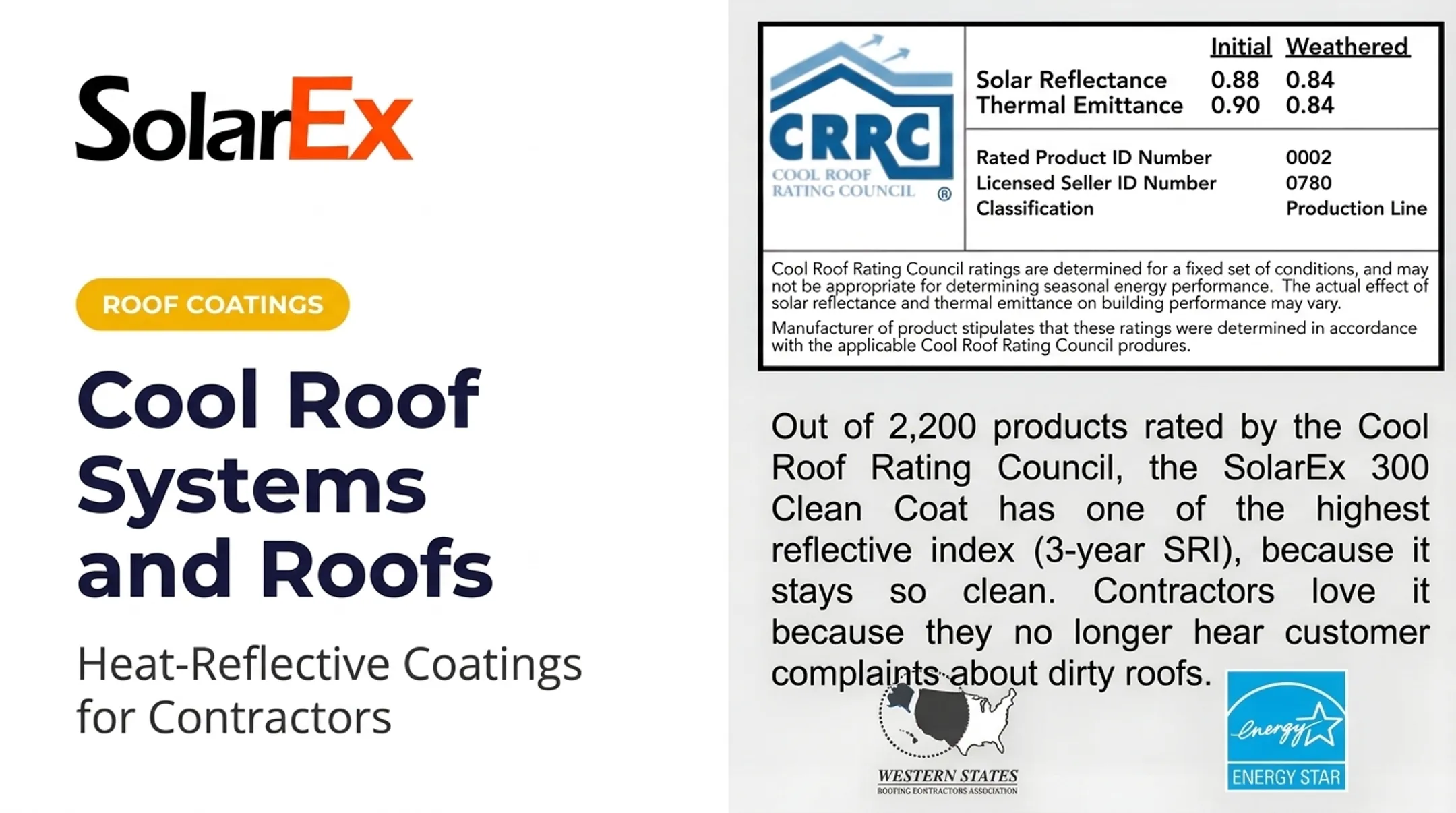
Two measurements define a cool roof: solar reflectance (how much sunlight bounces off the surface) and thermal emittance (how efficiently the surface releases absorbed heat back into the air). Both are scored on a 0-to-1 scale, and higher numbers generally mean a cooler roof.
Think of it like clothing on a hot day. A light-colored shirt stays cooler than a black one because it reflects more sunlight instead of soaking it in. Roofing works the same way, though specialty "cool-color" pigments now let manufacturers build reflective performance into darker shingles and coatings, so cool roofs don't have to be white.
Why Reflective Surfaces Run Cooler
The difference isn't small. According to Lawrence Berkeley National Laboratory's Heat Island Group, a roof reflecting 35% of sunlight can stay roughly 22°F cooler than a similar roof reflecting only 10%, on a typical summer afternoon. Lower surface temperature means less heat conducted into the roof assembly and the space below, which can:

- Reduce cooling demand in air-conditioned buildings
- Improve comfort in top-floor rooms without air conditioning
- Ease stress on aging HVAC equipment during peak summer hours
Initial vs. Aged Performance
Here's the part many product comparisons skip: reflectance changes over time. A coating rated at 87% solar reflectance the day it's installed won't stay at 87% forever. Dirt, foot traffic, and UV exposure gradually reduce performance.
The Cool Roof Rating Council (CRRC) addresses this directly. Its ratings include both initial and three-year aged values. The Solar Reflectance Index (SRI) methodology combines reflectance and emittance into one comparative score under fixed test conditions.
As one example, SiliconEx 500, our high-solids silicone coating, carries CRRC Rated Product ID #1448-0001. On smooth substrates it posts an initial solar reflectance of 0.87 and thermal emittance of 0.90, for an SRI of 110.
Always ask for aged values, not just the day-one number, before you compare products.
Cool Roofing Materials and Roofing Solutions
Cool roofing isn't one product category. It spans coatings, membranes, metal systems, shingles, and vegetated assemblies, each with different installation paths and limitations.
| Solution | How it stays cool | Best fit |
|---|---|---|
| Reflective coating | White or specialty pigments applied over existing roofs | Sound roofs needing restoration, not replacement |
| Single-ply TPO/PVC | Factory-white sheets, mechanically attached or welded | Low-slope commercial roofs |
| Modified bitumen | Reflective cap sheets or coatings over bitumen layers | Low-slope and built-up hybrid systems |
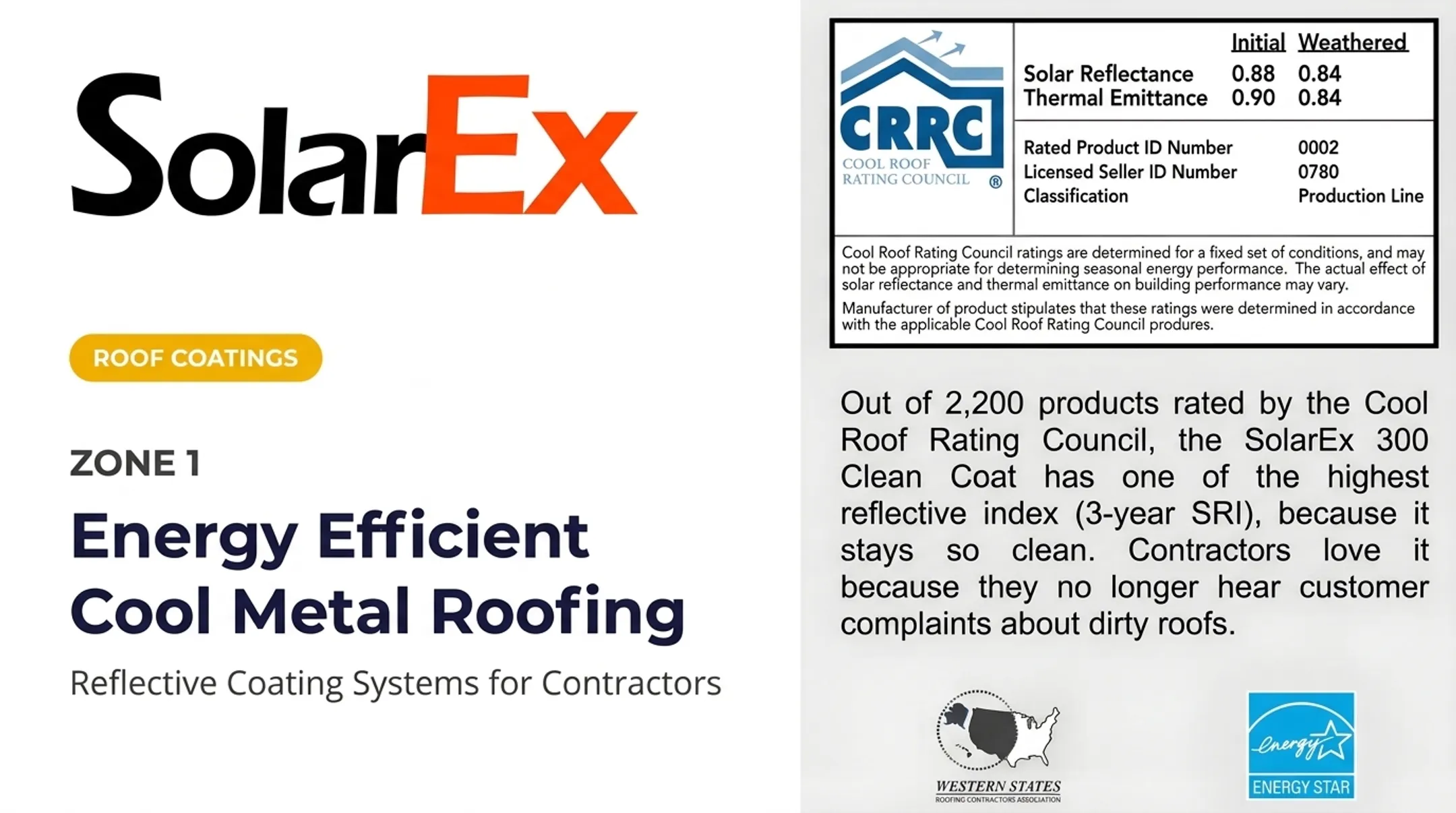
| Reflective metal | Factory-applied cool paint or reflective coating | Standing-seam and metal shingle roofs |
| Cool asphalt shingles | Light or cool-colored granules | Steep-slope residential replacement |
| Vegetative/green roof | Shade and evapotranspiration from plants | Structurally rated low-slope roofs |
New Construction vs. Retrofit
If you're building or fully re-roofing, you pick the assembly and its reflective surface at the same time. Retrofitting an existing roof is different: it usually means repair, restoration, or a field-applied coating over what's already there, without a full tear-off.
Compatibility Checklist
Before specifying a coating, confirm these items:
- Substrate type (TPO, EPDM, modified bitumen, metal, concrete, or shingle)
- Roof slope and drainage pattern
- Condition of seams, laps, fasteners, and penetrations
- Ponding water history
- Moisture content in the deck or insulation
- Adhesion test results per manufacturer instructions
When Coating Isn't Enough
A reflective coating preserves sound roofs. It cannot fix saturated insulation, correct deck failure, or seal an actively leaking roof. Those issues need repair first.
SiliconEx 500 is engineered for ponding water and UV exposure once seams, flashings, and penetrations are sound. It is not designed for submerged or below-grade applications. Complete a professional roof assessment before choosing a coating.
Benefits and Limitations of Cool Roofs
Cool roofs deliver real, measurable advantages, but they come with trade-offs worth understanding upfront.
Benefits for Owners and Occupants
- Cuts annual air-conditioning energy use by up to 15% for single-story buildings in warm or hot climates, per the U.S. Department of Energy's Guide to Cool Roofs
- Lowers roof surface temperatures and eases thermal cycling, which can support longer service life
- Keeps top-floor and non-air-conditioned spaces noticeably cooler in summer
- Trims cooling-related electricity use and the emissions tied to it
Community-Level Effects
Reflective roofs also reduce the amount of heat radiated back into the surrounding air, which can help moderate urban heat-island conditions across a neighborhood. That helps the neighborhood, but it is not a guaranteed savings figure for any one building.
Building-level results still depend on climate, insulation, HVAC efficiency, and how the space is used.
Trade-offs and Limitations
Even effective cool-roof projects have limits. Factor these in early:
- Winter heating penalty: Reflecting summer sun also means reflecting some winter warmth, though the effect is typically smaller than the summer benefit in most U.S. climates.
- Dirt and glare: Reflectance drops as surfaces collect dirt or algae, and bright finishes can create glare for nearby upper-story windows; periodic cleaning helps hold performance.
- Application conditions: Coatings generally require clean, dry surfaces, temperatures in a specific range, and adequate cure time before rain.
- Color and drainage constraints: Not every color or roof pitch suits every product.
Codes, Ratings, and Incentives
Local energy codes, utility rebates, and tax treatment vary by jurisdiction, and not every project qualifies automatically. Check your local building code and CRRC directory listing before assuming a coating meets compliance requirements in your area.
How to Choose and Plan a Cool Roofing Project
A good cool-roof project starts with an honest look at what's already on the building, not a coating color chart.
The Decision Sequence
- Inspect the existing roof for leaks, moisture, and general condition.
- Confirm the roof assembly and material (membrane, shingle, metal, or built-up system).
- Evaluate remaining service life. A roof with years of usable life left is a coating candidate; one near the end isn't.
- Define your goal: cooling performance, leak protection, restoration, replacement, or solar readiness.

What you choose next depends on substrate and end goal:
- Acrylic cool-roof coatings when reflectivity and cost efficiency matter on a sound roof
- Silicone coatings for flat or low-slope decks that see ponding water
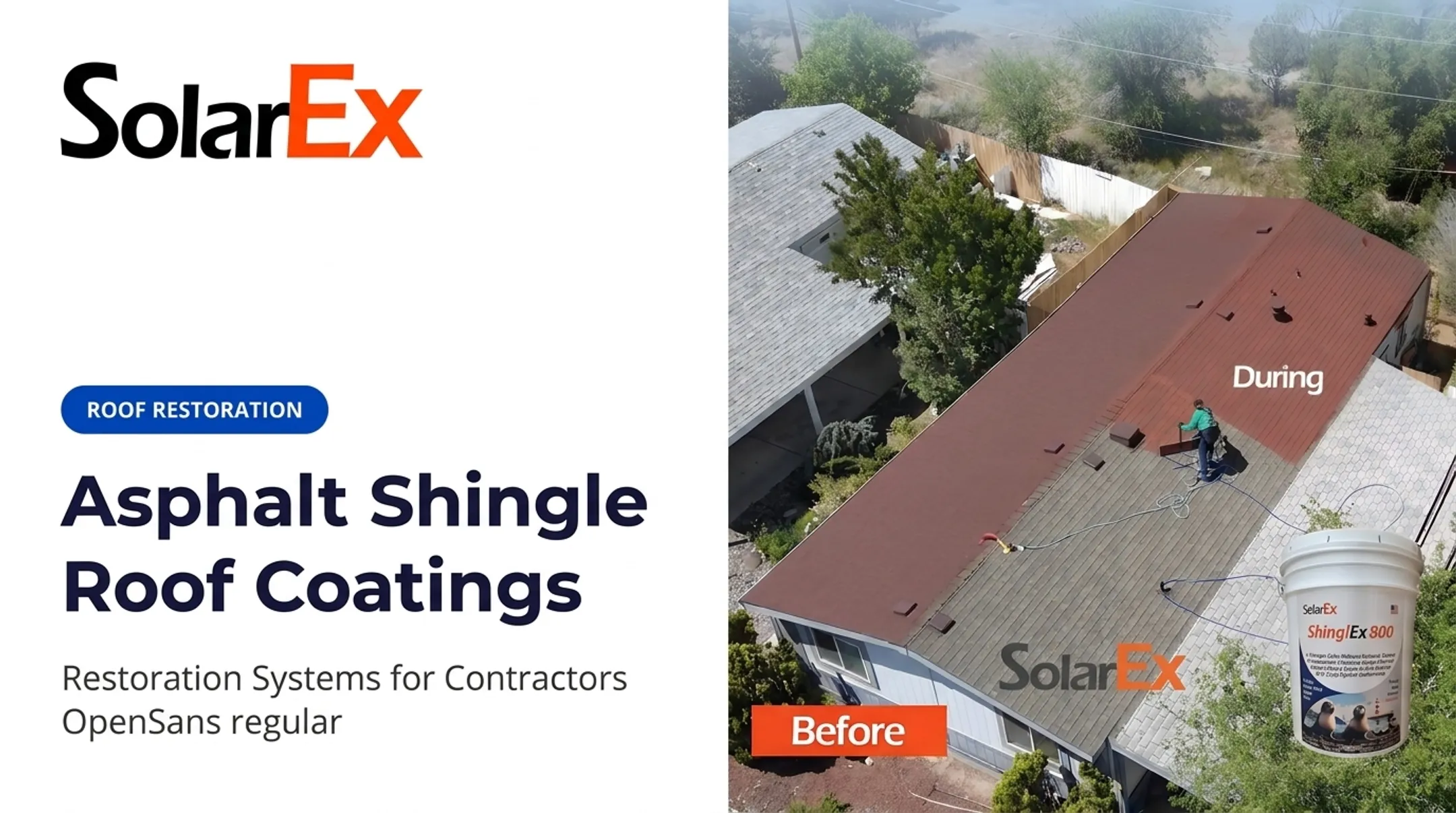
- Shingle rejuvenators when aging asphalt still has solid deck and structure underneath
Priorities Differ by Audience
- Homeowners typically want comfort improvements and more life out of an aging shingle roof.
- Contractors need substrate compatibility data and manufacturer application specs.
- Facility managers weigh lifecycle cost, tenant disruption, and long-term maintenance against energy performance.
Pre-Installation Checklist
With the goal set, lock down field conditions before any crew starts coating:
- Surface preparation (pressure washing, moisture testing, repairs)
- Primer requirements for the specific substrate
- Application thickness matched to warranty requirements
- Curing window (most silicones: 50°F–100°F and 24 hours of dry weather)
- Documentation and warranty compliance steps
Compare total project value, not just coating price per gallon. Preparation, labor, expected service life, and warranty terms matter more than the sticker price on a 5-gallon pail.
How Cool Roofs Fit Into an Integrated Energy Plan
Reflective roofing and solar power solve two different problems. A cool roof reduces the heat entering the building. Solar panels generate electricity. Neither replaces the other, and pairing them well takes some coordination.
Coordination Before Solar Installation
Before racking goes on a roof, address:
- Remaining roof service life and structural capacity for panel loads
- Attachment points, flashing details, and penetration sealing
- Drainage around mounting hardware
- Access needed for future roof maintenance
- Whether roof restoration should happen before, not after, panel installation
At SolarEx, we treat roof condition and any planned solar work as one sequence, not two disconnected projects. Coatings such as SiliconEx 500 and SolarEx 300 are formulated for solar-ready rooftops, and our team can specify the reflectance and mil thickness a roof needs before panels go up.
Roof restoration should be settled first. A site-specific evaluation—not a generic savings claim—should set the order of coating, attachment details, and later generation equipment.

Frequently Asked Questions
What are the best ways to cool down my roof?
Reflective coatings, light or cool-colored materials, insulation, ventilation, and practical shade all help lower roof temperatures. Have a professional evaluate your roof’s condition and local climate before you choose a product.
What makes a roof a cool roof?
A cool roof combines high solar reflectance with high thermal emittance. The Solar Reflectance Index (SRI) rolls both into one performance score. Exact thresholds vary by rating program, building code, roof type, and location.
Are cool roof coatings suitable for every roof?
No. Suitability depends on the substrate, slope, moisture level, drainage, and existing roof condition. A professional inspection should always precede any coating application.
Is a cool roof better than replacing a roof?
It depends on condition. Restoration or coating works well for a sound, repairable roof, while severe deterioration, structural issues, or saturated insulation usually calls for replacement.
Do cool roofs save energy in every climate?
Not automatically. Savings depend on cooling demand, insulation, roof assembly, HVAC use, and winter heating needs. A site-specific assessment gives a clearer picture than a general estimate.
Can I combine a cool roof with solar panels?
Yes, the two work well together. Review roof condition, structural capacity, attachment details, and warranty terms before installing either system.