
Introduction
"Silicone waterproof paint" is a product label, not a paint category. These systems form a water-resistant membrane over a compatible substrate, and that distinction matters more than most labels suggest.
Roofing contractors, facility managers, and building owners turn to silicone coatings when a roof is aging but not failing. Leaks, UV damage, and heat gain usually drive the choice. So does the cost of a full tear-off.
This guide covers how silicone coatings actually work, where they perform well, where they fall short, how to choose one, and what to check before you buy. No hype, just the mechanics.
Key Takeaways
- Silicone forms a seamless, flexible membrane—results still depend on substrate, adhesion, and detailing.
- Silicone outperforms many coatings on roof restoration, heavy UV exposure, and ponding-water areas.
- Compare solids content, dry-film thickness, elongation, and warranty terms before you buy.
- These coatings extend roof life. They don't fix drainage problems or structural damage on their own.
What Are Silicone Waterproof Paints and Coatings?
A silicone waterproof coating starts as a liquid, applied by roller, brush, or spray. Once it cures, it becomes something entirely different: a continuous, flexible film bonded to the roof surface. That's the gap most buyers miss. The wet product and the finished membrane behave nothing alike. In roofing, these products are usually specified as coatings rather than architectural paints—the difference is membrane build and elastomeric performance, not just color.
Silicone polymers cure into a film that repels water while flexing with the building. As roof decks expand and contract with temperature swings, a properly cured silicone membrane moves with them instead of cracking.
Here's the catch: "waterproof" isn't an absolute guarantee. Performance depends on:
- Coating formulation and solids content
- Application thickness (measured in dry-film mils)
- Roof details like seams, penetrations, and flashings
- Drainage design
- Substrate preparation before the first coat goes down
Silicone Coating Categories
Not every product labeled "silicone" is the same chemistry. There are real differences worth knowing:
- Silicone-modified / silicone-resin: Add water repellency and weathering resistance, but are not 100% silicone
- 100% silicone (silicone rubber): Elastomeric systems built to form a flexible waterproof membrane
- Cure and carrier type: Moisture-cured single-component, solvent-borne, and water-based options differ in VOCs, cure window, and application limits
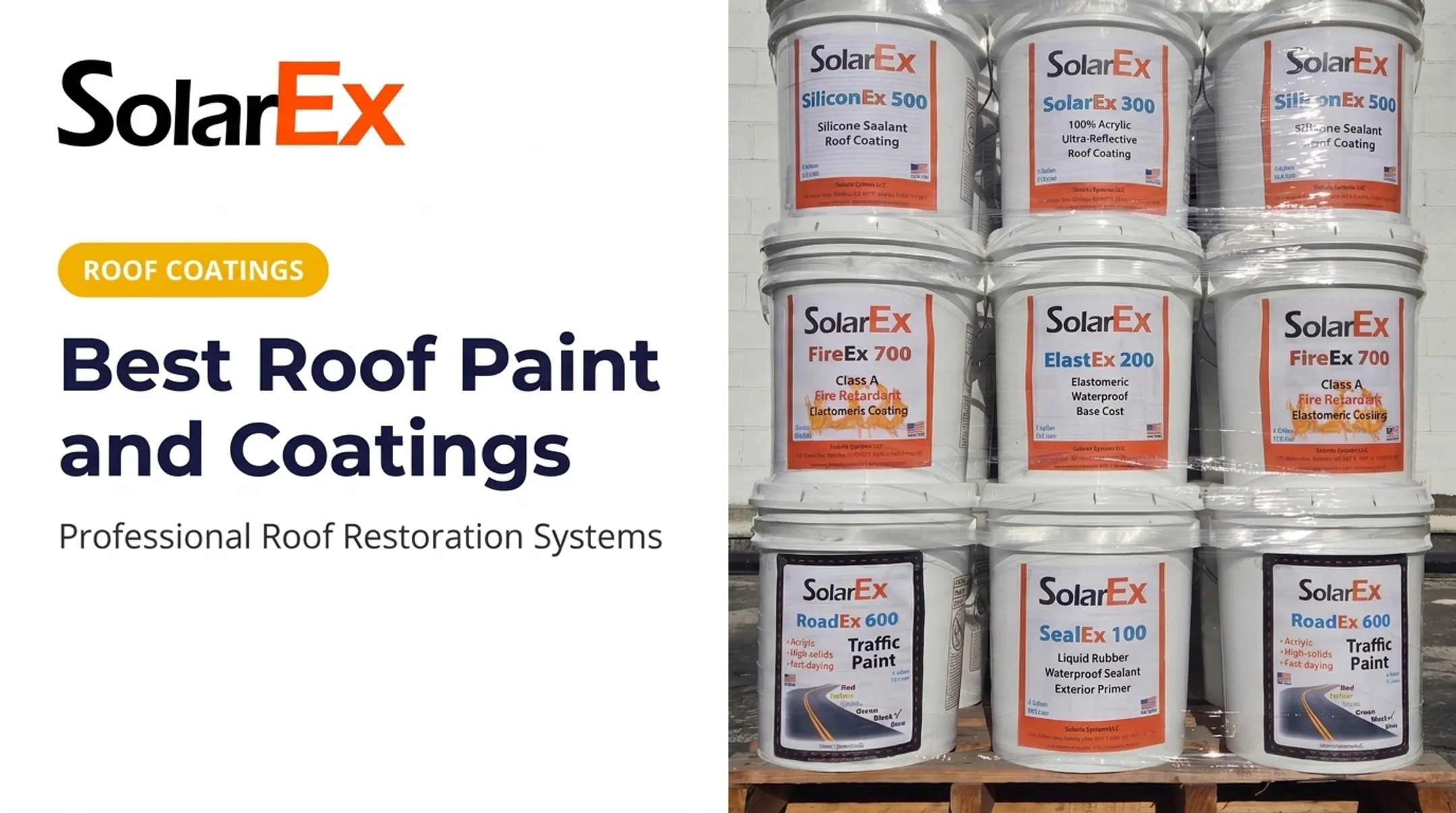
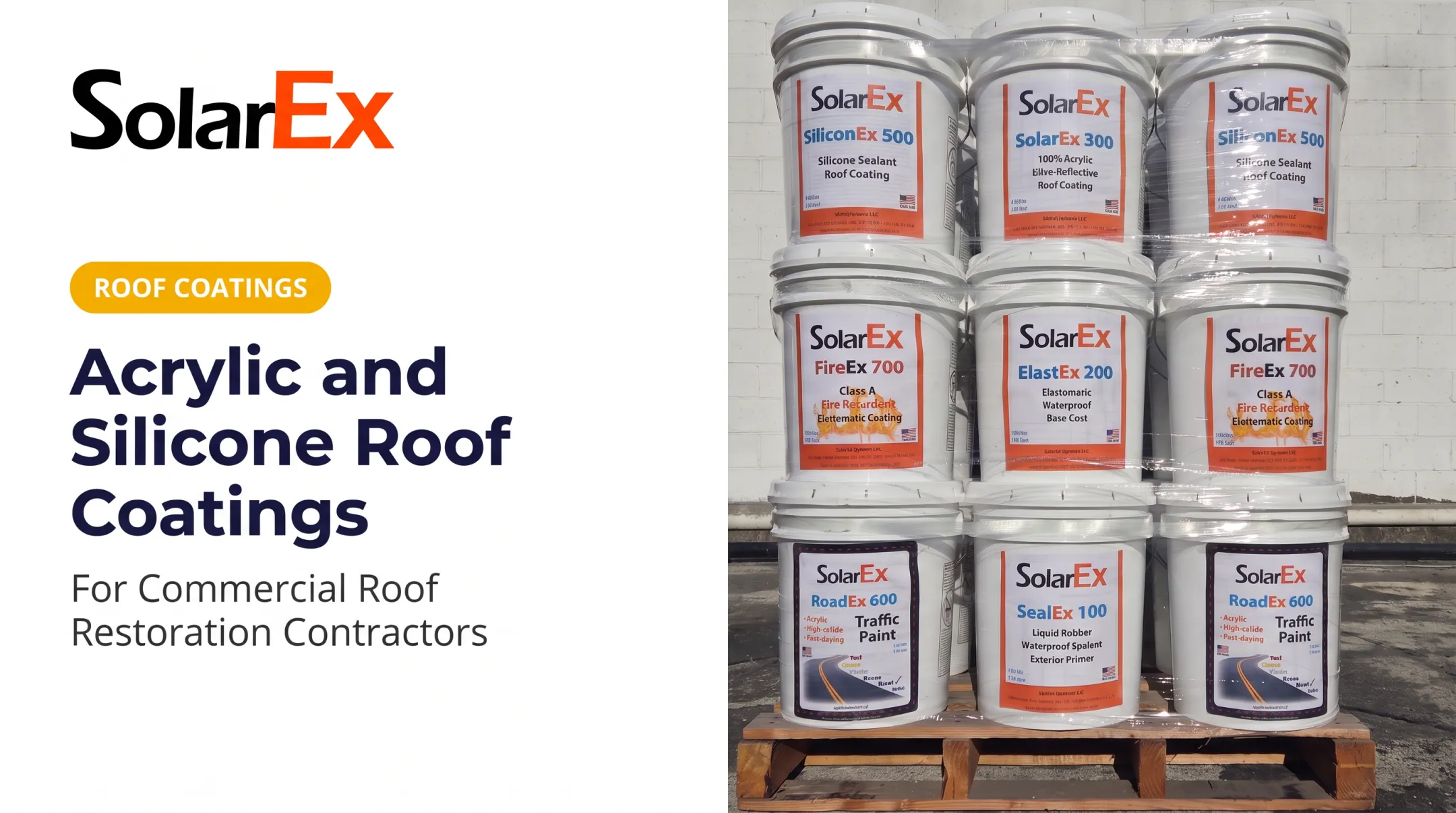
SolarEx's SiliconEx 500 is a solvent-free, single-component, moisture-cured 100% silicone coating that cures into a continuous membrane. Always check the technical data sheet before assuming compatibility with your substrate or existing system.
Properties Worth Evaluating
Before comparing products, look at these performance markers:
- Water and ponding-water resistance
- UV stability and reflectivity
- Elongation and tensile strength
- Adhesion strength on your specific substrate
- Low-temperature flexibility and cure time
A product with 250% elongation, for instance, stretches well beyond a rigid film's breaking point, which matters when a roof deck shifts seasonally.
Where Silicone Coatings Perform Best—and Where They Have Limits
Silicone coatings shine on aging but structurally sound roofs. They also fail in specific, predictable ways—and those limits matter as much as the strengths.
The Strong Cases
- Seamless coverage: Liquid-applied silicone eliminates the joints and seams that create weak points in sheet membranes.
- Heat reduction: Reflective, light-colored coatings can cut solar heat gain. The U.S. Department of Energy notes that in warm climates, a cool roof can reduce a single-story building's annual air-conditioning energy use by up to 15%—with results still tied to climate, insulation, and HVAC.
- Ponding-water tolerance: Silicone generally handles standing water better than acrylics, but it does not fix the drainage problem causing the ponding. Flashing repair and slope correction still matter.
- Lower VOC options: High-solids, solvent-free formulas cut odor and emissions during application—useful on occupied buildings.

The Real Limitations
- Reflectivity fades: The National Roofing Contractors Association reports white or light-colored coatings can drop from an initial solar reflectance of 0.85–0.90 down to around 0.70 as dirt builds up. Periodic cleaning helps hold performance.
- Adhesion fails on unprepared surfaces: Wet, oily, chalky, or contaminated substrates will not bond reliably, no matter how good the product is.
- Repair first, not coat: Continual immersion, trapped moisture, active structural leaks, and severe substrate damage need repair before any coating goes down.
- Wet silicone is slippery: CertainTeed notes silicone surfaces are especially slippery when wet, so walk pads and marked access routes matter for rooftop service work.
Before you buy, match the product to the roof you have: confirm fire rating, chemical resistance, and warranty exclusions against your assembly, insulation, and existing sealants—and do not coat over problems that need repair first.
Types and Common Applications of Silicone Waterproof Coatings
Not all silicone coatings suit every project. Matching the product to the substrate matters more than the brand name on the pail.
Where They're Typically Used
- Low-slope and flat commercial roofs — membrane, metal, modified-bitumen, and previously coated systems, subject to inspection and manufacturer approval
- Warehouses, retail buildings, and light-industrial facilities — where leak prevention and heat management directly affect operating costs
- Residential restoration — only when the specific product is approved for that roof material and won't compromise ventilation or drainage
Walls, masonry, and concrete need separate evaluation. A silicone label alone does not make a coating right for a vertical wall or concrete slab. Each substrate needs its own compatibility and adhesion test.
Purchase Formats
Silicone coatings ship in more than small cans. SolarEx's SiliconEx 500, for example, is available in:
- 1-gallon and 4-gallon pails for smaller jobs
- 55-gallon drums for mid-size projects
- 180-gallon bulk pallets (36 five-gallon buckets) for large commercial work
Contractors and distributors buying at volume typically negotiate pallet pricing directly.
Silicone vs. Acrylic vs. Polyurethane
| Factor | Silicone | Acrylic | Polyurethane |
|---|---|---|---|
| Ponding water | Generally strong tolerance | Weaker; not typically approved for persistent ponding | Product-specific |
| Reflectivity | High initial reflectivity, fades with dirt | Valued for reflectivity, similar fade pattern | Varies by formulation |
| Flexibility | High elongation, handles movement well | Moderate | Moderate to high |
| VOCs | Often low or solvent-free | Typically water-based, low-odor | Varies widely |
| Application conditions | Moisture-cured, tolerates humidity | Needs dry conditions before rain/dew | Product-specific |
| Material cost | Higher upfront cost | Generally lower cost | Mid-range typically |
No single material wins every category. The right choice depends on your roof's exposure, drainage, and budget.
How to Choose and Apply Silicone Waterproof Coating
Most early coating failures start before the first pail opens. Skip the roof assessment, and even a strong silicone system can peel, blister, or void its warranty.
Step 1: Assess the Roof
Document everything:
- Roof age, substrate type, and existing membranes or coatings
- Active leaks, ponding areas, and seam condition
- Penetrations, flashings, drainage paths, and insulation condition
Active leaks, rust, blisters, and trapped moisture need repair before coating. Run a small adhesion test if there's any uncertainty about the existing surface.
Step 2: Review the Technical Data Sheet
Compare these figures across products:
- Solids content and recommended coverage rate
- Target dry-film thickness (SiliconEx 500, for instance, calls for a minimum of 22 mils, with textured surfaces needing closer to 30 mils)
- Elongation, tensile strength, and cure time
- Application temperature range and humidity limits
Then read the warranty terms: required prep, film thickness, inspections, approved installers, and exclusions for misuse or incorrect application.
Step 3: Follow the Application Sequence
- Clean and prepare the substrate: remove contaminants, repair defects, and treat seams and penetrations with a compatible sealant or tape.
- Apply at the specified rate with the approved roller, brush, or spray equipment. Under-applying cuts durability and can void warranty coverage.
- Protect the curing coating from rain, condensation, and traffic. SiliconEx 500 is typically tack-free in 70–80 minutes and fully cured in 12–24 hours, depending on weather.
- Schedule a final inspection of drainage, high-traffic zones, penetrations, and any early cracking or ponding.

On large commercial roofs or complex assemblies, bring in contractor-level technical guidance before you coat—especially when the system is part of a wider cool-roof or energy-efficiency upgrade.
How SolarEx's Cool-Roof Approach Can Complement Silicone Coatings
SolarEx builds its cool-roof approach around a simple priority: cut heat absorption at the roof surface first. Reflective silicone and acrylic coatings lower the heat load a building has to manage, which supports comfort and cooling efficiency on U.S. commercial and residential roofs.
That cooler, protected surface also pairs well with solar. A coating does not replace a PV array, and a coating alone will not guarantee specific energy savings—but a solar-ready roof finish can reduce thermal stress on the membrane and the equipment above it.
SolarEx's silicone coating is a relevant example of what a well-specified product looks like:
- Reflects up to 88% of solar radiation, based on manufacturer testing
- Uses a low-VOC formulation designed to meet strict environmental standards
- Forms a moisture-cured, seamless barrier built for permanent ponding-water resistance
- Applied at precision mil-thickness tailored to the specific roof for warranty compliance
Before specifying or purchasing, verify current technical documentation directly, since formulations and test data can be updated.
For commercial building owners and facility managers, the smarter move is to evaluate roof condition and coating system together—heat reflectivity, waterproofing, and long-term durability—not color or price alone. That is how a silicone cool-roof coating complements a broader energy plan without being treated as a stand-alone savings guarantee.

Frequently Asked Questions
Is silicone paint waterproof?
It can form a water-resistant membrane when the product suits the substrate and is properly prepared, applied, and cured. It won't fix structural damage or poor drainage on its own.
Is silicone paint permanent?
No coating is truly permanent. Lifespan depends on formulation, weather exposure, roof movement, and how well you follow the manufacturer's maintenance and recoating guidance.
What surfaces can silicone waterproof paint be applied to?
Common candidates include approved roof membranes, metal, modified bitumen, concrete, and masonry. Always run compatibility and adhesion testing before full application on any surface.
Can silicone roof coating be applied over an existing roof?
Often, yes, if the roof is structurally sound, clean, dry, and compatible with the coating. Manufacturer approval and a thorough inspection are non-negotiable first steps.
How long does silicone waterproof coating take to cure?
Cure time depends on formulation, temperature, humidity, and film thickness. Many products are tack-free within a few hours and fully cured in 12 to 24 hours. Always follow the product's technical data sheet.