
Cool roofs can reduce peak cooling demand by 11% to 27% in air-conditioned homes, according to the EPA. Solar reflective roof paints and coatings are one way to fight back against that heat load without tearing off the existing roof.
That said, a coating isn't a cure-all. It won't fix a leaking roof, correct poor drainage, or replace missing insulation. This guide covers how reflective coatings work, which roofs and climates benefit most, how to compare products, and what installation and cost actually look like.
Key Takeaways
- Performance hinges on solar reflectance and thermal emittance together, not white appearance alone.
- Coatings lower roof heat and may cut cooling demand; climate, insulation, HVAC, and install quality drive results.
- Check roof condition, substrate, drainage, and manufacturer requirements before selecting a product.
- Compare initial and aged performance data, warranty terms, VOC content, and CRRC ratings, not marketing claims.
What Are Solar Reflective Roof Paints and Coatings?
A solar reflective roof coating is a protective surface layer designed to reflect more incoming solar energy and shed absorbed heat efficiently, rather than storing it and passing it into the building. Some manufacturers use the term "roof paint," but a true cool-roof coating is engineered differently than a can of exterior house paint.
Decorative paint vs. purpose-built coating. Standard decorative paint is formulated for appearance and basic weather resistance. A dedicated roof coating is built for:
- Waterproofing and UV resistance
- Flexibility across temperature swings
- Adhesion to specific roof substrates
- Documented performance data
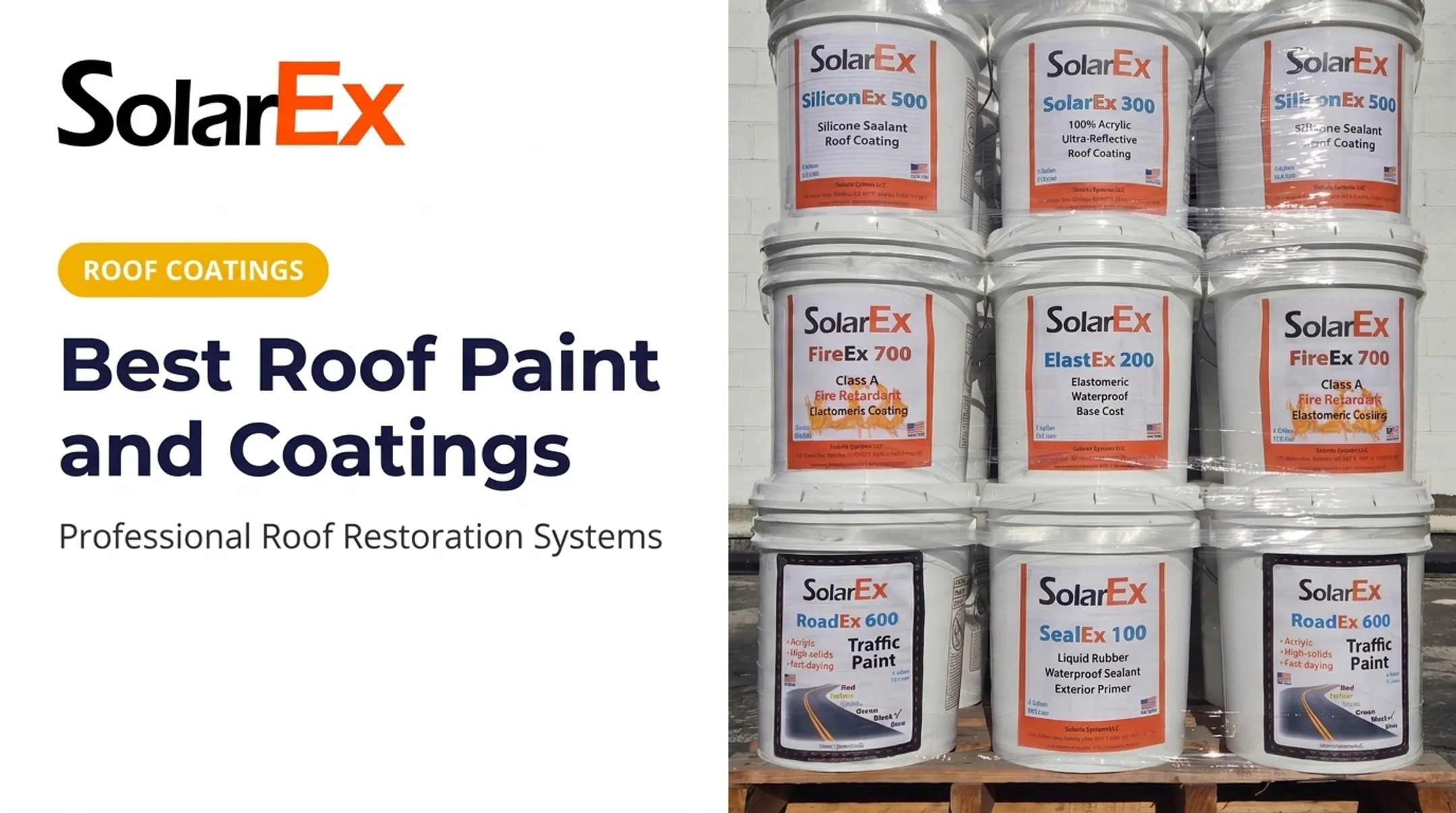
SolarEx 300 is a 100% acrylic latex topcoat built for reflectivity and mildew resistance across multiple substrates. TropEx 310 meets ASTM D6083 with roughly 310 psi tensile strength, 125% elongation, and flexibility tested to -15°F. These aren't generic paints with reflective pigment mixed in.
Common Coating Chemistries
Two chemistries dominate the market:
- Acrylic systems — water-based, cost-effective, strong UV resistance, best on roofs without standing water
- Silicone systems — solvent-free, moisture-cured, and built to handle ponding water and extreme weathering
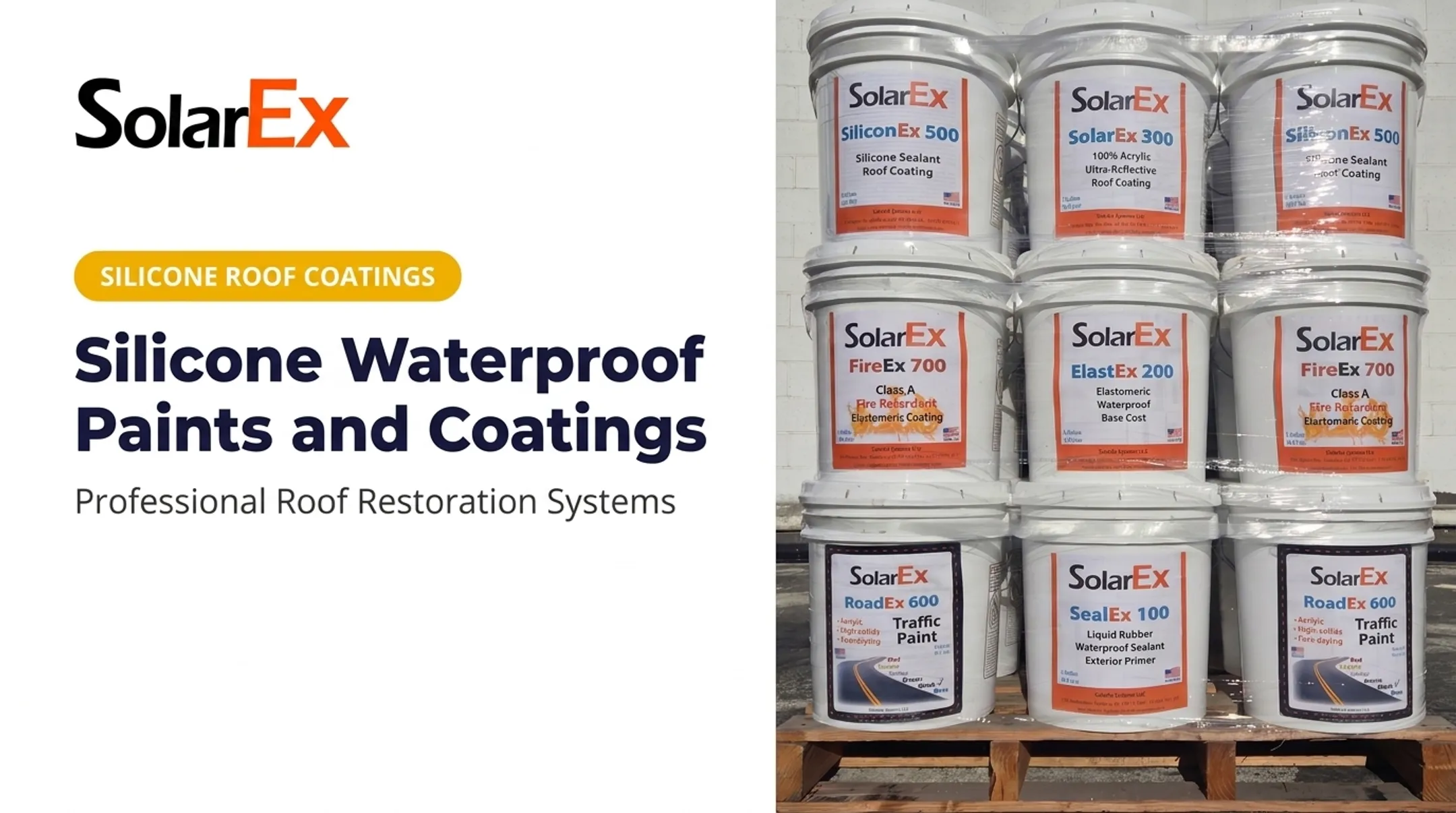
SiliconEx 500, for example, is a single-component silicone coating rated for permanent ponding water on metal, concrete, TPO, EPDM, and modified bitumen surfaces. Suitability always depends on the substrate, moisture exposure, and manufacturer specs, so check the product data sheet before assuming one chemistry fits every roof.
Coatings are not insulation. A coating manages heat at the roof's surface by reflecting and releasing solar energy. Insulation slows heat transfer through the building envelope after heat is already absorbed. They solve different problems, and most high-performing roofs benefit from both.
How Do Solar Reflective Roof Coatings Work?
Two properties determine how well a coating fights heat:
- Solar reflectance (SR) — the fraction of incoming sunlight the surface sends back, measured 0 to 1
- Thermal emittance (TE) — how efficiently the surface releases whatever heat it does absorb, also measured 0 to 1
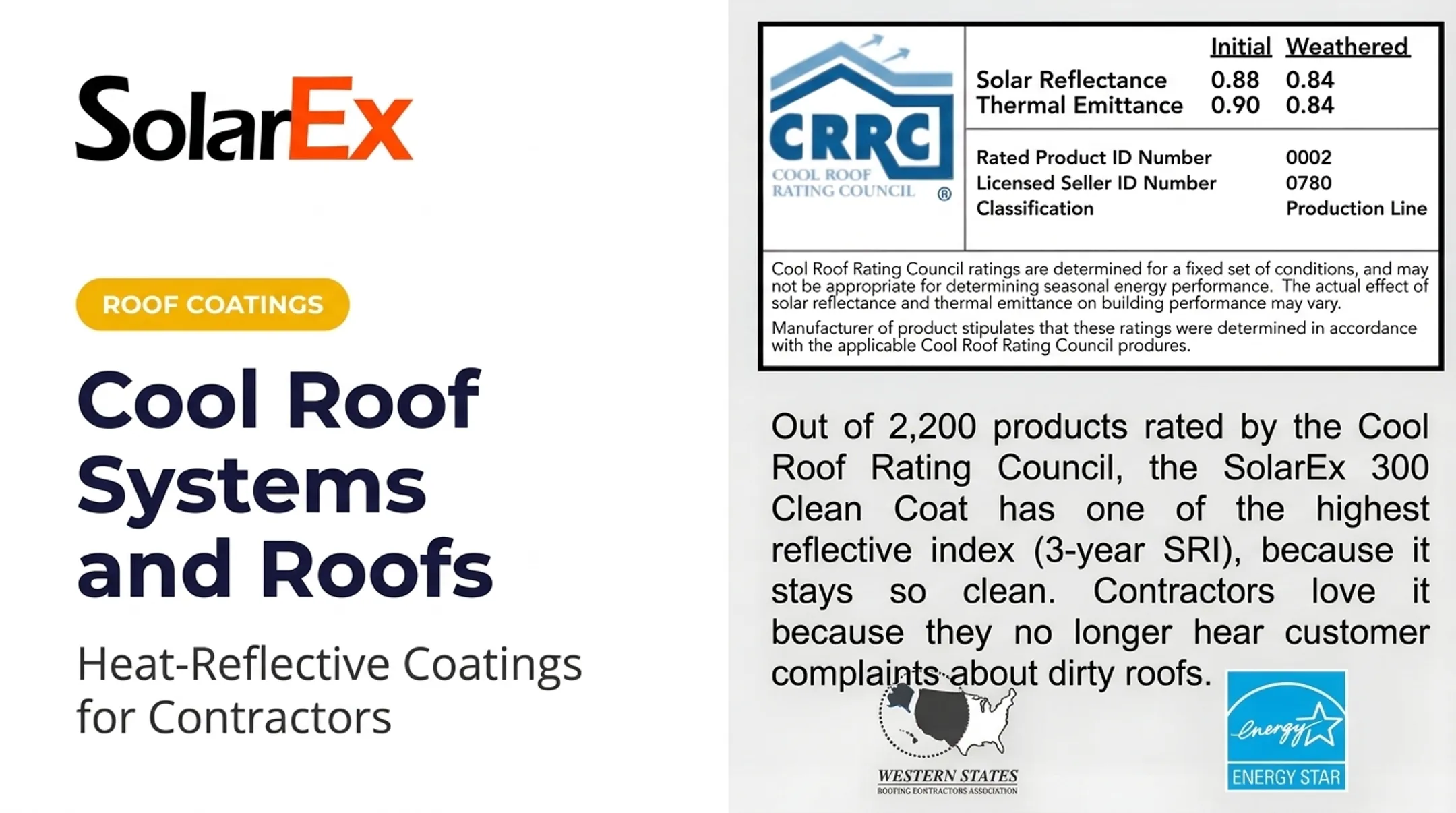
A coating with high SR but poor TE can still run hot. The Cool Roof Rating Council combines both measurements into a single Solar Reflectance Index, or SRI, which typically falls between 0 and 100. Higher SRI generally means a cooler surface.
Color Matters, But It Isn't the Whole Story
Light colors reflect more solar energy than dark ones. One internal product comparison found a white reflective roof at 90% reflectance held at 95°F, while a comparable dark roof at 17% reflectance climbed to 175°F. But color alone doesn't tell the full story.
Specially formulated "cool pigments" can boost reflectance in darker colors by reflecting more near-infrared radiation while keeping the visible color unchanged. SiliconEx 500 in white measures 0.87 initial solar reflectance, 0.90 thermal emittance, and an SRI of 110 — specs worth checking on any product, not just a color swatch.

Initial vs. Aged Performance
Reflectance drops over time as dirt, oxidation, and weathering take their toll. CRRC lists both initial and three-year aged values for a reason: a product's day-one numbers rarely match its year-three numbers. Always compare aged data, not just the number printed on the marketing sheet.
The Heat Path — and What Coatings Don't Fix
Heat moves from the roof surface, through the deck, into the attic, and finally into occupied space. A reflective coating interrupts the first step of that path. It does nothing for:
- Air leakage around penetrations and ductwork
- Thermal bridging through structural framing
- Undersized or poorly maintained HVAC equipment
- Missing or degraded insulation
DOE research shows cool roofs can cut annual air-conditioning energy use by up to 15% in warm, single-story buildings, but that number swings widely based on climate and building design. In cold climates, reflective roofs can actually increase winter heating use slightly, since they absorb less solar warmth.
A coating isn't a heating system, and it won't repair a structurally failing roof by itself.
Benefits, Applications, and Limitations
Where Reflective Coatings Help Most
Lower surface temperatures translate into real, measurable benefits:
- Reduced roof-surface heat and thermal stress on the membrane
- Improved occupant comfort, especially on top floors
- Lower peak cooling demand during summer months
- UV and weather protection that extends the life of compatible roofing systems
In one industrial project SolarEx worked on in the Middle East, a 10,200 m² (about 110,000 sq ft) manufacturing facility with a concrete deck and bitumen felt roof saw a 34°C (61°F) drop in roof-surface temperature and a 23% reduction in cooling-energy consumption after coating application.

Results like this vary by climate, building envelope, and HVAC setup, so treat any single case study as a data point, not a guarantee.
Matching the Coating to the Roof
| Roof Type | Common Approach |
|---|---|
| Asphalt shingles | Acrylic rejuvenator/sealer (properly primed) |
| Metal | Acrylic or silicone, primer often required |
| Modified bitumen / BUR | Acrylic or silicone systems |
| Single-ply (TPO, EPDM, PVC) | Silicone, if membrane remains sound |
| Concrete | Silicone or acrylic, moisture testing first |
Many products, including SiliconEx 500, are approved across several of these categories, but adhesion testing and manufacturer sign-off still matter before you commit to a system.
Commercial Applications
Warehouses and light-industrial buildings are common candidates for coating over replacement. Restoring an existing roof can defer a costly tear-off, but leak repair and structural assessment always come first. A coating applied over an unresolved leak just seals in the problem.
Limitations Worth Knowing
- Savings shrink in cool climates or already well-insulated buildings
- Bright reflective surfaces can create glare for neighboring taller structures
- Dirt and weathering reduce reflectance over time
- Coating failure often traces back to trapped moisture, poor adhesion, or unresolved ponding
For property owners weighing both heat reduction and clean energy generation, reflective coatings and rooftop solar work as complementary steps, not competing ones. SolarEx focuses on solar-ready cool roof coatings; whether you coat first, add PV later, or plan both together depends on roof condition, budget, and energy goals.
How to Choose the Right Roof Coating
Start With an Honest Roof Assessment
Before comparing products, document the roof itself:
- Age and substrate — what's it made of, and how many layers exist already?
- Leaks and soft spots — any active moisture intrusion?
- Seams and penetrations — are they sealed and sound?
- Drainage — does water pond anywhere for more than 48 hours?
- Load capacity — can the structure support another restoration layer?
Skipping this step is the most common reason coatings underperform or fail early.
Compare Chemistry to Your Roof's Real Conditions
Match chemistry to how the roof actually behaves—not just the label claims:
- Acrylic — strong UV resistance and lower cost; not ideal for standing water
- Silicone — excellent ponding-water resistance; harder to recoat because most materials won't bond to cured silicone
- Elastomeric — flexible waterproofing for roofs that move with temperature swings; confirm reflectance ratings if cool-roof performance is the goal
Read the Performance Documentation, Not the Marketing Copy
Look for a product data sheet listing initial and aged solar reflectance, thermal emittance, SRI, and CRRC listing status. SiliconEx 500's CRRC Product ID #1448-0001, for instance, shows 0.87 initial and 0.72 aged reflectance on smooth surfaces — a meaningful gap that tells you what to expect after a few years of weathering.

Color Selection Is a Trade-Off
White remains the most reflective standard option, but it isn't the only path to performance. Light gray coatings reflect slightly less sunlight than white but hide dirt more effectively over time. Weigh these factors:
- Local climate and sun exposure
- Building type and energy goals
- HOA or local aesthetic requirements
- Glare impact on neighboring properties
Check VOC Content and Local Rules
Low-VOC, water-based formulations are widely available and often required by local air-quality rules, which vary by state and county. SolarEx's SiliconEx 500 is formulated to meet strict VOC standards—still confirm compliance for your city or county rather than assuming one national rule applies.
After chemistry, reflectance, color, and VOC checks, request a roof-specific specification. A coating that performs well on a metal warehouse roof may be the wrong call for a ponding concrete deck.
Installation, Maintenance, and Cost Factors
The Correct Project Sequence
- Inspect and repair the roof, addressing wet insulation, loose membrane, and damaged flashing first
- Clean and prepare the surface thoroughly
- Treat seams and penetrations individually
- Apply primer where the manufacturer requires it
- Apply the coating at the specified dry-film thickness
- Allow proper cure time before exposing the roof to foot traffic or weather
Skipping surface prep is the fastest way to void a warranty.
Why Professional Application Matters
Large commercial roofs, complex penetrations, and ponding-water conditions all demand experienced application. SiliconEx 500, for example, needs airless spray equipment at 5,000–7,000 psi and a minimum 32-mil dry-film thickness. A roller will not hit that spec reliably on a 50,000-square-foot roof.
What Drives Cost
Roof coating pricing varies by:
- Roof area and access difficulty
- Coating chemistry (acrylic generally costs less than silicone)
- Number of coats and required dry-film thickness
- Surface repairs and primer needs
- Warranty length (a 20-year system requires more material than a 10-year system)
- Regional labor rates
As one reference point, SolarEx's SiliconEx 500 has run $1.25 to $1.64 per square foot for a 20-year warranty system. That figure is product-specific, not a national benchmark—your quote still hinges on roof condition and local labor.

Maintenance Keeps the Warranty Intact
- Inspect seams and penetrations at least annually
- Clean surfaces periodically to preserve reflectance
- Repair damage promptly rather than letting it spread
- Track coating age against warranty terms
Rebates and Incentives Vary by Location
Some utilities offer meaningful incentives. Austin Energy has offered $0.25 per square foot for reflective roof coatings on commercial buildings, and SRP has offered residential rebates up to $0.30 per square foot, capped at $600, for CRRC-rated cool roofing. Programs are location-specific and change often—confirm current eligibility with your local utility or building department before you budget around a rebate.
Frequently Asked Questions
What are solar reflective coatings?
They're protective surface layers formulated to reflect more sunlight and release absorbed heat efficiently, measured through solar reflectance and thermal emittance. Unlike decorative paint or bulk insulation, they're tested and rated for roofing performance.
Do solar reflective paints work?
Yes, they can reduce solar heat absorption and lower cooling demand in suitable buildings. Results depend heavily on your climate, roof construction, insulation, and how well the coating was installed.
How much does solar reflective coating for a roof cost?
Cost depends on roof size, coating chemistry, surface condition, and warranty length. Get a roof-specific quote rather than relying on a generic per-square-foot figure, since prices vary widely by region and project scope.
How long does solar reflective paint last?
Service life depends on coating chemistry, roof movement, weather exposure, and application quality. Acrylic systems commonly run 10-15 years and silicone systems 10-20+ years under proper conditions, per manufacturer guidance.
Which paint reflects sunlight best?
Compare documented solar reflectance, thermal emittance, and SRI values rather than relying on color alone. Aged performance data matters more than the initial numbers on a spec sheet.
What is the best solar reflective paint for a roof?
The best product is the one compatible with your substrate, moisture conditions, climate, and budget, not a single universal answer. A professional roof assessment narrows the options quickly.