
A generic "waterproof coating" doesn't solve that. The right membrane has to move with the metal, bridge the gaps, and resist whatever water sits on the roof after a storm.
Choosing the correct system depends on:
- Roof slope and how fast water actually drains off
- Ponding-water exposure near drains, curbs, or low spots
- Substrate condition — bare steel, galvanized, factory-finished, or already coated
- Climate, UV load, and how much the panels expand and contract
- Foot traffic, mechanical equipment, or restoration versus full replacement goals
This guide compares silicone, polyurethane, acrylic, and sheet-applied membranes for US metal roofs, then walks through prep, compatibility, and warranty checks that matter more than any single product label.
Key Takeaways
- Silicone typically performs best on low-slope metal roofs with documented ponding water.
- Acrylic fits positive-drainage roofs where budget and reflectivity matter most.
- Polyurethane suits roofs with foot traffic, equipment zones, or impact exposure.
- No membrane fixes active corrosion, structural damage, or poor drainage — repair comes first.
- Always compare technical data sheets, not marketing claims, before specifying a system.
Overview of Waterproofing Membranes for Metal Roofs in the US Market
A waterproofing membrane is a continuous protective layer applied over a prepared roof surface. Its job is clear: block water intrusion, flex with the substrate, and hold up against sun, rain, and temperature swings for years.
Metal roofs need flexibility more than most substrates. A 40-foot aluminum panel fixed at the ridge can expand by roughly 0.62 inch with a 100°F temperature swing, according to NRCA guidance. That movement stresses laps, fasteners, sealants, and any coating applied over them.

Corrosion and capillary action compound the problem by opening leak paths that aren't visible from the ground.
Field Membrane vs. Supporting Materials
A complete waterproofing system is never just one product. It typically includes:
- The field membrane (silicone, polyurethane, acrylic, or a sheet system)
- Seam sealants and mastics rated for the same chemistry
- Reinforcing fabric at seams, fasteners, and penetrations
- Primer where the substrate or existing coating requires it
- Fastener treatments for corrosion-prone exposed heads
These components need to be specified as one compatible system. Mixing chemistries without manufacturer approval is one of the fastest ways to void a warranty.
The comparison below ranks the leading options by movement accommodation, ponding-water resistance, UV stability, substrate compatibility, application complexity, and manufacturer support.
Best Waterproofing Membranes for Metal Roofs
Every product claim below should be verified against the manufacturer's current technical data sheet before specification. Roof conditions vary too much for any single recommendation to apply universally.
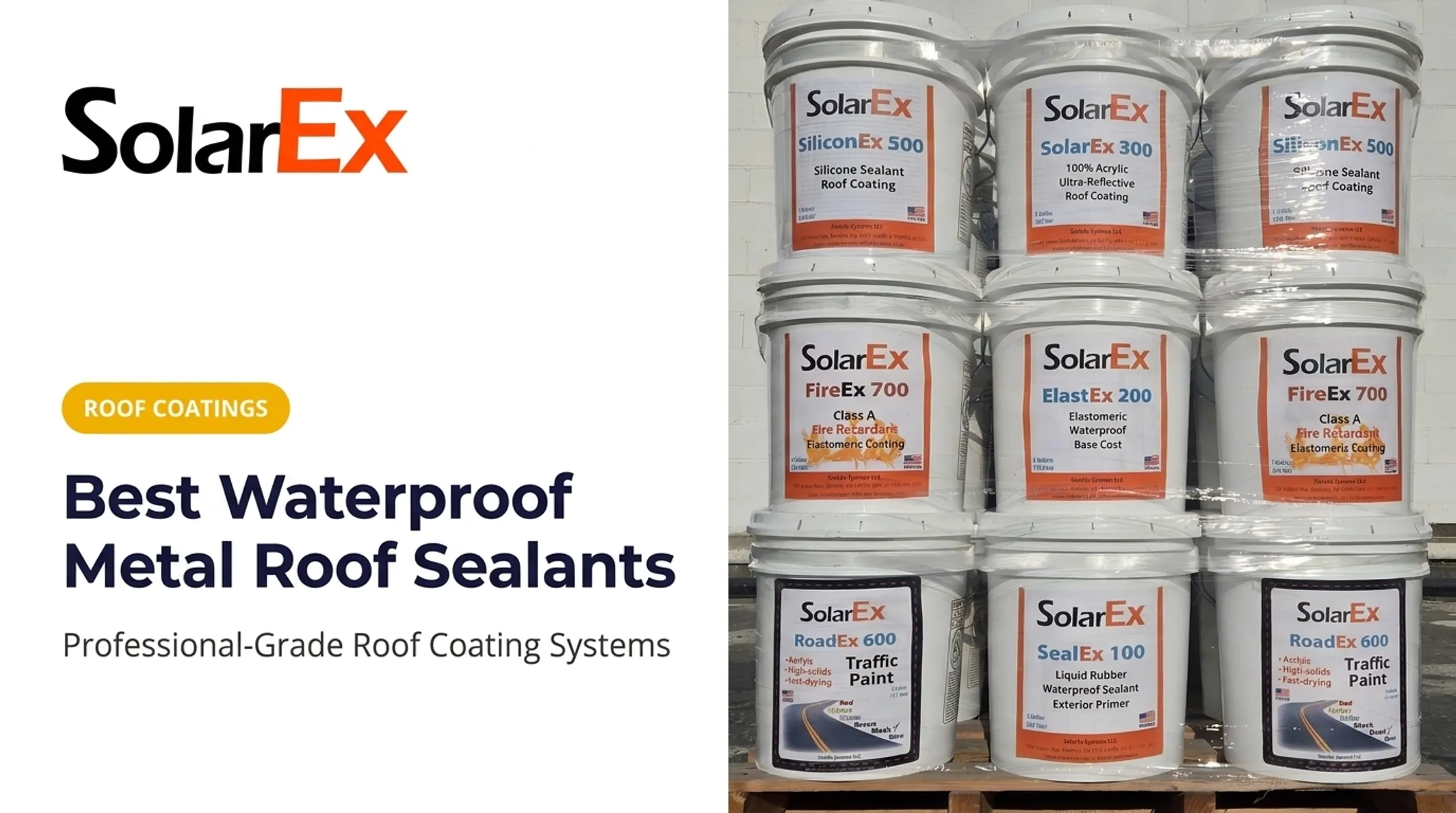
SiliconEx 500 by SolarEx Systems
SolarEx Systems, based in Berkeley, California, manufactures SiliconEx 500 — a 100% silicone, solvent-free, single-component, moisture-cured coating designed for flat and pitched roofs, including metal.
Key characteristics documented for SiliconEx 500:
| Property | Detail |
|---|---|
| Application | Brush, roller, or airless spray |
| Substrates | Metal, concrete, wood, TPO, EPDM, modified bitumen, existing coatings |
| Tensile strength (ASTM D2370) | 300 psi (HS) / 500 ± 25 psi (LS) |
| Elongation (ASTM D412) | 250 ± 15% (HS) / 225 ± 15% (LS) |
| VOC content | 8 g/L |
| Initial reflectivity | 0.87 |
| Warranty | Up to 20 years, material-based |
SiliconEx 500 cures into a monolithic membrane that flexes with panel seams and fasteners as temperatures shift. For rusted metal sheets, SolarEx's system calls for an Anti-Rust primer before coating. Over existing coatings, run an adhesion test before full application.
Best fit: structurally sound, weathered metal roofs being restored rather than replaced — particularly where ponding water and UV exposure are both concerns. It's not a fix for wet insulation, structural failure, or severe deck damage; those need a professional inspection first.
Liquid-Applied Silicone Membranes (General)
Silicone holds up on low-slope metal roofs for one reason: it doesn't break down under standing water the way other chemistries can.
Advantages:
- Stays flexible under UV exposure and thermal cycling
- Forms continuous, seamless coverage over seams and fasteners
- Supports reflective, cool-roof performance when documented by the manufacturer
Trade-offs:
- Surface prep is non-negotiable — rust and contamination must be addressed first
- Cured silicone is slippery when wet; plan for limited foot traffic
- Silicone attracts dirt over time, which can dull reflectivity
- Recoating over aged silicone is difficult; the Roof Coatings Manufacturers Association notes that adhesion to existing silicone generally requires a silicone-compatible product
Best fit: flat or low-slope metal roofs with confirmed ponding water and heavy sun exposure.
Polyurethane or Hybrid Polyurethane Membranes
Polyurethane fits roofs that take a beating from foot traffic, mechanical equipment, or occasional impact.
Many systems use a two-layer approach:
- An aromatic base coat for cost-effective bulk protection (no UV stabilizers, not meant as a topcoat)
- An aliphatic finish coat for UV and color stability on top
Limitations to plan around:
- Strong odor during curing — occupied buildings need ventilation planning
- Tight pot-life and recoat windows that shift with temperature
- Curing sensitivity to humidity and dew point
- Generally higher material and labor costs, with lifespans commonly cited around 10–15 years
Best fit: commercial metal roofs near rooftop equipment, service paths, or areas with abrasion risk.
Acrylic Elastomeric Membranes
Acrylic is the budget-friendly, easy-to-apply option — water-based, water-cleanable, and reflective right out of the can.
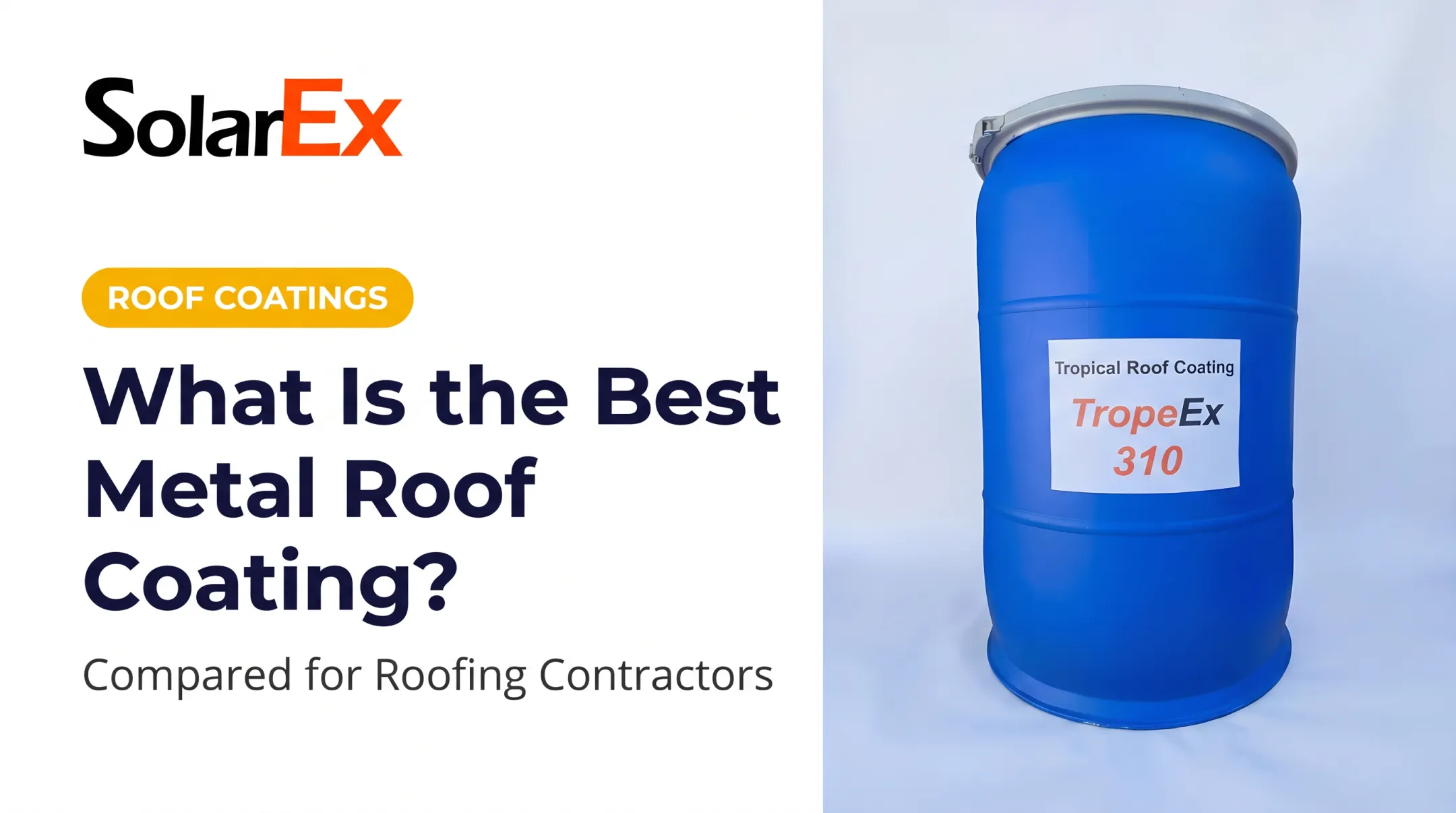
TropEx 310, a 100% acrylic elastomeric coating for metal and other substrates, is a clear example of this category:
- Initial reflectivity around 0.83 (about 0.69 aged)
- No cracking after 1,000 hours of accelerated weathering
- Typical pricing of $0.96–$1.30 per square foot for a 10-year system
The core limitation: acrylic isn't built for standing water. GAF's liquid-applied roofing manual states that ponding areas should be repaired before coating, since prolonged water contact can compromise acrylic performance. Cold temperatures, high humidity, and inadequate cure time before rain create similar problems.
Best fit: positive-drainage metal roofs where budget and reflectivity matter more than ponding resistance. Expect recoating on a shorter cycle than silicone — typically 5–10 years.
Sheet-Applied Thermoplastic or Other Factory-Manufactured Membranes
TPO, PVC, and similar sheet membranes work differently than fluid-applied coatings. Instead of curing in place, they arrive as manufactured sheets that get seamed, flashed, and mechanically attached or adhered over the roof.
Key considerations before choosing this route:
- Metal roofs often need an approved cover board, separation layer, or insulation assembly before a sheet membrane goes down, not a direct overlay
- Fastener pull-out resistance depends on deck gauge; thin metal panels may not hold FM-approved fasteners the way heavier steel decking does
- Seam quality determines long-term watertightness; heat-welded or fusion-bonded seams need trained installers
- Wind uplift, structural condition, and manufacturer approval must be confirmed before specification
This is not a universal overlay solution. It's a full roof-system decision that usually costs more upfront and disrupts the building more than a fluid-applied coating.

How We Chose the Best Waterproofing Membranes
Product rankings mean little without a consistent evaluation method. These criteria separate a sound metal-roof specification from a costly callback.
Common Mistakes to Avoid
- Choosing acrylic for a roof with persistent ponding water
- Applying any membrane over unaddressed active rust or unprepared surfaces
- Ignoring drainage defects and hoping the coating will compensate
Substrate Compatibility
Those failures usually start with the wrong substrate match. Confirm the exact surface before specifying anything:
- Bare steel, galvanized steel, or aluminum
- Factory-applied finishes
- Existing acrylic or silicone coatings
- Areas with visible corrosion
Adhesion testing is worth the time, particularly over existing coatings.
Core Technical Properties to Compare
Pull these figures straight from manufacturer technical data sheets, not marketing pages:
- Elongation and tensile strength (ASTM D412, D2370)
- Permeability (ASTM E96)
- UV stability and accelerated weathering results
- Ponding-water resistance
- Abrasion or impact resistance
Installation System Checklist
A membrane is only as good as the prep underneath it:
- Clean and degrease the entire surface
- Treat corrosion and remove loose or scaled material
- Prime where the substrate or existing coating requires it
- Replace loose fasteners and reinforce seams with compatible mastic and mesh
- Repair drainage issues before coating, not after
- Apply the membrane at the manufacturer's specified thickness

Project Conditions and Buyer Checklist
Climate, occupancy, and access all shape the right choice. Before signing off on a system, confirm:
- Data sheets: Current technical data sheet and safety data sheet
- Substrates: Approved surfaces and required primers
- Application window: Temperature and dew-point limits
- Film thickness: Wet and cured thickness requirements
- Warranty terms: Exclusions and maintenance obligations
- Installer fit: Qualifications and future recoating compatibility
Conclusion
The best waterproofing membrane for a metal roof is the one matched to that roof's chemistry, movement, drainage, and climate exposure.
Before specifying anything, arrange a professional inspection:
- Identify active corrosion
- Test drainage performance
- Check adhesion on the existing surface
- Compare complete systems rather than isolated products
Where reflective protection, moisture resistance, and long-term energy planning line up, SolarEx's integrated approach pairing SiliconEx 500 with cool-roof and solar-ready planning is worth investigating. Not every roof is a fit, but for structurally sound metal roofs facing ponding water and heavy sun exposure, that system is built around exactly that problem.
Reach out to SolarEx Systems for product or project guidance.
Frequently Asked Questions
What is the best waterproofing solution for a metal roof?
Slope, ponding water, substrate, and climate drive the choice. Silicone suits ponding-prone low-slope roofs, acrylic fits positive-drainage roofs, and polyurethane handles traffic or impact. A professional inspection confirms which system fits your roof.
Is silicone or acrylic better for waterproofing a metal roof?
Silicone is generally the stronger choice for documented ponding water, while acrylic works well on roofs that drain properly. Substrate condition, climate, and warranty terms can shift the recommendation either way.
Can a waterproofing membrane be applied over an existing metal roof coating?
Often yes, but only after identifying the existing coating, cleaning and repairing the surface, confirming chemical compatibility, and completing an adhesion test. Skipping this step is a common cause of premature failure.
Do metal roofs need primer before applying a waterproofing membrane?
Primer needs vary by metal type, oxidation level, factory finish, and the selected membrane. Follow the manufacturer's approved preparation procedure rather than assuming one primer works across every roof.
How do I prepare a metal roof for a waterproofing membrane?
Inspect, clean, degrease, treat rust, repair fasteners and seams, correct drainage, and confirm the surface is dry before application. Every step should follow the selected system's technical documentation.
How long can a waterproofing membrane last on a metal roof?
Service life varies with membrane chemistry, application quality, climate, and maintenance. Properly applied coatings can extend roof life by 10 years or more, and some silicone systems carry warranties up to 20 years. Always confirm terms with the manufacturer.