
Introduction: Why Energy Efficient Cool Metal Roofing Matters
A dark, sun-baked roof can turn an attic into an oven. That heat doesn't stay put. It radiates into living and working spaces below, forcing air conditioners to run longer and harder just to keep up.
Here's what surprises a lot of homeowners and building owners: a metal roof isn't automatically a cool roof. Energy performance depends on the finish, solar reflectance, thermal emittance, insulation, ventilation, local climate, and how well the whole system was installed.
This guide breaks down how cool metal roofing actually works, where the real benefits (and trade-offs) show up, what it typically costs, and how to evaluate a system for your specific building.
Key Takeaways
- Cool metal roofs cut heat gain by reflecting more solar energy and releasing absorbed heat faster than low-reflectance roofs.
- Compare solar reflectance, thermal emittance, and SRI values — not just color or metal type.
- Energy savings vary with climate, insulation, HVAC efficiency, and utility rates.
- Both factory-finished panels and compatible retrofit coatings count as legitimate cool roofing options.
- Always confirm product testing, coating compatibility, and warranty terms before buying.
What Is Energy Efficient Cool Metal Roofing?
Cool metal roofing is a metal roof surface engineered to reflect a larger share of incoming solar radiation and release the heat it does absorb. Less heat moves into the building below, which helps cut cooling demand. The finish, not the metal substrate, is what makes the roof "cool."
There are three distinct products people lump together:
- Conventional metal roof — no documented reflectance or emittance testing behind the finish.
- Cool-rated painted or coated metal roof — factory-applied finish with measured, published performance data.
- Retrofit roof coating — a field-applied coating installed over an existing, compatible metal roof to restore reflectivity and add a moisture barrier.
Color Isn't the Whole Story
A common assumption is that light colors equal cool roofs. That's only half true. Pigment technology, coating formulation, gloss level, and surface condition all factor into actual performance. Two roofs that look the same shade of gray can perform very differently once tested.
Where Cool Metal Roofing Shows Up
Cool metal systems are used across:
- Residential roofs, especially standing-seam installations
- Warehouses and light-industrial buildings
- Retail properties with large low-slope roof areas
- Both low-slope and steep-slope commercial applications
Suitability still depends on the specific roof assembly, local building codes, and slope requirements.
How Does a Metal Roof Become "Cool"?
Three measurements determine whether a roof qualifies as cool, and none of them are guesswork.
Solar Reflectance
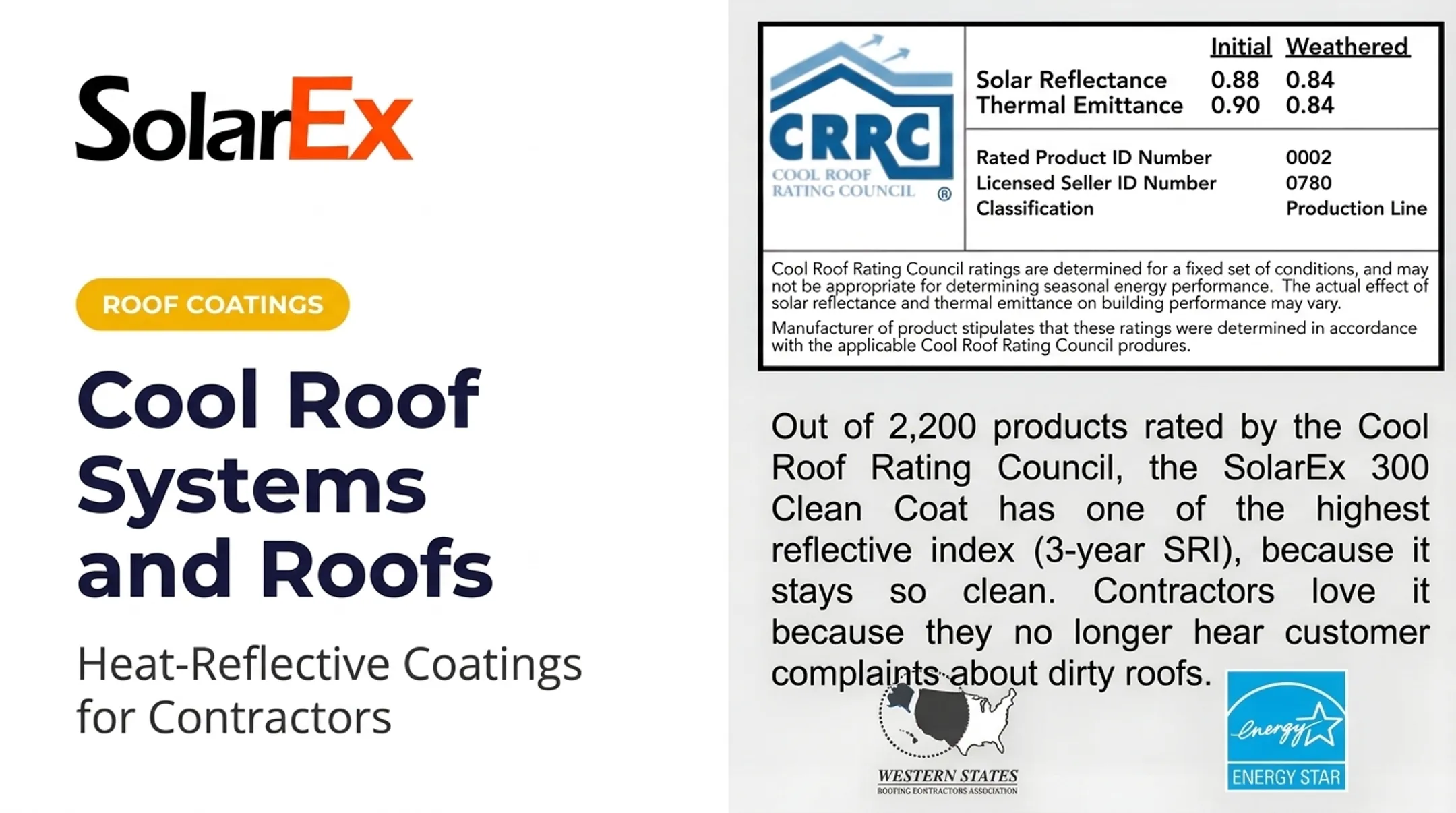
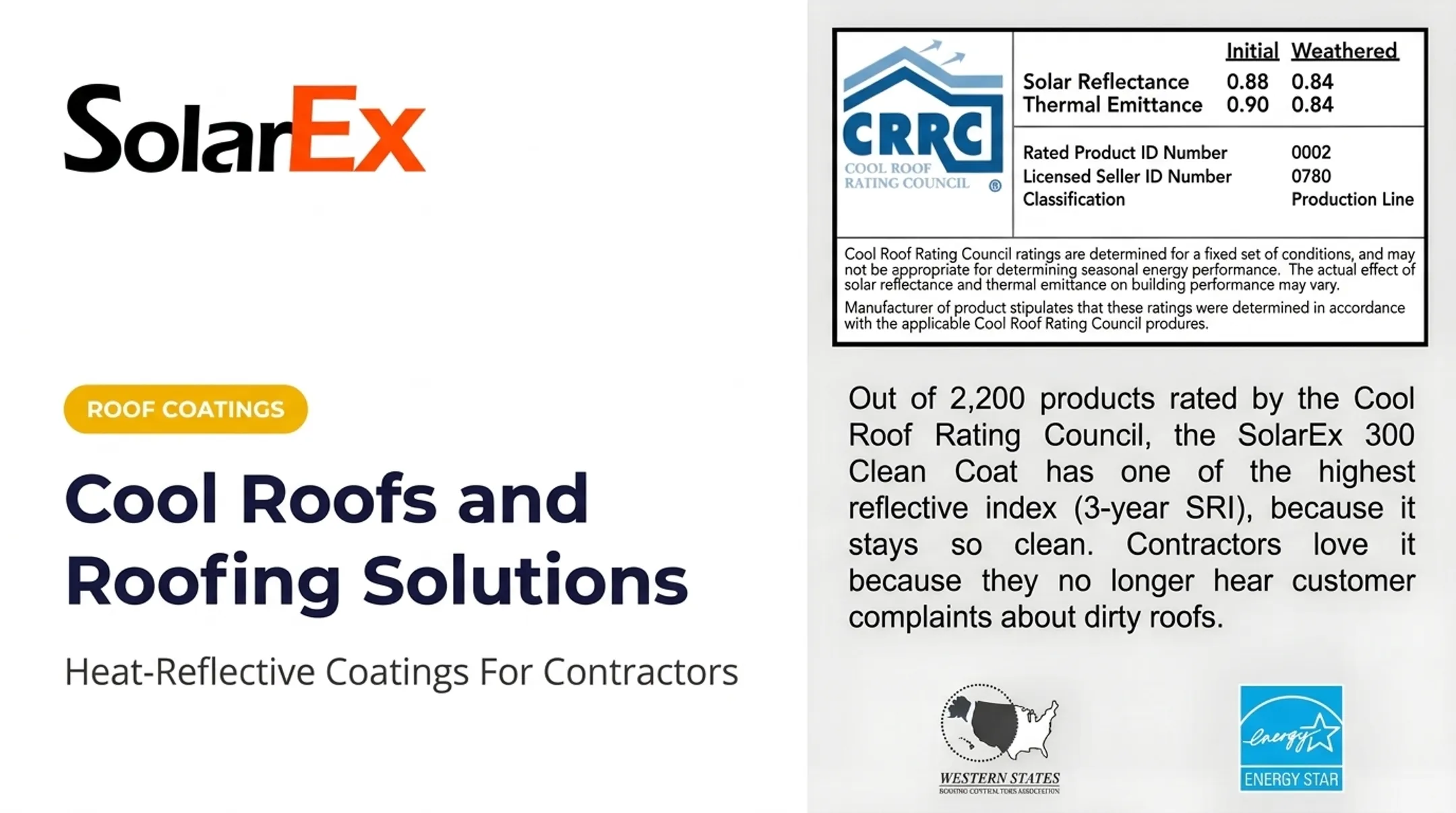
Solar reflectance measures the fraction of solar energy a surface bounces back, on a scale from 0 to 1. A higher number means less heat gets absorbed into the roof deck in the first place. The Cool Roof Rating Council identifies solar reflectance and thermal emittance as the two basic properties that define a cool roof.
Thermal Emittance
Thermal emittance is the roof's ability to radiate absorbed heat back out, rather than holding onto it. A surface can reflect sunlight well but still trap heat if emittance is poor. That's why CRRC evaluates both properties together, not separately.
Solar Reflectance Index (SRI)
SRI combines reflectance and emittance into one number that estimates how hot a roof surface will get in direct sun. Most SRI values fall between 0 and 100, though products can fall outside that range. Rather than trusting a marketing claim, ask for the CRRC-rated SRI value directly.
Dark colors aren't automatically disqualified. About half of sunlight sits in the invisible near-infrared range. Lawrence Berkeley National Laboratory found that a cool brown metal panel reflected 27% of sunlight, compared to just 8% for a conventional brown panel: same visible color, very different infrared-reflective pigment technology.

The roof assembly still matters. A reflective surface can't fix bad insulation. Ventilation, air sealing, underlayment, roof pitch, shading, and HVAC efficiency all affect how much of that reflected benefit reaches your energy bill.
Picture two identical buildings side by side. One has a dark, absorptive roof and no attic ventilation. The other has a reflective, high-emittance finish over properly insulated decking. The second building loses far less heat gain to the space below, but only because reflectance and assembly worked together.
Benefits and Limitations of Cool Metal Roofing
Where the Energy Savings Come From
The U.S. Department of Energy reports up to 15% lower annual air-conditioning energy use for a cool roof on a single-story building, with the biggest gains showing up in hot, sunny climates. Other documented benefits include:
- Reduced peak cooling demand during summer months
- Improved indoor comfort in non-air-conditioned spaces
- Less mechanical strain on HVAC equipment over time
Durability, Maintenance, and Environmental Upside
Metal roofing holds up well against weather exposure, and restoring an existing metal roof with a coating can extend service life without a full tear-off.
The Metal Roofing Alliance notes that most metal roofing contains at least 25% recycled content and is fully recyclable at end of service (an industry-association claim, not an independent lab study).
Lower cooling energy use also means less demand pulled from the grid, which can translate into reduced associated power-plant emissions.
Commercial and Code Considerations
Cool roofing can support sustainability goals, LEED credits, or local energy code compliance, but program criteria (slope, climate zone, aged vs. initial values) vary by jurisdiction. Verify current requirements for your specific project before assuming eligibility.
Limitations and Trade-Offs
Cool metal roofing isn't free of downsides:
- Higher upfront cost than some conventional options
- Climate-dependent value in mild or heating-dominated climates (DOE notes reflective roofs can slightly raise winter heating use)
- Glare from highly reflective finishes
- Fewer color/design choices in some cool-rated product lines
- Ongoing maintenance to preserve reflectance over time
A cool roof also doesn't replace the need for insulation, ventilation, efficient HVAC equipment, leak repairs, or professional installation. It's one piece of the system, not a substitute for the rest.

Factory-Finished Panels vs. Retrofit Cool Roof Coatings
Choosing between a new cool-rated panel and a coating over your existing metal roof comes down to condition, budget, and how much disruption you can tolerate.
| Factor | Factory-Finished Panel | Retrofit Coating |
|---|---|---|
| Best for | New installs or full roof replacement | Sound roofs needing renewed reflectivity |
| Installation disruption | Higher: often a full tear-off | Lower: applied over existing roof |
| Reflectance documentation | CRRC-rated finish from the manufacturer | Depends on the specific coating product |
| Substrate requirement | New panel, no compatibility issue | Must be clean, dry, structurally sound |
| Typical warranty | Panel manufacturer warranty | Coating system warranty (often tiered) |
When a Coating Makes Sense
A retrofit coating fits best on a metal roof that's structurally sound and properly prepared but has lost reflectivity or needs renewed waterproofing. Use it to restore reflectivity and waterproofing on a sound roof. It will not fix failed structure or active system damage.
Before coating, assess for:
- Active leaks or wet insulation underneath
- Corrosion, rust, or loose fasteners
- Panel movement, gaps, or damaged seams
- Ponding water or inadequate drainage
- Incompatibility with any existing finish already on the roof
SolarEx's SiliconEx 500 is one option in this category: a 100% silicone, moisture-curing coating built for metal roofs and other low-slope substrates. It is low-VOC, carries a CRRC Rated Product ID for smooth-surface performance, and documents up to 87% initial solar reflectance.
The product is engineered for restoration, not full replacement. It belongs on roofs that are dry, firmly attached, and able to pass an adhesion test. Severe corrosion or structural damage still calls for repair or panel replacement first.
Preparation Determines the Outcome
Coating performance depends on prep work. Primer choice, application thickness (SolarEx systems specify rates such as 1.5 gallons per 100 square feet), and detailing at seams, fasteners, and penetrations decide whether the job meets its rated warranty. Skipping steps voids the protection you're paying for.
SolarEx pairs this coating approach with solar power systems as part of a broader energy strategy: reduce heat absorption first, then generate power more efficiently on a cooler roof surface. That combination supports a whole-building energy plan. A coating alone does not guarantee solar output or a specific utility-bill reduction.
How Much Does Cool Metal Roofing Cost, and How Should You Choose?
What Drives the Price
Final price depends on several job-specific factors:
- Roof area and pitch
- Panel type or coating system selected
- Substrate condition and required repairs
- Insulation and ventilation upgrades
- Penetrations, flashing, and access difficulty
- Local labor rates and warranty level chosen
Planning Ranges (Not Quotes)
Industry cost guides put roof coating materials and installation in the $1.50 to $3.00 per square foot range for metal roof coating projects. Full standing-seam panel jobs sit in a higher budget tier once tear-off, materials, and labor are included.
Treat these as budgeting starting points only. Get a written, itemized local quote before committing.
Quote-Comparison Checklist
When comparing bids, ask each contractor to specify:
- Solar reflectance, thermal emittance, and SRI values (initial and aged)
- Coating or paint system and substrate compatibility
- Measured coating thickness and surface prep scope
- Drainage repairs included or excluded
- Warranty length and what voids it
- Maintenance expectations after installation
Estimating Payback
A simple framework: incremental cool-roof cost ÷ annual net cooling-energy savings = payback period. A qualified professional should factor in your climate, utility rates, insulation, HVAC performance, and shading. This isn't a number you can pull from a generic online calculator with confidence.

Before You Commit
Before choosing between full replacement, factory-finished panels, or a retrofit coating, get a roof inspection or condition assessment first. Confirm the proposed product has current technical documentation, independent testing, and code compliance information for your roof type before signing off.
Frequently Asked Questions
How much do cool metal roofs cost?
Cost varies by roof size, panel or coating system, existing roof condition, labor, access, and any insulation upgrades needed. Get an itemized local quote rather than relying on a national average.
How do you make a metal roof cool?
Use a factory-applied cool-rated finish or a compatible retrofit coating with documented solar reflectance and thermal emittance. Proper insulation, ventilation, and installation quality matter just as much as the coating itself.
What are the pros and cons of cool metal roofs?
Pros include lower heat absorption and potential cooling-cost savings. Cons include higher upfront cost, climate-dependent results, possible glare, and ongoing maintenance needs.
Can you coat an existing metal roof to make it more energy efficient?
Yes, if the roof is structurally sound, clean, and properly prepared. Corrosion, active leaks, ponding water, and seam condition all need to be assessed before coating.
Do dark metal roofs qualify as cool roofs?
Not automatically. Some dark finishes use infrared-reflective pigments that perform well despite their color, so check the tested reflectance, emittance, and SRI values directly.
Will a cool metal roof reduce heating and cooling costs year-round?
Benefits are most noticeable during hot, sunny periods. Annual results depend on your climate, heating demand, insulation, and HVAC system performance.