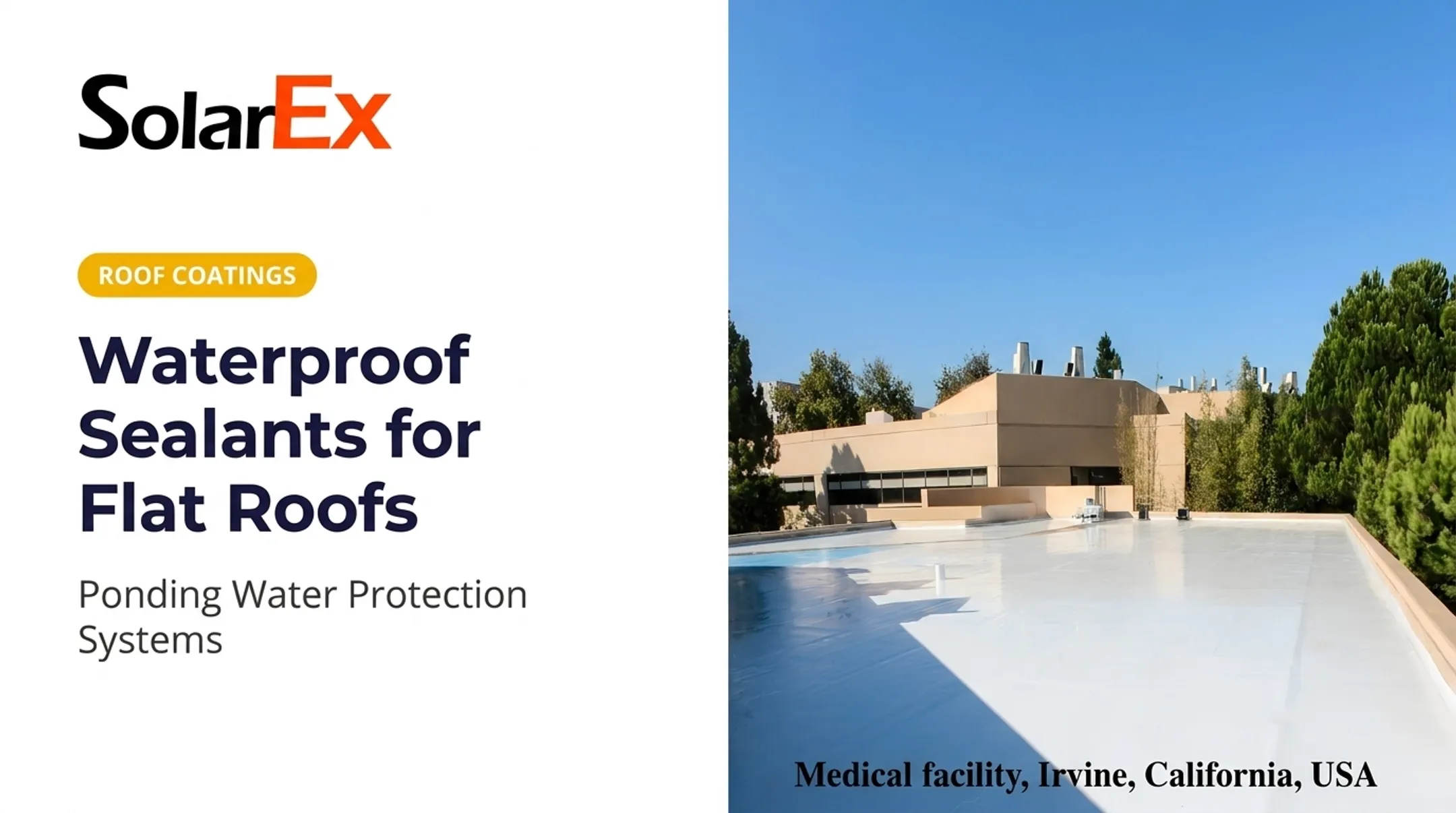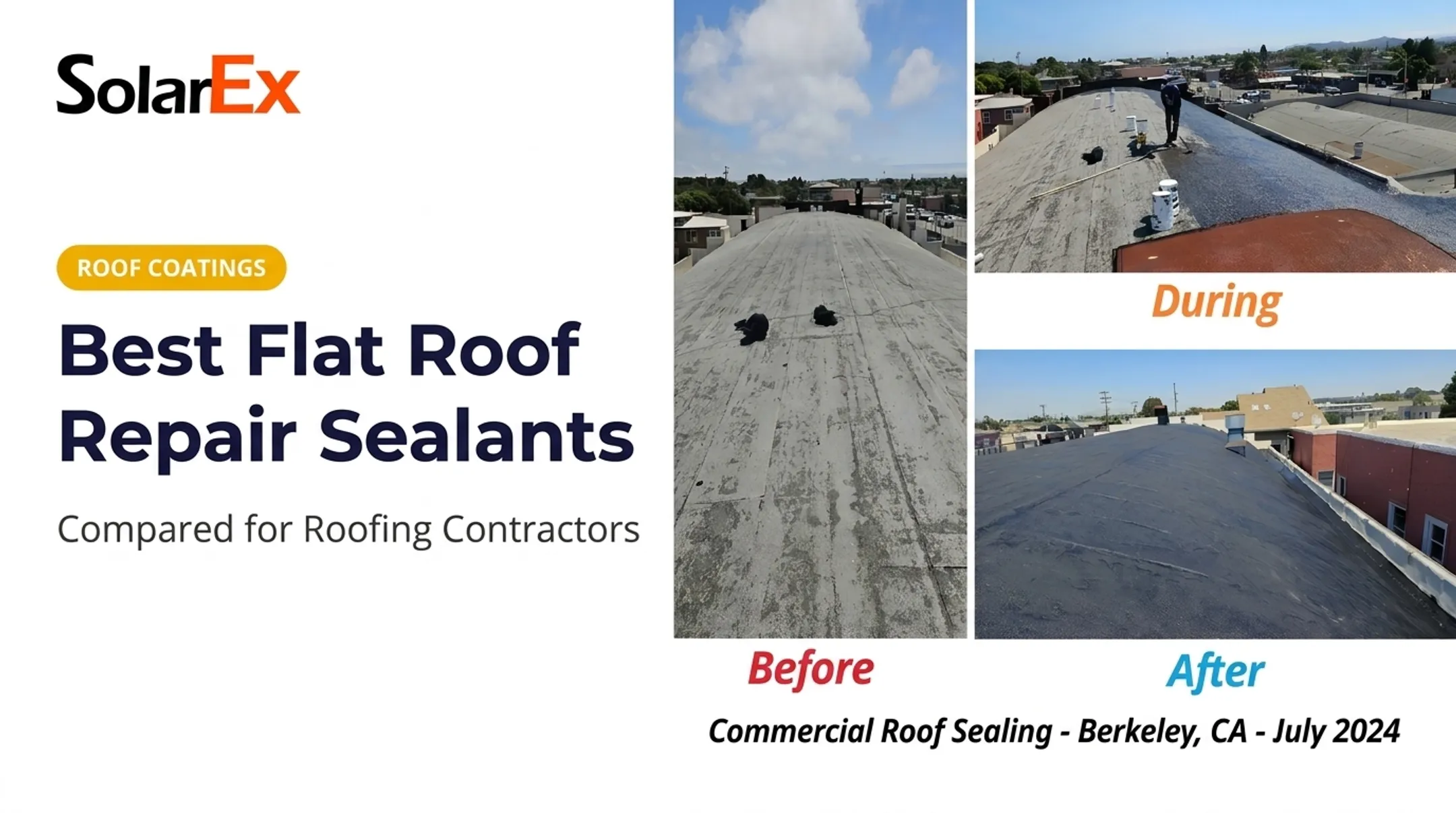

The Asphalt Roofing Manufacturers Association defines ponding water as water that sits on a roof for 48 hours or longer — long enough to stress membranes, add deck load, and push moisture into places it shouldn't reach.
Before you shop for a sealant, get clear on what you're actually sealing: a joint, a penetration, a crack, or the entire roof surface. A tube of mastic and a five-gallon pail of roof coating solve different problems.
This guide compares the main sealant and coating chemistries used on US flat roofs, explains when each applies, and shows how to choose based on your roof's substrate, ponding conditions, weather exposure, foot traffic, and project scope.
Key Takeaways
- Match sealant to substrate, ponding exposure, and patch-versus-full-surface scope.
- Surface prep, seam reinforcement, and coating thickness matter as much as chemistry.
- Silicone suits UV and moisture; acrylic fits reflective budget jobs; urethane or rubber handle movement at stress points.
- Persistent ponding, wet insulation, or structural damage need drainage fixes or a pro—not more sealant.
Overview of Flat-Roof Sealants and Coatings in the US Market
"Sealant" gets used loosely in the roofing world. On a flat roof, it usually refers to one of these:
- Elastomeric roof coatings — stretchy, weather-resistant membranes applied across the whole roof
- Silicone coatings — moisture-cured systems built for UV and ponding resistance
- Acrylic coatings — water-based, reflective, budget-friendly options
- Polyurethane/urethane sealants — high-adhesion products for movement and traffic areas
- Butyl, SEBS, and elastomeric mastics — flexible detail sealants for seams and penetrations
- Asphaltic or rubber-based compounds — repair pastes for asphalt-based roof systems
Flat roofs need different performance than sloped roofs. They deal with standing water, more direct UV load, thermal cycling that stresses seams, and repeated wet-dry cycles that sloped shingles rarely experience.
Buyers range from homeowners patching a garage roof to commercial contractors restoring 50,000 square feet of TPO. Facility managers use coatings to stretch capital budgets, and restoration crews match products to the system already on the roof.

Product selection should follow the roof system and the job, not brand popularity.
The comparison below breaks down each chemistry so you can match the product to your actual roof.
Best Sealants for Sealing a Flat Roof
Every product below is judged against the same criteria:
- Waterproofing performance and ponding-water resistance
- Adhesion, flexibility, and substrate compatibility
- UV stability and VOC profile
- Ease of application
- How clearly the manufacturer documents its claims
Silicone Roof Coating or Sealant Systems
Silicone shows up constantly in flat-roof discussions because it holds up under intense sun and recurring moisture better than most alternatives. A full silicone coating waterproofs the entire roof. A tube-applied silicone sealant targets details like joints and cracks.
Silicone tends to make sense when:
- The existing membrane is compatible and structurally sound
- You're restoring a roof rather than replacing it
- Reflective performance and moisture resistance are priorities
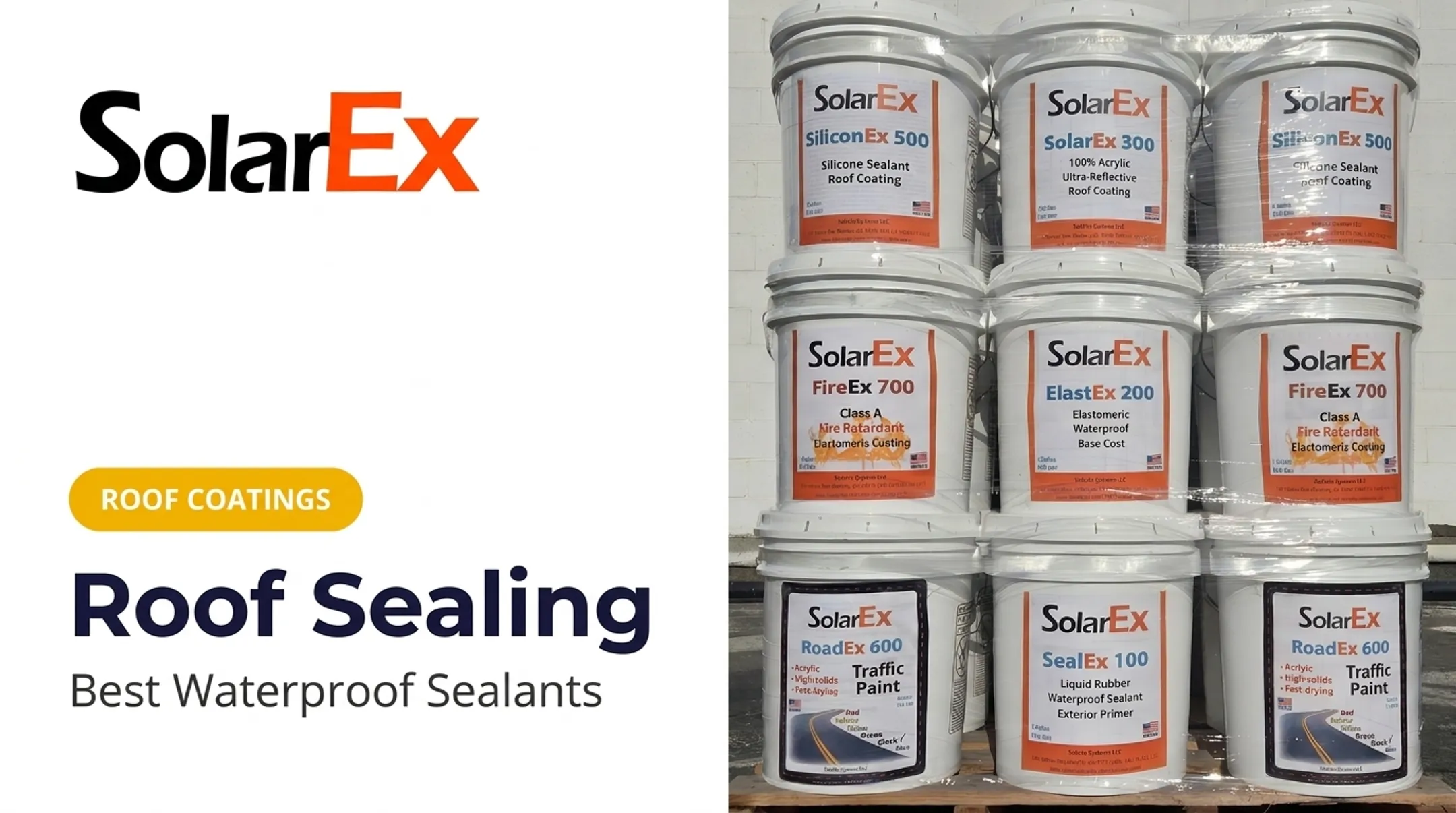
SolarEx's SiliconEx 500 is a 100% silicone, solvent-free, single-component, moisture-cure coating. It adheres directly to metal, concrete, wood, TPO, EPDM, and modified bitumen.
According to SolarEx's product data, it offers up to 87% initial solar reflectance, cures into a seamless waterproof membrane, and carries manufacturer warranty options up to 20 years when applied per spec. Pricing runs $1.25–$1.64 per square foot for a 20-year system, sold in 1-gallon through 180-gallon pallet formats.

Limitations to check: silicone can have adhesion or recoat limitations over certain existing coatings, may require primer on porous concrete or rusted metal, and won't fix poor drainage or a deteriorated deck underneath it.
Acrylic Roof Coatings and Acrylic Detail Sealants
Acrylic coatings are popular for a simple reason: they're water-based, easier to clean up, widely available, and generally cheaper than silicone or urethane systems.
Good use cases include:
- Low-slope areas without standing water
- Maintenance recoats on an existing acrylic system
- Compatible metal or membrane roofs
- Projects prioritizing a lower-VOC, water-based approach
The catch: acrylic coatings generally aren't built for extended ponding exposure. Low spots and drainage issues need fixing before you apply one.
SolarEx's acrylic lineup shows how formulas differ by roof condition:
- SolarEx 300 reflects 90%+ of UV and infrared radiation and works on commercial and residential roofs, walls, decks, and mineral cap sheets
- TropEx 310 is an ASTM D6083 acrylic elastomeric coating for BUR, metal, SPF, and concrete restoration
- Sunshield 3800 is built for non-ponding conditions only
Even within one lineup, acrylic products aren't interchangeable across every roof type.
Before applying any acrylic product, confirm primer requirements, temperature restrictions, coat count, and the manufacturer's specified dry-film thickness.
Polyurethane or Urethane Roof Sealants
Urethane earns its place around seams, penetrations, flashings, and other high-stress details where strong adhesion and abrasion resistance matter more than pure reflectivity.
There are two basic formulation types:
- One-component (1K): cures through exposure to air moisture; simpler to apply, slower cure in cold or dry conditions
- Two-component (2K): cures once mixed with a curing agent; faster cure, but requires mixing accuracy and a limited pot life
According to the Sealant, Waterproofing & Restoration Institute, 1K sealants depend on atmospheric moisture to cure, while 2K sealants must be installed before the mixed material exceeds its pot life.
SolarEx's polyurethane roof coating pairs a tougher aromatic base coat with a UV-stable aliphatic finish coat. That stack resists abrasion, impact, and mechanical wear on commercial roofs with regular foot traffic or rooftop equipment paths.
Check before applying: substrate moisture level, overcoating requirements, VOC/odor considerations, and the specific technical data sheet. Urethane usually works best as part of a complete restoration system, not a standalone fix for a roof with widespread leaks.
Butyl, SEBS, and Elastomeric Seam Mastics
These flexible mastics are detail products, not full-surface waterproofing. They target seams, fasteners, penetrations, and flashing transitions: the localized movement points where a full coating alone won't hold.
What matters most here:
- Flexibility and adhesion at the specific joint
- Compatibility with reinforcement fabric where specified
- Resistance to weathering on metal, modified bitumen, or other compatible systems
SolarEx's SealEx 510 Mastic, a 100% silicone detail sealant, is typically applied to joints, cracks, and extrusions before a full SiliconEx 500 coating. Detail sealants and field coatings work together rather than compete.
Warning: don't layer a new mastic over old cement, silicone, tar, or an unknown existing coating without cleaning, testing, and following the manufacturer's prep instructions. Incompatible layers can peel, bubble, or fail outright.
Asphaltic, Rubber-Based, and Repair Compounds
Asphaltic and rubber-based compounds work on compatible built-up roofing, modified bitumen, or emergency patch situations. They're not a substitute for a durable restoration system.
Strengths and limits:
- Compatible with certain asphalt-based assemblies for localized cracks or flashing repairs
- Prone to UV degradation, brittleness, or softening without a protective topcoat
- Often incompatible with other coating chemistries applied later
SolarEx's SealEx 100, an elastomeric asphalt emulsion liquid rubber sealant, fits this category. It's sold in a 5-gallon pail or a 36×5-gallon bulk pallet for larger jobs.
Repeated spot-patching can hide widespread deterioration underneath. It also creates a stack of incompatible layers that makes future restoration harder and more expensive.
Bottom line: choose a detail sealant for isolated joints and penetrations. Move to a complete coating system once leaks, weathering, or surface degradation show up across the roof.
How We Chose the Best Flat-Roof Sealant
The evaluation above prioritizes roof-system compatibility and the actual failure point over vague claims like "waterproof" or "industrial strength." Here's what drove the comparison:
- Substrate compatibility: Confirm approval for EPDM, TPO, PVC, modified bitumen, BUR, metal, concrete, spray foam, or existing coatings. SiliconEx 500 calls for PrimEx 505 on rusted metal, BleedEx 400 on modified bitumen or BUR, and adhesion testing over existing coatings.
- Water exposure: Assess ponding, blocked drains, and low spots before choosing. Some SolarEx specs require a liquid roof patch to level low areas before coating; sealant doesn't correct bad slope.
- Movement and weathering: Match flexibility, UV resistance, and freeze-thaw performance to your climate. NRCA reports initial reflectance of 0.85–0.90 often falls to 0.60–0.70 after year one as dirt accumulates.
- Application and lifecycle: Compare coverage rate, coat count, dry-film thickness, cure conditions, and warranty terms. SiliconEx 500 requires a minimum 32-mil dry-film thickness and is tack-free in 70–80 minutes under normal conditions.
- Cost and risk: Total cost includes roof area, prep, access, drainage correction, thickness, and maintenance, not the container price. Low advertised rates often exclude cleaning, repairs, primers, and labor.

Conclusion
There's no single best sealant for every flat roof. The right choice depends on the membrane underneath, where the repair sits, ponding conditions, local climate, seam movement, and whether you're patching a detail or restoring the whole system.
Before sealing anything:
- Inspect drains and check for standing water beyond 48 hours
- Identify the existing roof substrate
- Test adhesion on a small area first
- Reinforce seams and penetrations per the manufacturer's spec
- Follow the technical data sheet. Thickness and cure conditions aren't suggestions
If you're weighing a cool-roof coating against a full replacement, talk through the roof's condition with SolarEx. A compatible reflective coating system can handle moisture protection and heat gain while supporting longer roof life and energy goals.
Coating still isn't a substitute for structural repairs or a professional roof assessment.
For commercial roofs or anything showing widespread wear, get a written system specification covering prep requirements, coating thickness, warranty terms, and maintenance expectations before signing off on any product.
Frequently Asked Questions
How much does it cost to reseal a roof?
Cost depends on roof size, substrate, prep work, leak repairs, drainage corrections, access, labor, and the number of coats required. Get a roof-specific estimate rather than relying on a generic per-square-foot figure.
What is the best way to seal a flat roof?
Identify the roof system, then correct drainage and structural issues before coating. Clean and dry the surface, repair defects, and reinforce seams and penetrations. Apply a compatible sealant or coating at the specified thickness, then inspect.
What is the best sealant for a flat roof?
It depends on your substrate and use case. Silicone, acrylic, urethane, flexible mastics, and asphaltic compounds all serve different roles. The product's technical data sheet determines what actually fits your roof.
Is silicone or acrylic better for a flat roof?
Silicone generally handles ponding water and UV exposure better; acrylic costs less and works well on well-drained, reflective roofs. Neither is automatically the right call. Match the choice to drainage, climate, and substrate.
Can I seal a flat roof with ponding water?
A compatible coating may help protect the surface, but persistent ponding usually needs drain clearing and slope correction first. If water lingers or the membrane looks deteriorated, get a professional assessment before coating.
Do I need sealant or a full roof coating?
Sealant or mastic suits seams, flashings, penetrations, and localized cracks. A full coating makes more sense when weathering, leaks, or degradation show up across the roof rather than at one spot.