
Introduction
Metal roofing holds up for decades, but it isn't leakproof by design alone. Water finds its way in at panel laps, fastener penetrations, flashing edges, and trim transitions long before the panels themselves fail. Sealant is the small detail that keeps a big investment dry.
The right waterproof metal roof sealant depends on the roof metal, where the joint sits, how much the panels move with temperature swings, and whether you're sealing a joint or restoring a whole roof section.
This guide compares leading sealant technologies sold in the U.S., including silicone, polyurethane, hybrid, and acrylic chemistries, plus butyl tape. It also explains when a localized sealant is enough, and when a broader roof coating system makes more sense.
Key Takeaways
- Silicone, polyurethane, hybrid, acrylic, and butyl products each solve different metal-roof problems
- Flexibility, adhesion, UV resistance, and manufacturer approval matter more than sticker price
- Butyl tape belongs under laps and flashings, not out in the open without UV protection
- Cleaning, rust treatment, and following the technical data sheet drive real-world performance
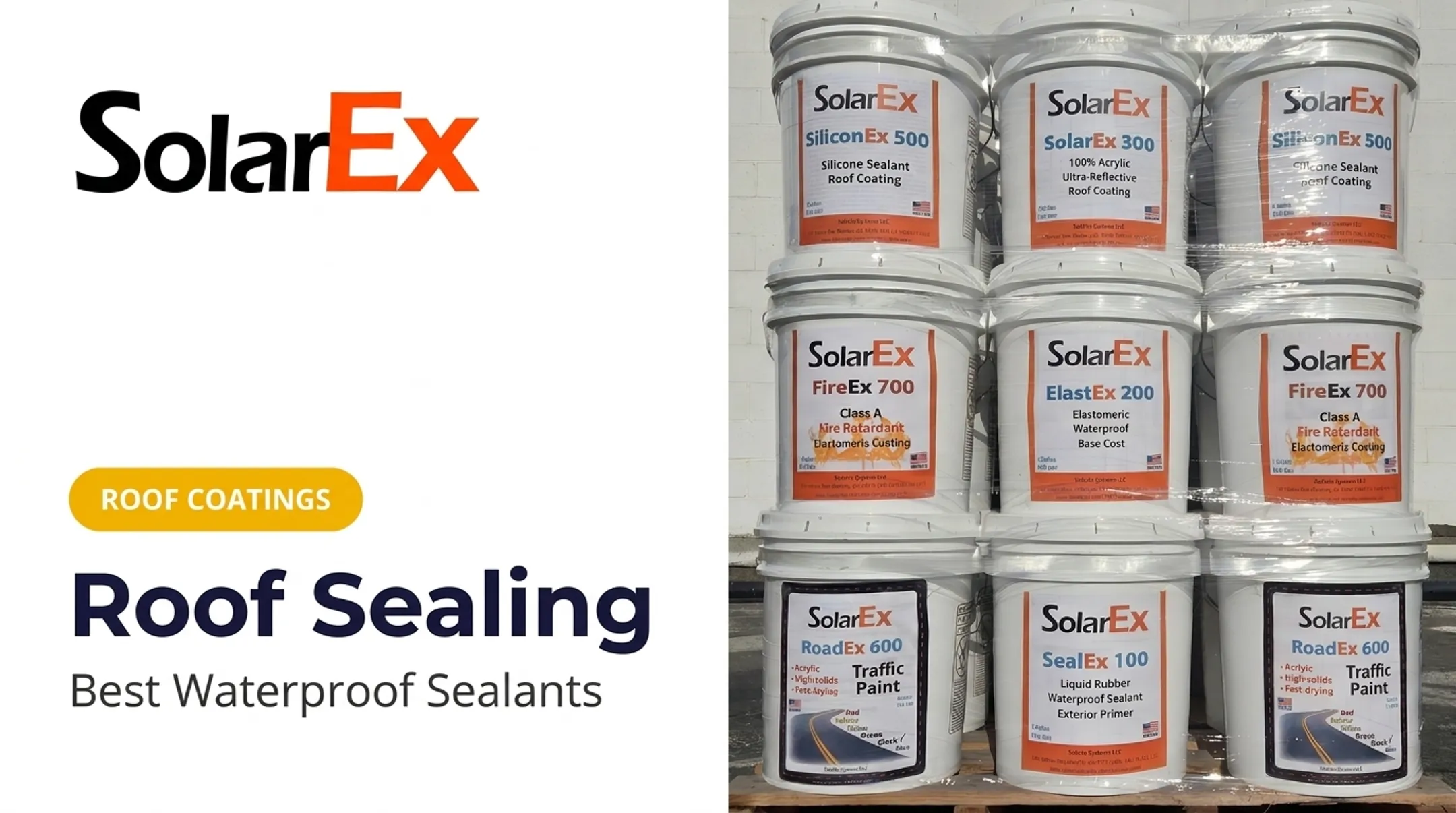
- Full roof coatings, like SolarEx cool-roof systems, waterproof the whole roof; joint sealants only close seams and fasteners
Overview of Waterproof Metal Roof Sealants in the U.S. Market
A metal roof sealant blocks water and air at the roof's vulnerable points: seams, overlaps, fastener heads, penetrations, and flashing transitions. It's one component of a functioning roof assembly, not a substitute for sound panels, working drainage, or proper underlayment.
Metal roofing creates sealing demands that shingles and membranes don't face:
- Smooth, often coated substrates that resist adhesion unless the sealant chemistry matches the finish
- Thermal expansion and contraction that stresses joints more than static materials
- Wind-driven rain that pushes water sideways and upward at laps and fasteners
- Corrosion risk from sealant chemistry that reacts with the metal or a dissimilar fastener
Metal roofing's footprint keeps growing. The Metal Construction Association's 2025 market study projects 160% growth for the metal construction industry over the next decade, meaning more buildings will depend on properly sealed metal roof details in the years ahead.
That growth doesn't mean sealant alone determines how long a roof lasts. The National Roofing Contractors Association notes that most roofs are designed for roughly 20 years of service. Climate, design, material quality, application, and maintenance shape that lifespan far more than sealant choice alone.

The products below are grouped by intended use, not brand reputation. Some are built for exposed topical sealing. Others belong under concealed panel laps. A few are meant for penetration repair or broader restoration work.
Top Waterproof Metal Roof Sealants for U.S. Roofing Projects
We selected these products based on documented metal adhesion, weather resistance, movement capability, and current technical data sheets. Every claim below traces back to manufacturer documentation, not marketing copy.
This ranking is editorial and application-specific, not a universal performance guarantee. Confirm compatibility with your panel manufacturer's specs and roof system warranty before you buy anything.
Titebond WeatherMaster Metal Roof Sealant
Titebond's WeatherMaster is an elastomeric sealant built for exposed metal-roof joints, flashing, trim, and repair work. Per the manufacturer's technical data sheet, it bonds to Kynar-coated metal, aluminum, galvanized steel, and copper, and adheres to wet or damp surfaces without shrinking.
Key specs:
- Joint movement capability of ±50%
- Service temperature from -75°F to 350°F, depending on the formulation
- Paintable after 1 hour with plasticizer-free acrylic latex paint
- Over 100 color options for matching existing panels
It's not rated for continuous submersion, copper needs a pre-coat to stop oxidation before sealing, and application requires temperatures above 0°F. High heat during cure can cause sagging on vertical joints.
Novaflex Metal Roof Sealant
NovaFlex Pro Premium Adhesive Sealant is a single-component, oxime-cured silicone for exterior metal panels, rivets, gutters, corner joints, and screw heads.
Key specs:
- Primerless adhesion to Kynar-coated metal and aluminum
- Permanently flexible cure; resists UV, chalking, and mildew
- Tack-free in about 10 minutes; full cure in 48 hours
Best-fit uses include seam sealing, screw-head and rivet sealing, and gutter or corner-joint detailing.
Skip it below 0°F or above 120°F, and avoid surfaces meant for painting. Galvanized steel and Galvalume are not named in the documentation reviewed, so confirm those substrates with the manufacturer.
Butyl Sealant Tape
Butyl tape is a format, not a single interchangeable product. GSSI's MB-10A, distributed by H.B. Fuller, is a hot-melt butyl rubber tape extruded onto silicone-coated paper, with documented tack, adhesion to metal, and resistance to UV and water exposure.
Manufacturer guidance places this tape under fasteners, at closures, beneath flashings, and at concealed metal-to-metal laps to block wind-driven rain through fastener holes. Application calls for dry surfaces above 40°F.
Butyl tape is generally not the right choice for exposed, topical applications without added UV protection or a compatible cover sealant. Reserve it for connections you won't see once the roof is finished, and confirm thickness, width, and temperature limits against your specific product submittal.
KARNAK Metal Roof Sealant
KARNAK's 671 Karna-Seal is a single-component, moisture-curing 100% silicone built for metal-roof repairs at seams, flashings, penetrations, fasteners, drains, and scuppers. The current product data sheet calls for brush application, with fabric reinforcement between layers at flashing and lap-seam details.
Performance highlights:
- Rain-safe within 1 hour of application
- Full cure in 24 hours at 77°F and 50% relative humidity
- Cured service range from -75°F to 385°F
- Resistant to ponding water, UV, and weathering once cured
Apply between 50°F and 120°F. This product fits repair and restoration work on an existing metal roof rather than new-construction seam sealing.
LOCTITE PL Roof and Flashing Polyurethane Sealant
Henkel's LOCTITE PL Roof and Flashing Polyurethane Sealant is a commercial-grade option for roof and flashing repairs, chimneys, roof edging, and nail heads. It bonds to asphalt, aluminum, metal, brick, wood, and concrete, usually without a primer.
Key specs:
- Joint movement of ±35% (ASTM C719)
- Service range of -40°F to 180°F; UV and ozone resistant
- Full cure in about 7 days; paintable once cured
Trade-offs worth knowing: moist surfaces hurt adhesion, deep joints over 1/2 inch need a backer rod, and it shouldn't contact butyl, other silicones, polysulfide, or SBS/modified-bitumen membranes.
Polyurethane isn't automatically better than silicone. It trades some flexibility range for strong adhesion on porous and painted substrates.

How We Chose the Best Waterproof Metal Roof Sealants
Mistakes We Ruled Out
We ruled out products and misuse patterns that fail under real roofing conditions:
- Generic household caulk marketed as an all-purpose sealant
- Products chosen on price alone, with no documented metal adhesion
- Sealant applied over oil, rust, or existing contamination
- Sealant used to mask an active structural leak instead of a diagnosed repair
- Concealed butyl tape used as a finished, exposed surface
Technical and Compatibility Checks
Every product had to clear these performance and compatibility bars:
- Adhesion to the roof finish it is marketed for
- Flexibility through thermal cycling without cracking
- UV resistance for long-term outdoor exposure
- Compatibility with Galvalume, galvanized steel, aluminum, copper, and painted panels
- Documented primer needs and no conflict with panel manufacturer warranty terms
Application, Lifecycle, and Documentation
We compared surface prep, joint sizing, cure time, temperature limits, and package sizes, then verified each claim against current technical data sheets and relevant ASTM references such as C920 and C1311. Marketing language and unsupported lifespan claims didn't factor into the ranking.
A simple decision framework:
- Concealed laps and internal connections – use an approved butyl tape or concealed sealant
- Exposed joints, flashing, and penetrations – use a compatible topical sealant rated for UV and weather exposure
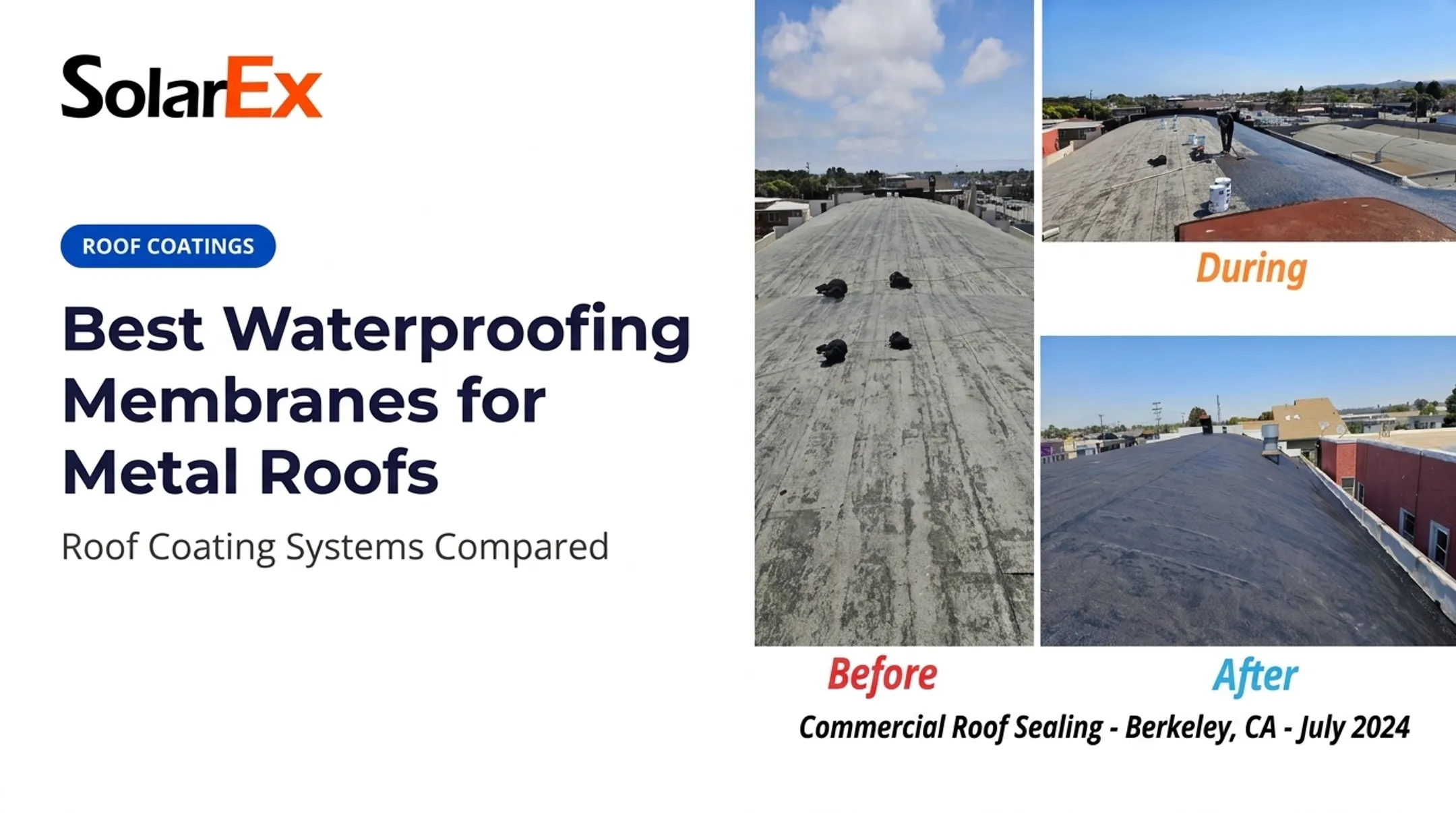
- Widespread deterioration or leakage across multiple details – consider a full coating or restoration system instead of patching joint by joint
That third scenario is where SolarEx cool-roof coating systems fit. They restore reflectivity and moisture resistance across an entire roof surface rather than repairing one detail at a time. A coating solves a different problem than a joint sealant, and it is not a substitute for the sealants above.

Conclusion
The best waterproof metal roof sealant is the one matched to your roof's metal, joint location, movement, climate, and the panel manufacturer's installation requirements.
Before you seal anything:
- Diagnose the real leak source first
- Clean off contamination and rust
- Follow the technical data sheet exactly
- Call a roofing professional for widespread corrosion, ponding water, damaged panels, or leaks that keep returning
If you need broader moisture protection or reflective performance beyond a single joint repair, SolarEx can help you evaluate a compatible cool roof coating and solar-ready system for your building. Reach the team at +1 (877) 888-2278 or info@solarexsys.com.
Frequently Asked Questions
What is the best waterproof sealant for a metal roof?
It depends on the metal, joint exposure, movement needs, and climate. Silicone options like Titebond WeatherMaster suit exposed joints needing flexibility; butyl tape fits concealed laps. Always check the product's technical data sheet.
What is the best waterproof coating for a metal roof?
A full roof coating differs from a localized sealant. Match the system to roof condition, prep, drainage, ponding exposure, and reflectivity goals. Silicone coatings generally handle ponding water and UV better than acrylics on metal.
Do you need to put a membrane under a metal roof?
Underlayment may be required or recommended depending on roof design, slope, climate, and building code. A membrane still doesn't remove the need to seal joints, laps, and penetrations correctly.
Why does my metal roof leak during heavy rain?
Common causes include failed seams, loose fasteners, bad flashing, blocked drainage, corrosion, and wind-driven rain. Sheffield Metals flags these same failure points as top leak causes. Get a professional diagnosis before applying sealant.